Institute of Pharmacology & Toxicology, NHC and CAMS Key Laboratory of Medical Neurobiology, College of Pharmaceutical Sciences, Zhejiang University, Hangzhou, China.
Department of Neurology, Epilepsy Center, Second Affiliated Hospital, School of Medicine, Zhejiang University, Hangzhou, China.
CNS Neurosci Ther. 2020 Nov;26(11):1111-1120. doi: 10.1111/cns.13434. Epub 2020 Jun 28.
Pharmaco-genetics emerges as a new promising approach for epileptic seizures. Whether it can modulate epileptogenesis is still unknown.
Here, parvalbumin neurons and pyramidal neurons of the seizure focus were transfected with engineered excitatory Gq-coupled human muscarinic receptor hM3Dq and engineered inhibitory Gi-coupled human muscarinic receptor hM4Di, respectively. And their therapeutic value in mouse hippocampal kindling-induced epileptogenesis was tested.
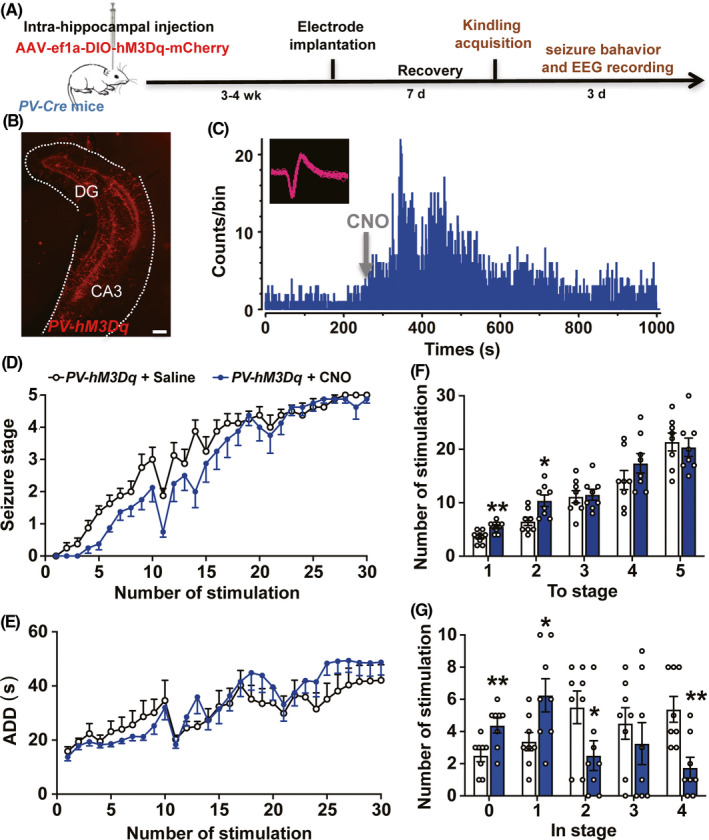
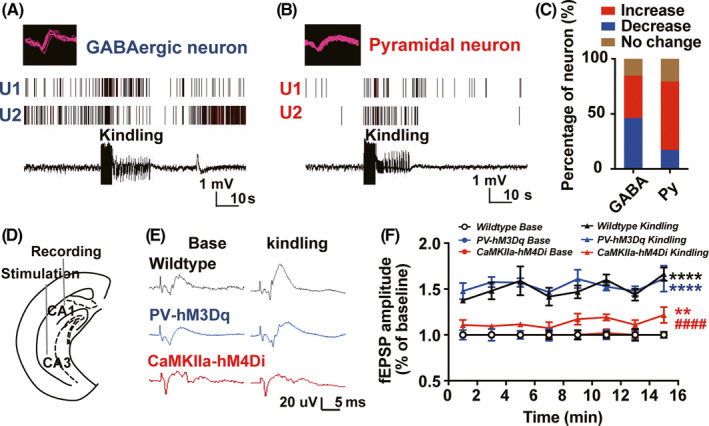
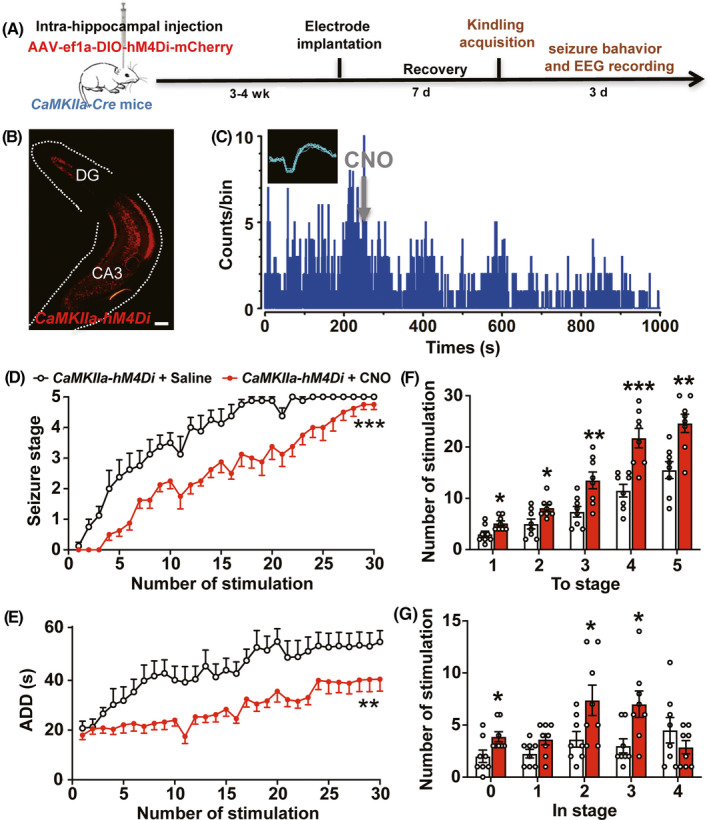
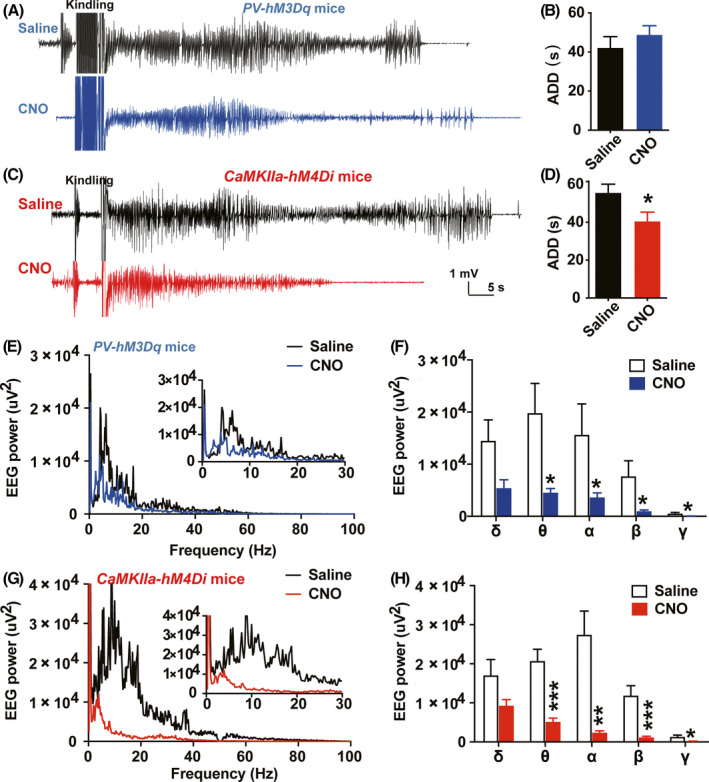
Pharmaco-genetic activating parvalbumin neurons limitedly retarded the progression of behavioral seizure stage and afterdischarge duration (ADD) during epileptogenesis induced by kindling. Activating parvalbumin neurons delayed seizure development only in the early stage, but accelerated it in late stages. On the contrary, pharmaco-genetic inhibiting pyramidal neurons robustly retarded the progression of seizure stages and ADDs, which greatly delayed seizure development in both early and late stages. Although both pharmaco-genetic therapeutics efficiently alleviated the severity of acute kindling-induced seizures, pharmaco-genetic inhibiting pyramidal neurons were able to reverse the enhanced synaptic plasticity during epileptogenesis, compared with that of pharmaco-genetic activating parvalbumin neurons.
Our results demonstrated that pharmaco-genetic inhibiting pyramidal neurons retard hippocampal kindling-induced epileptogenesis and reverse the enhanced synaptic plasticity during epileptogenesis, compared with that of pharmaco-genetic activating parvalbumin neurons. It suggests that pharmaco-genetics targeting pyramidal neurons may be a promising treatment for epileptogenesis.
药物遗传学是一种新兴的有前途的癫痫发作治疗方法。它是否可以调节癫痫发生还不清楚。
本研究分别转染致痫灶中的 Parvalbumin 神经元和锥体神经元表达工程化的兴奋性 Gq 偶联人毒蕈碱受体 hM3Dq 和工程化的抑制性 Gi 偶联人毒蕈碱受体 hM4Di,并测试其在小鼠海马点燃诱导的癫痫发生中的治疗价值。
药物遗传学激活 Parvalbumin 神经元可在一定程度上延缓点燃诱导的癫痫发生过程中的行为性癫痫发作阶段和发作后放电持续时间(ADD)的进展。激活 Parvalbumin 神经元仅在早期阶段延迟癫痫发作的发展,但在晚期阶段加速其发展。相反,药物遗传学抑制锥体神经元可强烈延缓癫痫发作阶段和 ADD 的进展,这大大延迟了早期和晚期阶段的癫痫发作。尽管两种药物遗传学治疗方法都能有效缓解急性点燃诱导的癫痫发作的严重程度,但与激活 Parvalbumin 神经元相比,药物遗传学抑制锥体神经元能够逆转癫痫发生过程中的增强的突触可塑性。
我们的结果表明,药物遗传学抑制锥体神经元可延缓海马点燃诱导的癫痫发生,并逆转癫痫发生过程中的增强的突触可塑性,这表明针对锥体神经元的药物遗传学可能是一种有前途的癫痫发生治疗方法。