Laboratory of Plant Protection and Biotechnology, Intercollegiate Faculty of Biotechnology University of Gdansk and Medical University of Gdansk, 58 Abrahama Street, 80-307, Gdansk, Poland.
Present address: Institute of Biotechnology and Molecular Medicine, 3 Trzy Lipy Street, 80-172, Gdansk, Poland.
BMC Genomics. 2020 Jun 29;21(1):449. doi: 10.1186/s12864-020-06863-w.
Dickeya solani is an important plant pathogenic bacterium causing severe losses in European potato production. This species draws a lot of attention due to its remarkable virulence, great devastating potential and easier spread in contrast to other Dickeya spp. In view of a high need for extensive studies on economically important soft rot Pectobacteriaceae, we performed a comparative genomics analysis on D. solani strains to search for genetic foundations that would explain the differences in the observed virulence levels within the D. solani population.
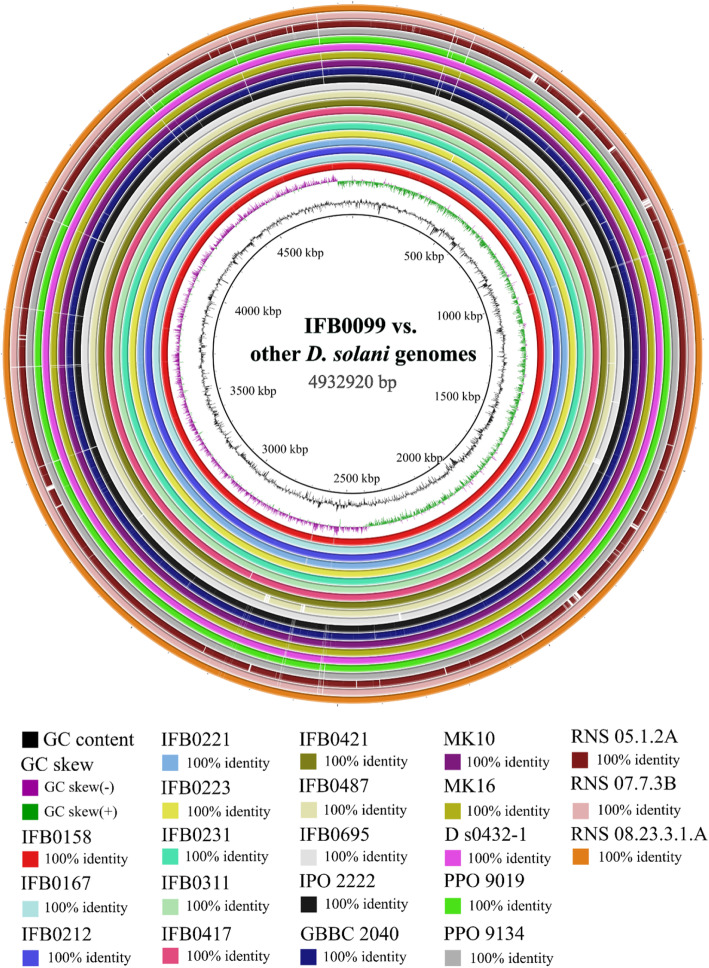
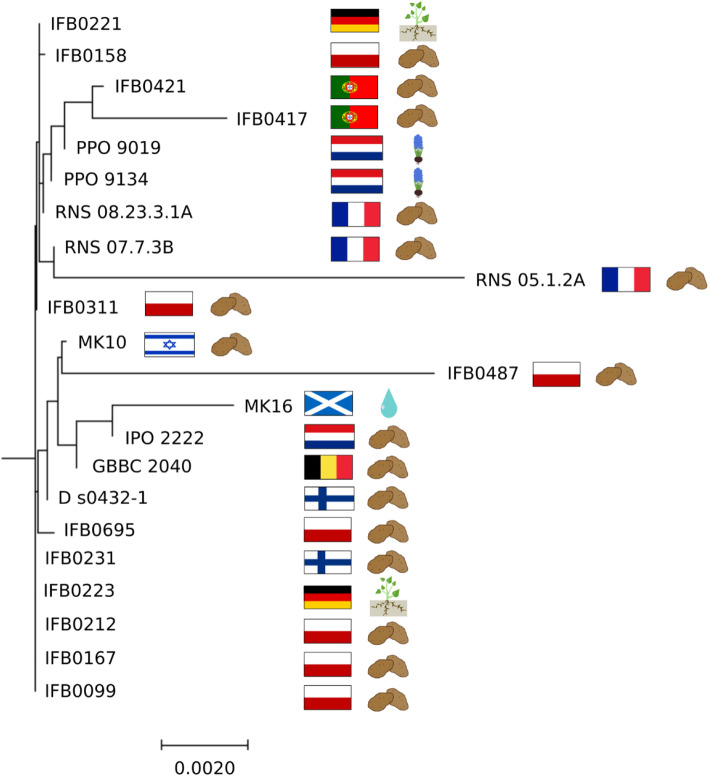
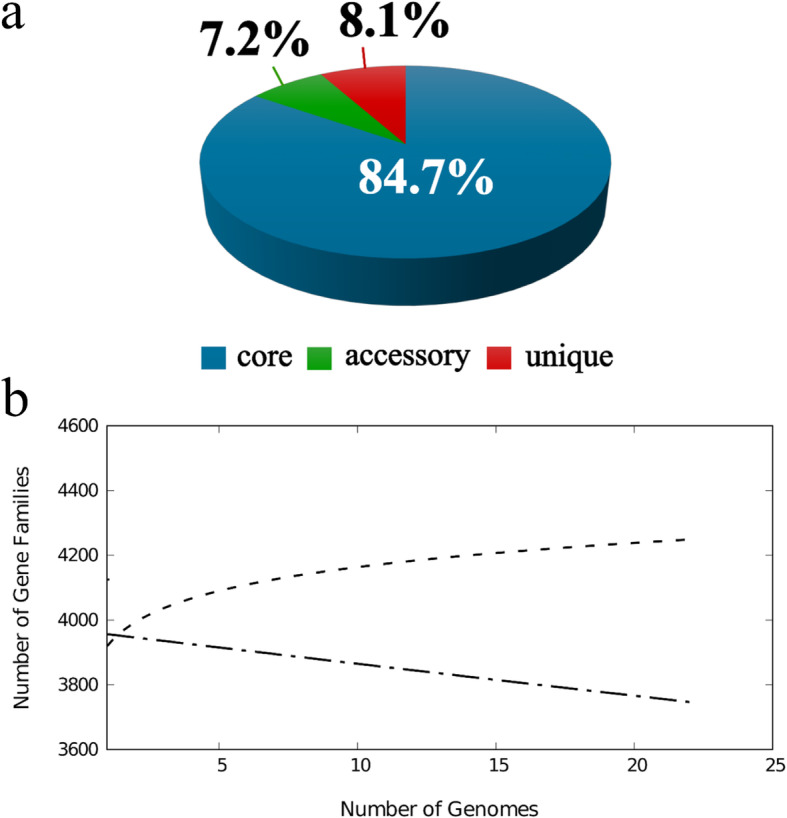
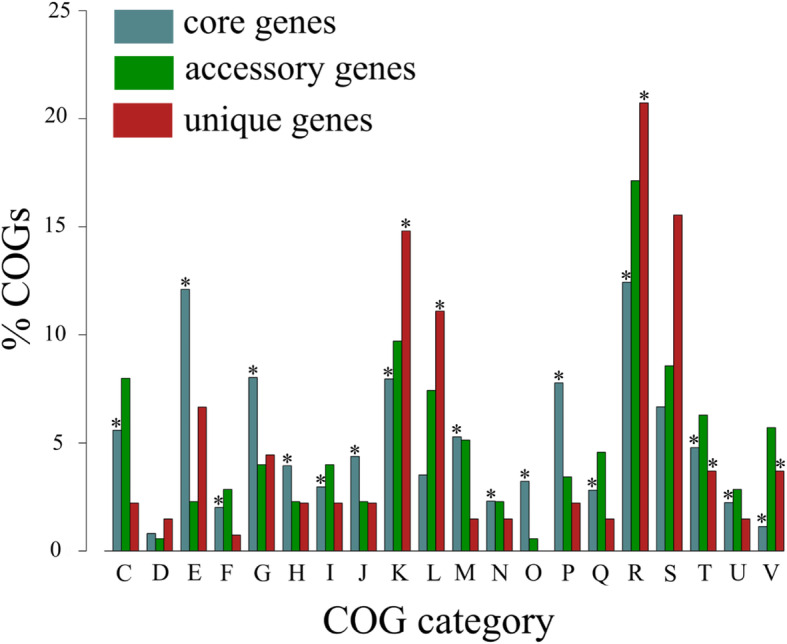
High quality assemblies of 8 de novo sequenced D. solani genomes have been obtained. Whole-sequence comparison, ANIb, ANIm, Tetra and pangenome-oriented analyses performed on these genomes and the sequences of 14 additional strains revealed an exceptionally high level of homogeneity among the studied genetic material of D. solani strains. With the use of 22 genomes, the pangenome of D. solani, comprising 84.7% core, 7.2% accessory and 8.1% unique genes, has been almost completely determined, suggesting the presence of a nearly closed pangenome structure. Attribution of the genes included in the D. solani pangenome fractions to functional COG categories showed that higher percentages of accessory and unique pangenome parts in contrast to the core section are encountered in phage/mobile elements- and transcription- associated groups with the genome of RNS 05.1.2A strain having the most significant impact. Also, the first D. solani large-scale genome-wide phylogeny computed on concatenated core gene alignments is herein reported.
The almost closed status of D. solani pangenome achieved in this work points to the fact that the unique gene pool of this species should no longer expand. Such a feature is characteristic of taxa whose representatives either occupy isolated ecological niches or lack efficient mechanisms for gene exchange and recombination, which seems rational concerning a strictly pathogenic species with clonal population structure. Finally, no obvious correlations between the geographical origin of D. solani strains and their phylogeny were found, which might reflect the specificity of the international seed potato market.
茎点霉属(Dickeya)是一种重要的植物病原菌,对欧洲马铃薯生产造成了严重损失。与其他茎点霉属(Dickeya)物种相比,该种具有显著的毒性、巨大的破坏性潜力和更容易传播的特点,因此引起了广泛关注。鉴于对经济上重要的软腐果胶杆菌科进行广泛研究的迫切需要,我们对 D. solani 菌株进行了比较基因组学分析,以寻找解释 D. solani 群体中观察到的毒力水平差异的遗传基础。
获得了 8 个从头测序的 D. solani 基因组的高质量组装。对这些基因组和另外 14 个菌株的序列进行全序列比较、ANIb、ANIc、Tetra 和泛基因组分析表明,研究的 D. solani 菌株遗传物质之间具有极高的同质性。使用 22 个基因组,几乎完全确定了 D. solani 的泛基因组,由 84.7%核心、7.2%辅助和 8.1%独特基因组成,表明存在几乎封闭的泛基因组结构。将包含在 D. solani 泛基因组部分的基因归因于功能 COG 类别表明,与核心部分相比,辅助和独特泛基因组部分的比例更高,在噬菌体/移动元件和转录相关组中遇到,而 RNS 05.1.2A 菌株的基因组则具有最显著的影响。此外,本文还报道了首次在 D. solani 全基因组水平上基于串联核心基因比对计算的大规模系统发育。
本工作中获得的 D. solani 泛基因组几乎封闭的状态表明,该物种的独特基因库不应再扩大。这种特征是那些代表占据孤立生态位或缺乏有效基因交换和重组机制的类群的特征,这对于具有克隆种群结构的严格致病性物种来说是合理的。最后,没有发现 D. solani 菌株的地理起源与其系统发育之间存在明显的相关性,这可能反映了国际种薯市场的特异性。