Department of Pharmaceutical Sciences, St, College of Pharmacy and Health Sciences, St. John's University College of Pharmacy and Health Sciences, St. Albert Hall, 8000 Utopia Parkway, Queens, New York, 11439, USA.
Feinstein Institutes for Medical Research, Northwell Health System, 350 Community Drive, Manhasset, New York, 11030, USA.
Mol Med. 2020 Jun 29;26(1):63. doi: 10.1186/s10020-020-00177-z.
Oxygen therapy, using supraphysiological concentrations of oxygen (hyperoxia), is routinely administered to patients who require respiratory support including mechanical ventilation (MV). However, prolonged exposure to hyperoxia results in acute lung injury (ALI) and accumulation of high mobility group box 1 (HMGB1) in the airways. We previously showed that airway HMGB1 mediates hyperoxia-induced lung injury in a mouse model of ALI. Cholinergic signaling through the α7 nicotinic acetylcholine receptor (α7nAChR) attenuates several inflammatory conditions. The aim of this study was to determine whether 3-(2,4 dimethoxy-benzylidene)-anabaseine dihydrochloride, GTS-21, an α7nAChR partial agonist, inhibits hyperoxia-induced HMGB1 accumulation in the airways and circulation, and consequently attenuates inflammatory lung injury.
Mice were exposed to hyperoxia (≥99% O) for 3 days and treated concurrently with GTS-21 (0.04, 0.4 and 4 mg/kg, i.p.) or the control vehicle, saline.
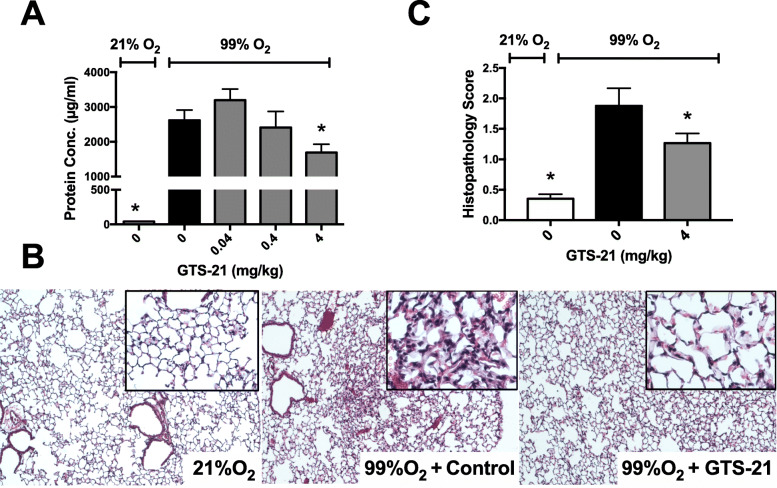
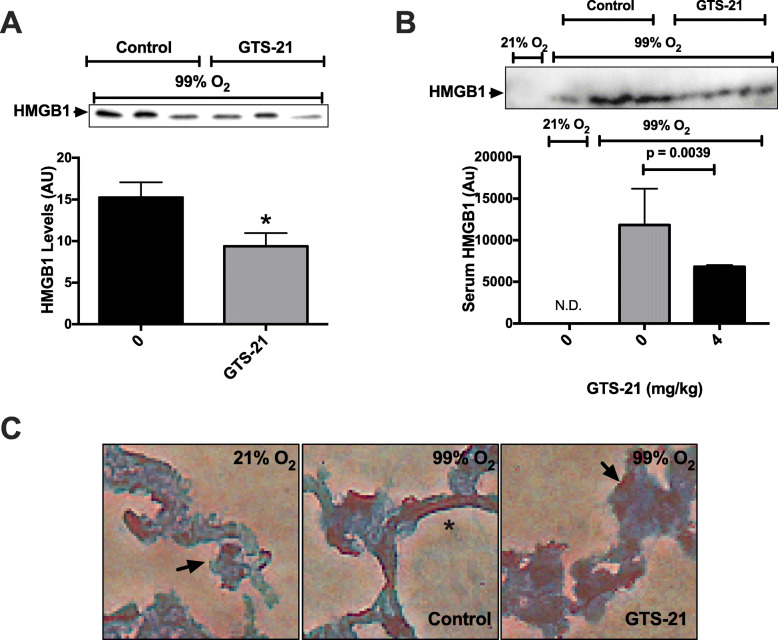
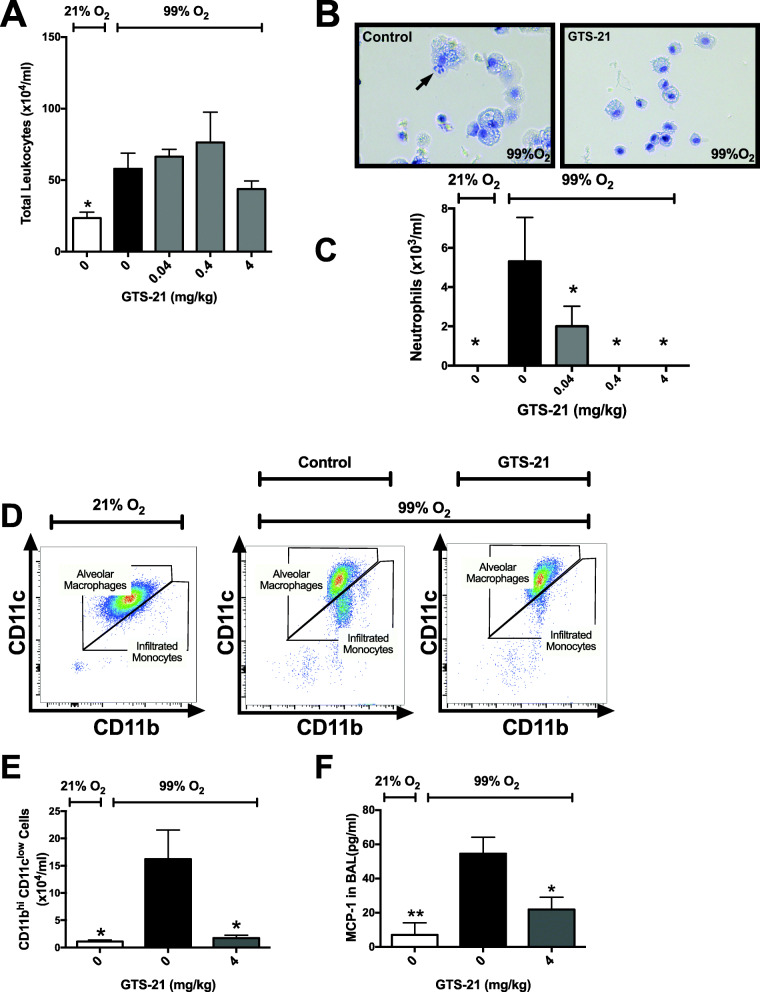
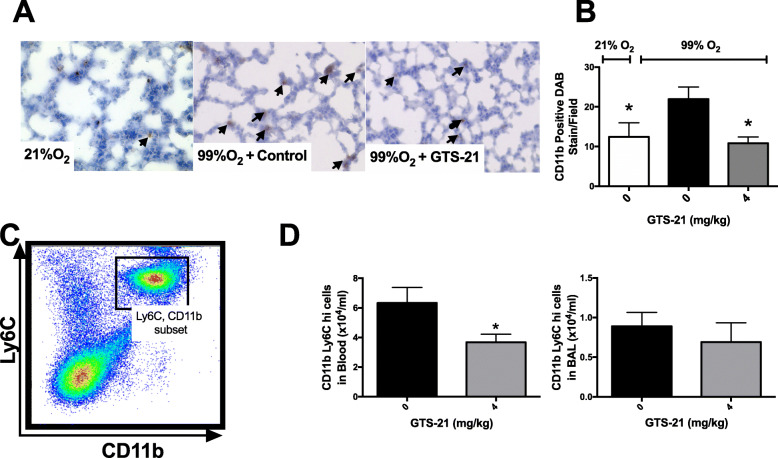
The systemic administration of GTS-21 (4 mg/kg) significantly decreased levels of HMGB1 in the airways and the serum. Moreover, GTS-21 (4 mg/kg) significantly reduced hyperoxia-induced acute inflammatory lung injury, as indicated by the decreased total protein content in the airways, reduced infiltration of inflammatory monocytes/macrophages and neutrophils into the lung tissue and airways, and improved lung injury histopathology.
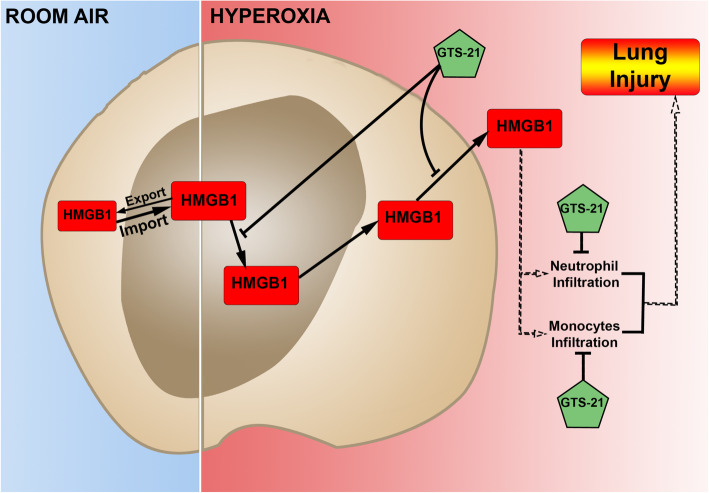
Our results indicate that GTS-21 can attenuate hyperoxia-induced ALI by inhibiting extracellular HMGB1-mediated inflammatory responses. This suggests that the α7nAChR represents a potential pharmacological target for the treatment regimen of oxidative inflammatory lung injury in patients receiving oxygen therapy.
氧气疗法,即使用高于生理浓度的氧气(高氧),常被用于需要呼吸支持的患者,包括机械通气(MV)。然而,长时间暴露于高氧环境会导致急性肺损伤(ALI),并导致气道中高迁移率族蛋白 1(HMGB1)的积累。我们之前的研究表明,气道中的 HMGB1 介导了高氧诱导的 ALI 小鼠模型中的肺损伤。通过α7 烟碱型乙酰胆碱受体(α7nAChR)的胆碱能信号转导可减轻多种炎症状态。本研究旨在确定 3-(2,4-二甲氧基苄叉基)-烟碱二盐酸盐,GTS-21,一种α7nAChR 部分激动剂,是否可以抑制高氧诱导的气道和循环中 HMGB1 的积累,并由此减轻炎症性肺损伤。
将小鼠暴露于高氧(≥99% O)中 3 天,并同时给予 GTS-21(0.04、0.4 和 4mg/kg,腹腔注射)或对照载体生理盐水。
GTS-21(4mg/kg)的全身给药显著降低了气道和血清中的 HMGB1 水平。此外,GTS-21(4mg/kg)还显著减轻了高氧诱导的急性炎症性肺损伤,表现为气道中总蛋白含量降低,炎症性单核细胞/巨噬细胞和中性粒细胞浸润肺组织和气道减少,以及肺损伤组织病理学得到改善。
我们的研究结果表明,GTS-21 通过抑制细胞外 HMGB1 介导的炎症反应,可减轻高氧诱导的 ALI。这表明α7nAChR 可能成为接受氧疗的患者氧化炎症性肺损伤治疗方案的潜在药理学靶点。