Laboratorio de Insectos Sociales, Departamento de Biodiversidad y Biología Experimental, Facultad de Ciencias Exactas y Naturales, Universidad de Buenos Aires, Buenos Aires, Argentina.
Instituto de Fisiología, Biología Molecular y Neurociencias (IFIBYNE), CONICET-Universidad de Buenos Aires, Buenos Aires, Argentina.
Sci Rep. 2020 Jun 29;10(1):10516. doi: 10.1038/s41598-020-67477-6.
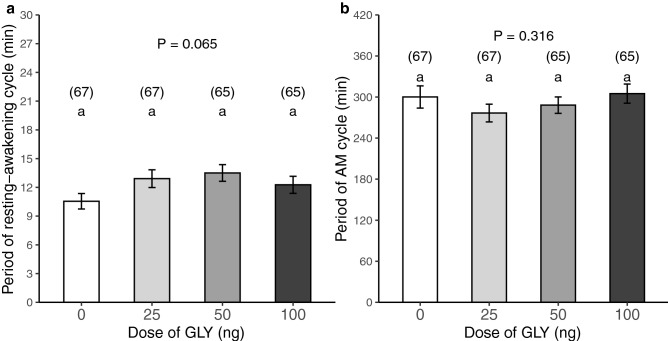
Sleep plays an essential role in both neural and energetic homeostasis of animals. Honey bees (Apis mellifera) manifest the sleep state as a reduction in muscle tone and antennal movements, which is susceptible to physical or chemical disturbances. This social insect is one of the most important pollinators in agricultural ecosystems, being exposed to a great variety of agrochemicals, which might affect its sleep behaviour. The intake of glyphosate (GLY), the herbicide most widely used worldwide, impairs learning, gustatory responsiveness and navigation in honey bees. In general, these cognitive abilities are linked with the amount and quality of sleep. Furthermore, it has been reported that animals exposed to sleep disturbances show impairments in both metabolism and memory consolidation. Consequently, we assessed the sleep pattern of bees fed with a sugar solution containing GLY (0, 25, 50 and 100 ng) by quantifying their antennal activity during the scotophase. We found that the ingestion of 50 ng of GLY decreased both antennal activity and sleep bout frequency. This sleep deepening after GLY intake could be explained as a consequence of the regenerative function of sleep and the metabolic stress induced by the herbicide.
睡眠在动物的神经和能量稳态中起着至关重要的作用。蜜蜂(Apis mellifera)表现出的睡眠状态是肌肉张力和触角运动的减少,这很容易受到物理或化学干扰。这种社会性昆虫是农业生态系统中最重要的传粉媒介之一,会接触到各种农用化学品,这些化学品可能会影响它们的睡眠行为。草甘膦(GLY)是世界上使用最广泛的除草剂,其摄入会损害蜜蜂的学习、味觉反应和导航能力。一般来说,这些认知能力与睡眠的数量和质量有关。此外,有报道称,暴露在睡眠干扰下的动物在新陈代谢和记忆巩固方面都存在损伤。因此,我们通过量化蜜蜂在暗期的触角活动,评估了摄入含有草甘膦(0、25、50 和 100ng)的糖水的蜜蜂的睡眠模式。我们发现,摄入 50ng 的草甘膦会降低触角活动和睡眠爆发的频率。摄入草甘膦后睡眠加深可能是睡眠的再生功能和除草剂引起的代谢应激的结果。