Department of Hydrology, Meteorology and Water Management, Institute of Environmental Engineering, Warsaw University of Life Sciences WULS-SGGW, Warsaw, Poland.
Int J Biometeorol. 2021 Sep;65(9):1485-1495. doi: 10.1007/s00484-020-01957-2. Epub 2020 Jun 30.
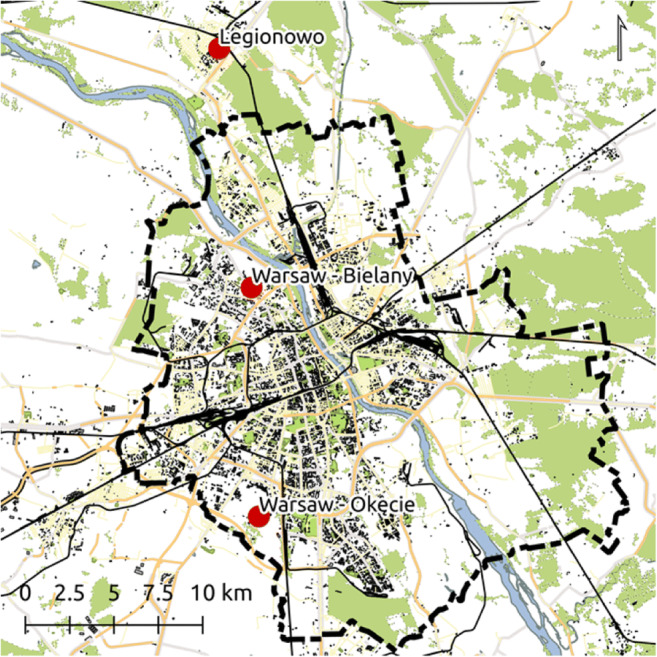
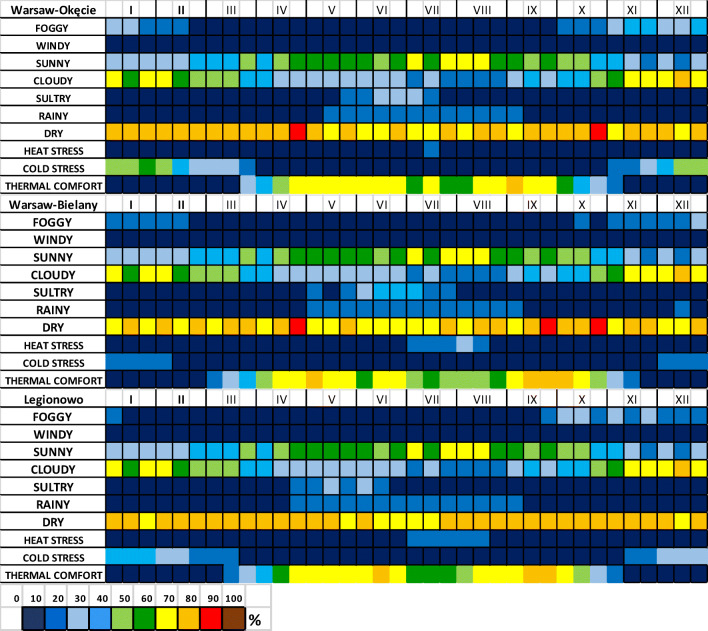
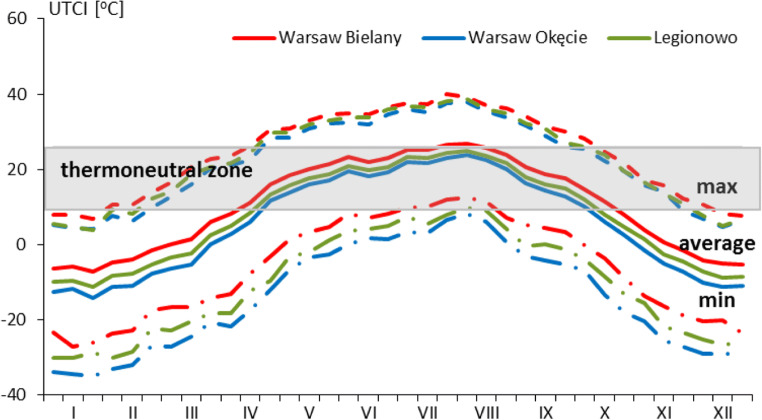
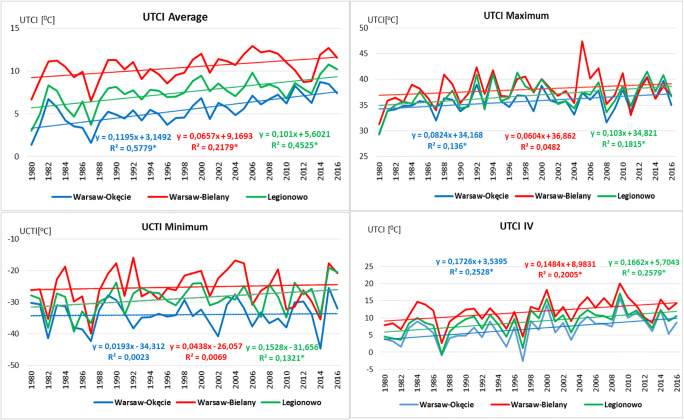
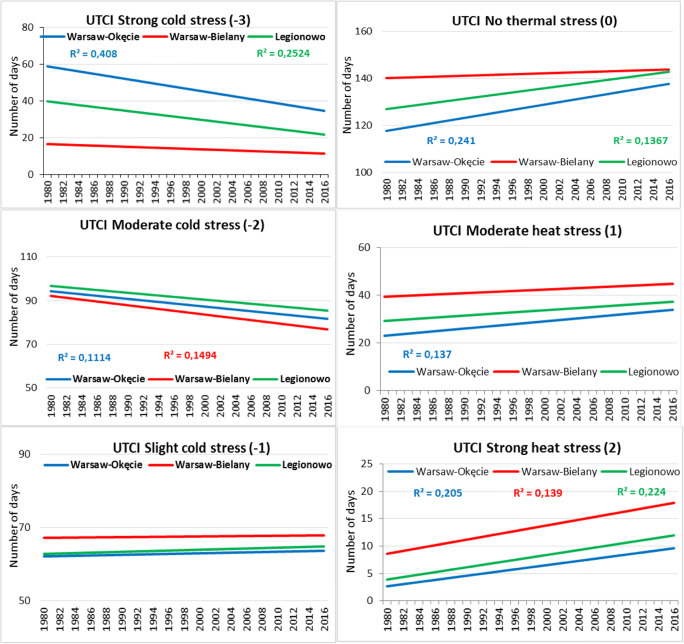
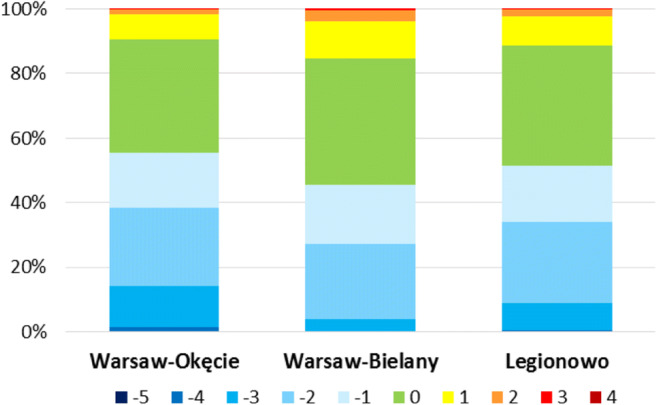
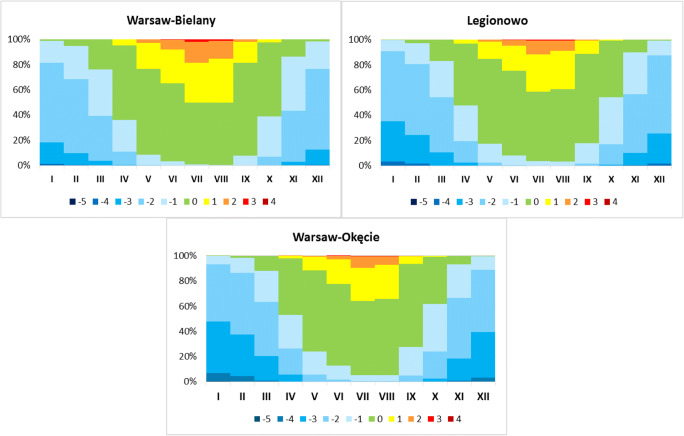
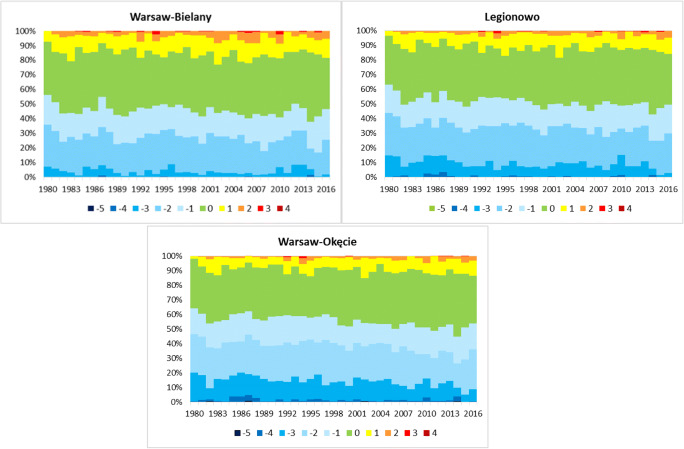
The research area includes one of the largest in terms of population and also the most attractive tourist area in Poland-Warsaw agglomeration. The aim of the study is to assess the temporal and spatial difference of the heat stress on the human body in this area based on long-term data (1980-2016). On the basis of the Universal Thermal Climate Index (UTCI) and designated Climate-Tourism-Information-Scheme (CTIS) diagrams, a comprehensive and detailed bioclimate assessment was made for three different areas. The highest values of the UTCI as well as the frequency of thermal sensations related to heat stress occurred at the Bielany station representing the city area, and the lowest at stations representing suburban area-Legionowo and outskirts-Okęcie. A negative linear trend of the number of days was observed for thermal stress related to cold stress and the category of 'no thermal stress' while a positive linear trend was obtained for thermal stress related to heat stress. Based on the obtained results, it can be concluded that in summer months (in June over 60%) the conditions are favourable for the residents causing the lack or slight intensification of the body's adaptation processes and they are beneficial for practicing various forms of recreation and tourism. However, on the other hand, the rise in the number of days with the 'strong and very strong heat stress' especially at the station representing the city area is a disturbing factor and negatively affecting both the health and well-being of agglomeration residents in the future.
研究区域包括波兰华沙都会区,这是人口最多的地区之一,也是最具吸引力的旅游区之一。本研究的目的是根据长期数据(1980-2016 年)评估该地区人体热应激的时空差异。基于通用热气候指数(UTCI)和指定的气候-旅游-信息方案(CTIS)图,对三个不同区域进行了全面详细的生物气候评估。UTCI 值最高以及与热应激相关的热感觉频率出现在代表城市区域的 Bielany 站,而代表郊区的 Legionowo 和郊外的 Okęcie 站的值最低。与冷应激和“无热应激”相关的热应激天数呈负线性趋势,而与热应激相关的热应激天数呈正线性趋势。根据得出的结果,可以得出结论,在夏季(6 月超过 60%),居民的条件有利于居民,导致身体适应过程的缺乏或轻微加强,这有利于进行各种形式的娱乐和旅游。然而,另一方面,“强烈和非常强烈的热应激”天数的增加,特别是在代表城市区域的站,是一个令人不安的因素,对未来城市群居民的健康和福祉产生负面影响。