Hopp Children's Cancer Center (KiTZ), Heidelberg, Germany.
Division of Pediatric Neurooncology, German Cancer Research Center (DKFZ), German Cancer Consortium (DKTK), Heidelberg, Germany.
Acta Neuropathol. 2020 Sep;140(3):249-266. doi: 10.1007/s00401-020-02182-2. Epub 2020 Jun 29.
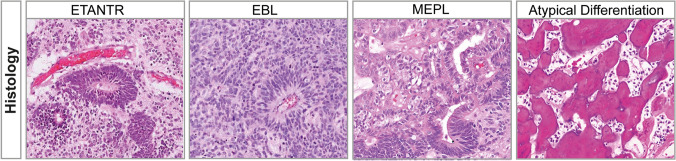
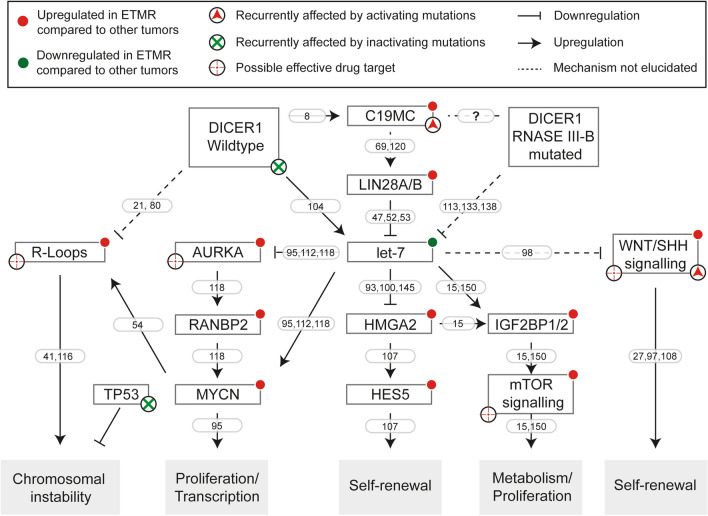
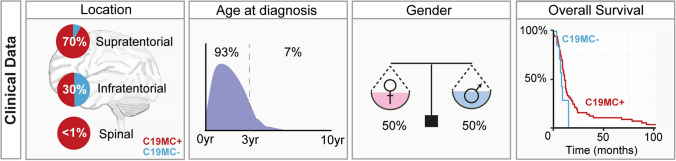
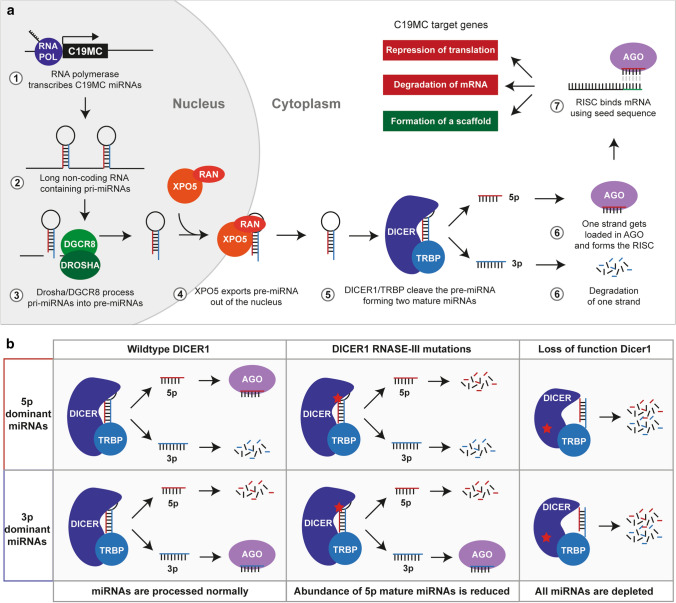
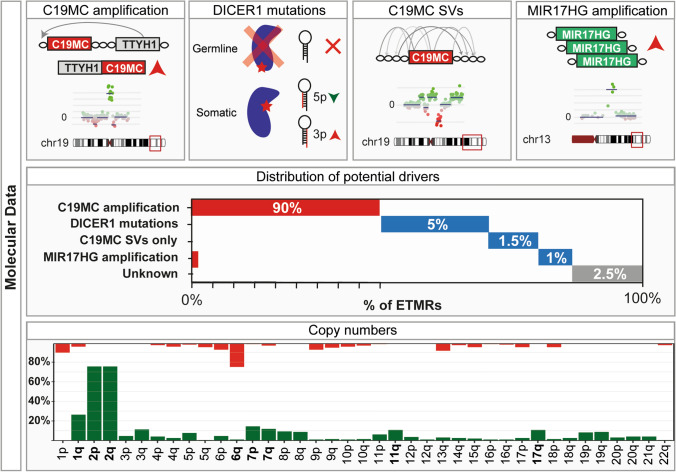
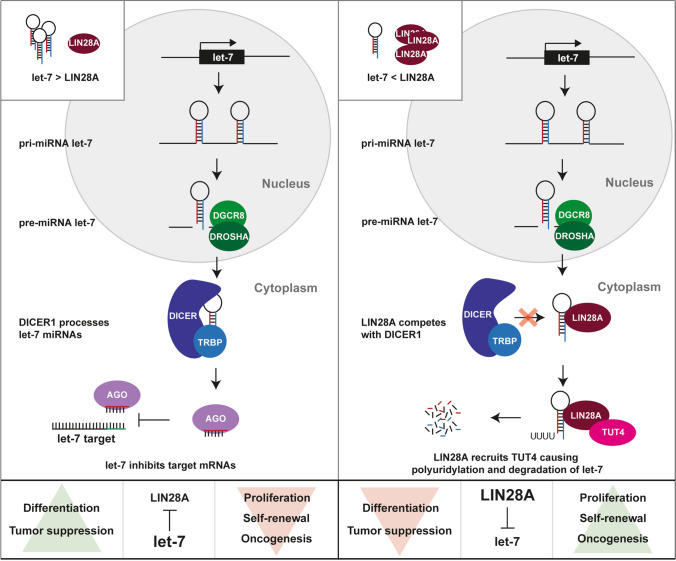
Embryonal tumor with Multilayered Rosettes (ETMR) is a relatively rare but typically deadly type of brain tumor that occurs mostly in infants. Since the discovery of the characteristic chromosome 19 miRNA cluster (C19MC) amplification a decade ago, the methods for diagnosing this entity have improved and many new insights in the molecular landscape of ETMRs have been acquired. All ETMRs, despite their highly heterogeneous histology, are characterized by specific high expression of the RNA-binding protein LIN28A, which is, therefore, often used as a diagnostic marker for these tumors. ETMRs have few recurrent genetic aberrations, mainly affecting the miRNA pathway and including amplification of C19MC (embryonal tumor with multilayered rosettes, C19MC-altered) and mutually exclusive biallelic DICER1 mutations of which the first hit is typically inherited through the germline (embryonal tumor with multilayered rosettes, DICER1-altered). Identification of downstream pathways affected by the deregulated miRNA machinery has led to several proposed potential therapeutical vulnerabilities including targeting the WNT, SHH, or mTOR pathways, MYCN or chromosomal instability. However, despite those findings, treatment outcomes have only marginally improved, since the initial description of this tumor entity. Many patients do not survive longer than a year after diagnosis and the 5-year overall survival rate is still lower than 30%. Thus, there is an urgent need to translate the new insights in ETMR biology into more effective treatments. Here, we present an overview of clinical and molecular characteristics of ETMRs and the current progress on potential targeted therapies.
胚胎性肿瘤伴多层菊形团(ETMR)是一种相对罕见但通常致命的脑肿瘤,主要发生在婴儿中。自十年前发现特征性染色体 19 miRNA 簇(C19MC)扩增以来,诊断这种疾病的方法得到了改进,并且在 ETMR 的分子景观方面获得了许多新的见解。尽管所有 ETMR 的组织学高度异质,但都具有特定的 RNA 结合蛋白 LIN28A 的高表达特征,因此 LIN28A 常被用作这些肿瘤的诊断标志物。ETMR 存在少数反复出现的遗传异常,主要影响 miRNA 通路,包括 C19MC 扩增(胚胎性肿瘤伴多层菊形团,C19MC 改变)和相互排斥的双等位 DICER1 突变,其中第一个突变通常通过种系遗传(胚胎性肿瘤伴多层菊形团,DICER1 改变)。鉴定受失调 miRNA 机制影响的下游通路导致了几种潜在的治疗靶点,包括靶向 WNT、SHH 或 mTOR 通路、MYCN 或染色体不稳定性。然而,尽管有这些发现,自该肿瘤实体的最初描述以来,治疗结果仅略有改善。许多患者在诊断后存活时间不超过一年,5 年总生存率仍低于 30%。因此,迫切需要将 ETMR 生物学的新见解转化为更有效的治疗方法。在这里,我们介绍了 ETMR 的临床和分子特征以及潜在靶向治疗的最新进展。