Civil, Chemical, Environmental and Materials Engineering Department, University of Bologna, Via Terracini 28, 40131 Bologna, Italy.
Civil and Environmental Engineering Department, University of Perugia, Strada di Pentima 4, 05100 Terni, Italy.
Biomacromolecules. 2020 Aug 10;21(8):3254-3269. doi: 10.1021/acs.biomac.0c00701. Epub 2020 Jul 10.
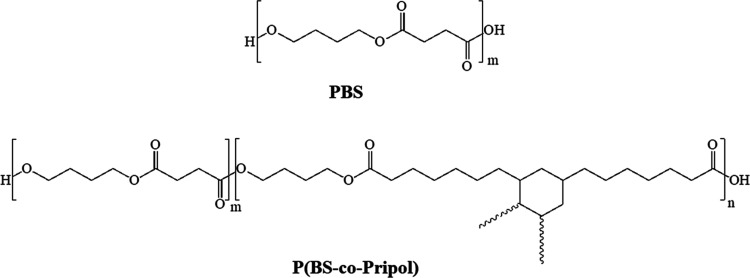
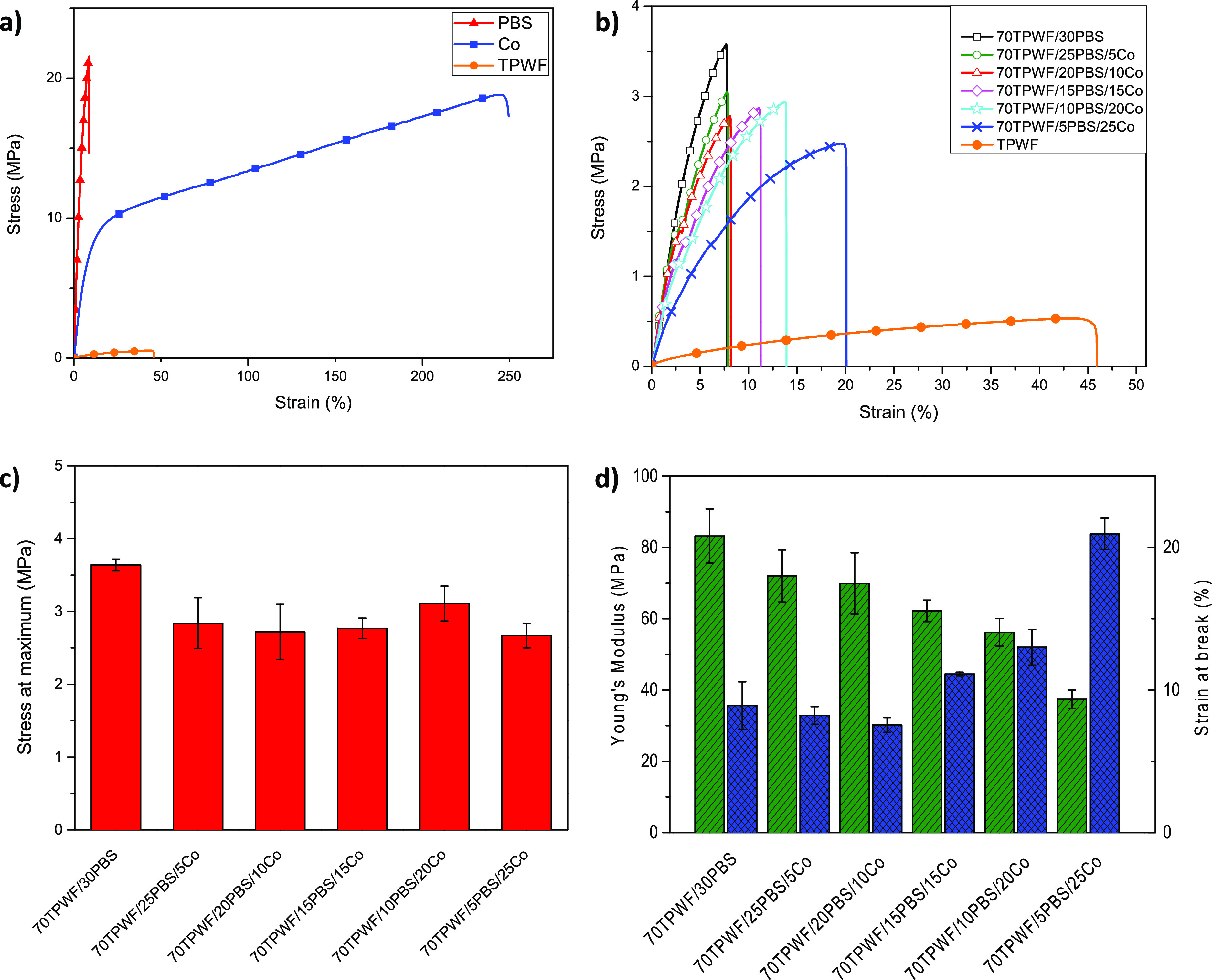
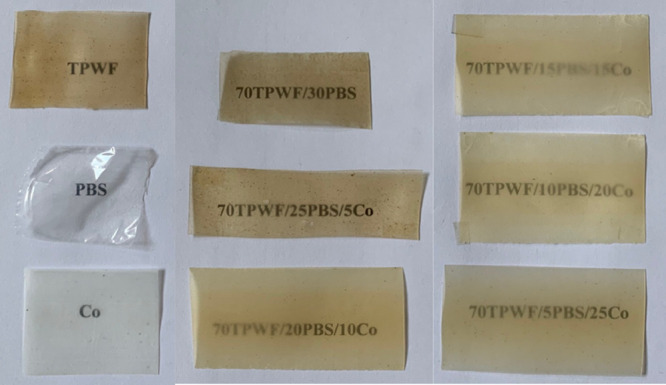
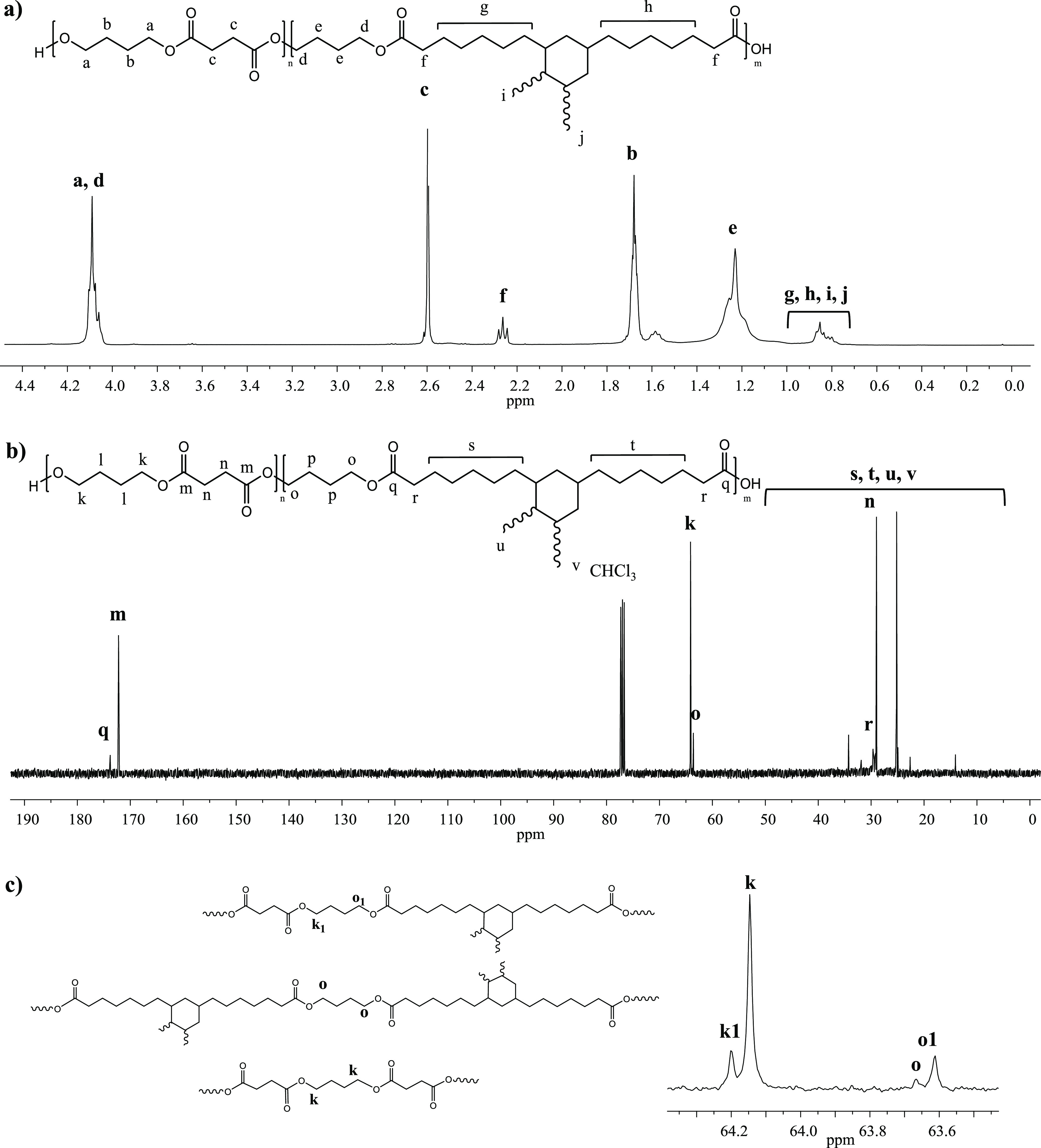
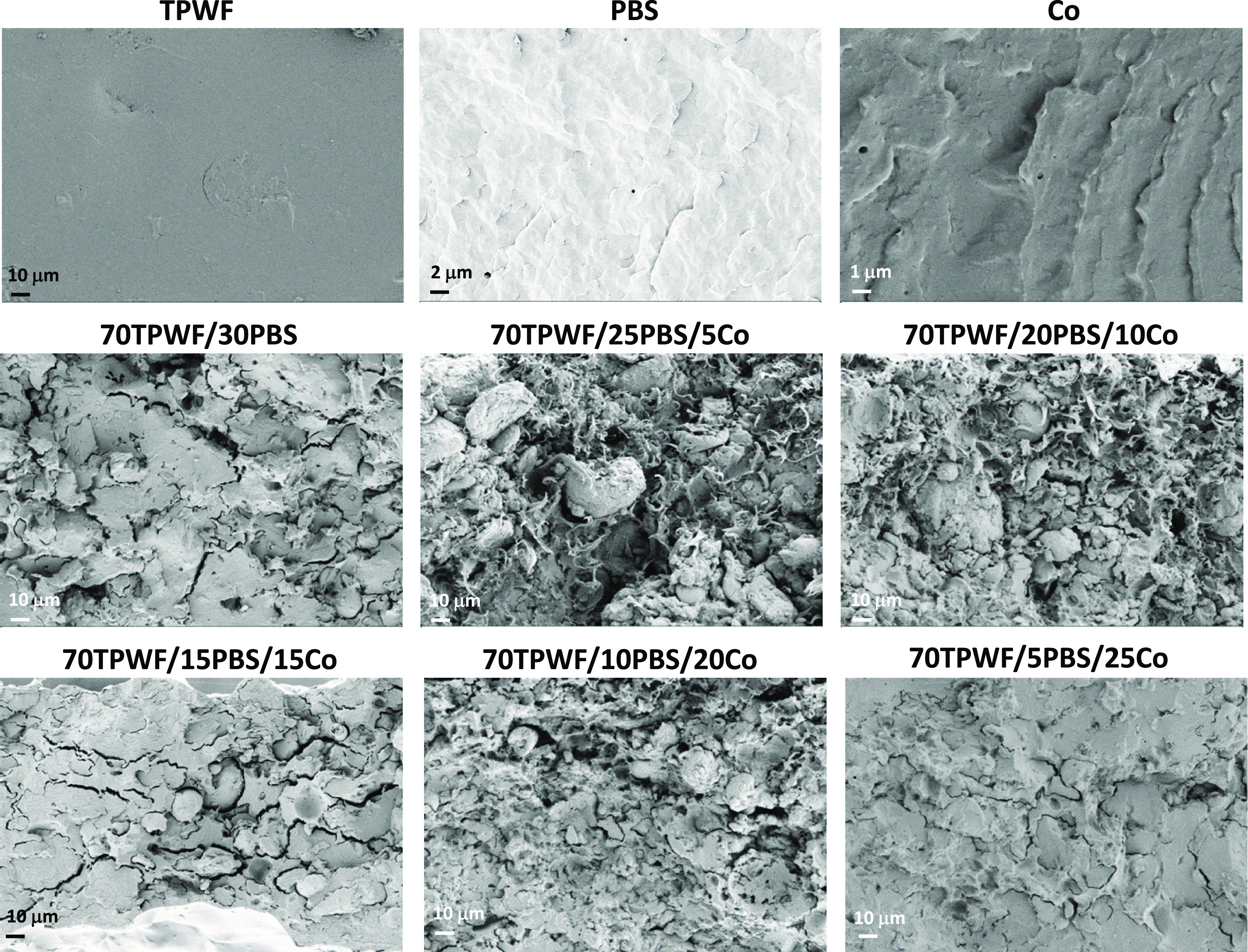
Considering the current context of research aiming at proposing new bioplastics with low costs and properties similar to fossil-based commodities currently on the market, in the present work, a hybrid blend containing a prevalent amount of cheap inedible cereal flour (70 wt %) and poly(butylene succinate) (PBS) (30 wt %) has been prepared by a simple, eco-friendly, and low-cost processing methodology. In order to improve the interfacial tension and enhance the adhesion between the different phases at the solid state, with consequent improvement in microstructure uniformity and in material mechanical and adhesive performance, the PBS fraction in the blend was replaced with variable amounts (0-25 wt %) of PBS-based green copolymer, which exerted the function of a compatibilizer. The copolymer is characterized by an ad hoc chemical structure, containing six-carbon aliphatic rings, also present in the flour starch structure. The two synthetic polyesters obtained through two-stage melt polycondensation have been deeply characterized from the molecular, thermal, and mechanical points of view. Copolymerization deeply impacts the polymer final properties, the crystallizing ability, and stiffness of the PBS homopolymer being reduced. Also, the prepared ternary blends were deeply investigated in terms of microstructure, thermal, and mechanical properties. Lastly, both pure blend components and ternary blends were subjected to disintegration experiments under composting conditions. The results obtained proved how effective was the compatibilizer action of the copolymer, as evidenced by the investigation conducted on morphology and mechanical properties. Specifically, the mixtures with 15 and 20 wt % Co appeared to be characterized by the best mechanical performance, showing a progressive increase of deformation while preserving good values of elastic modulus and stress. The disintegration rate in compost was found to be higher for the lower amount of copolymer in the ternary blend. However, after 90 days of incubation, the blend richest in copolymer content lost 62% of weight.
考虑到目前的研究背景是提出具有低成本和类似于市场上现有化石基商品性能的新型生物塑料,在本工作中,通过简单、环保且低成本的加工方法制备了一种含有大量廉价不可食用谷物面粉(70wt%)和聚丁二酸丁二醇酯(PBS)(30wt%)的混合共混物。为了提高界面张力,增强不同相在固态下的附着力,从而改善微观结构均匀性和材料的机械和粘合性能,将共混物中的 PBS 部分用不同量(0-25wt%)的 PBS 基绿色共聚物替代,该共聚物起到增容剂的作用。该共聚物具有特殊的化学结构,含有六碳脂肪环,也存在于面粉淀粉结构中。通过两步熔融缩聚获得的两种合成聚酯从分子、热和机械角度进行了深入的表征。共聚作用深刻影响聚合物的最终性能,降低了 PBS 均聚物的结晶能力和刚性。此外,还对制备的三元共混物的微观结构、热性能和机械性能进行了深入研究。最后,对纯共混物组分和三元共混物进行了在堆肥条件下的崩解实验。结果表明,共聚物的增容作用非常有效,这从形态和力学性能的研究中得到了证明。具体来说,含有 15wt%和 20wt%Co 的混合物表现出最佳的力学性能,在保持良好弹性模量和应力值的同时,表现出逐渐增加的变形。在堆肥中的崩解率随着三元共混物中共聚体含量的降低而升高。然而,在 90 天的孵育后,共聚物含量最高的混合物损失了 62%的重量。