Dipartimento di Ingegneria, Università degli Studi di Palermo, 90128 Viale delle Scienze, Palermo, Italy.
Dipartimento di Ingegneria, Università degli Studi di Palermo, 90128 Viale delle Scienze, Palermo, Italy; Istituto di Calcolo e Reti ad Alte Prestazioni (ICAR), Consiglio Nazionale delle Ricerche, 90146, Via Ugo La Malfa, 153 Palermo, Italy.
J Biomed Inform. 2020 Aug;108:103483. doi: 10.1016/j.jbi.2020.103483. Epub 2020 Jun 27.
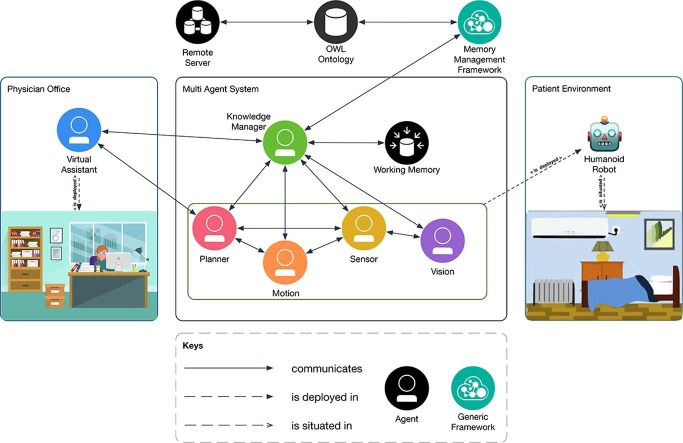
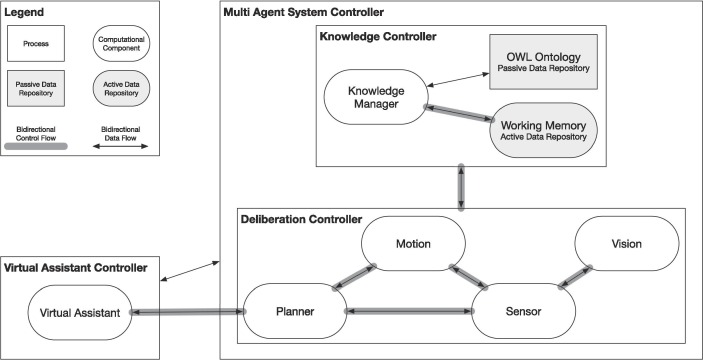
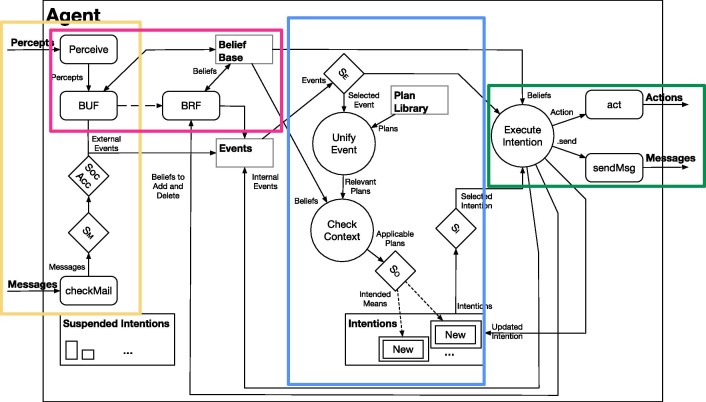
Monitoring patients through robotics telehealth systems is an interesting scenario where patients' conditions, and their environment, are dynamic and unknown variables. We propose to improve telehealth systems' features to include the ability to serve patients with their needs, operating as human caregivers. The objective is to support the independent living of patients at home without losing the opportunity to monitor their health status. Application scenarios are several, and they spread from simple clinical assisting scenarios to an emergency one. For instance, in the case of a nursing home, the system would support in continuously monitoring the elderly patients. In contrast, in the case of an epidemic diffusion, such as COVID-19 pandemic, the system may help in all the early triage phases, significantly reducing the risk of contagion. However, the system has to let medical assistants perform actions remotely such as changing therapies or interacting with patients that need support. The paper proposes and describes a multi-agent architecture for intelligent medical care. We propose to use the beliefs-desires-intentions agent architecture, part of it is devised to be deployed in a robot. The result is an intelligent system that may allow robots the ability to select the most useful plan for unhandled situations and to communicate the choice to the physician for his validation and permission.
通过机器人远程医疗系统对患者进行监测是一种有趣的情况,因为患者的病情及其所处环境是动态的、未知的变量。我们建议改进远程医疗系统的功能,使其具备满足患者需求的能力,以充当人类护理人员。其目标是支持患者在家中独立生活,同时不失对其健康状况的监测机会。应用场景有很多,从简单的临床辅助场景到紧急场景都有涉及。例如,在养老院的情况下,该系统将支持对老年患者进行持续监测。相比之下,在传染病(如 COVID-19 大流行)扩散的情况下,该系统可以帮助进行所有早期分诊阶段的工作,显著降低感染风险。但是,系统必须让医疗助理能够远程执行操作,例如更改治疗方案或与需要支持的患者进行交互。本文提出并描述了一种用于智能医疗的多代理架构。我们建议使用信念-欲望-意图代理架构,其中一部分被设计用于部署在机器人上。其结果是一个智能系统,该系统可能使机器人能够选择针对未处理情况的最有用的计划,并将选择传达给医生,以获得其验证和许可。