Seifert Michael, Schackert Gabriele, Temme Achim, Schröck Evelin, Deutsch Andreas, Klink Barbara
Institute for Medical Informatics and Biometry (IMB), Carl Gustav Carus Faculty of Medicine, Technische Universität Dresden, D-01307 Dresden, Germany.
National Center for Tumor Diseases (NCT), Partner Site Dresden, D-01307 Dresden, Germany.
Cancers (Basel). 2020 Jun 26;12(6):1696. doi: 10.3390/cancers12061696.
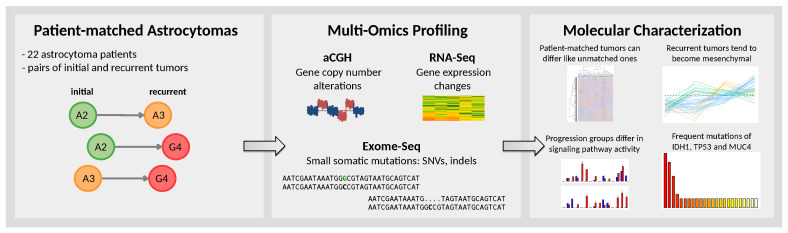
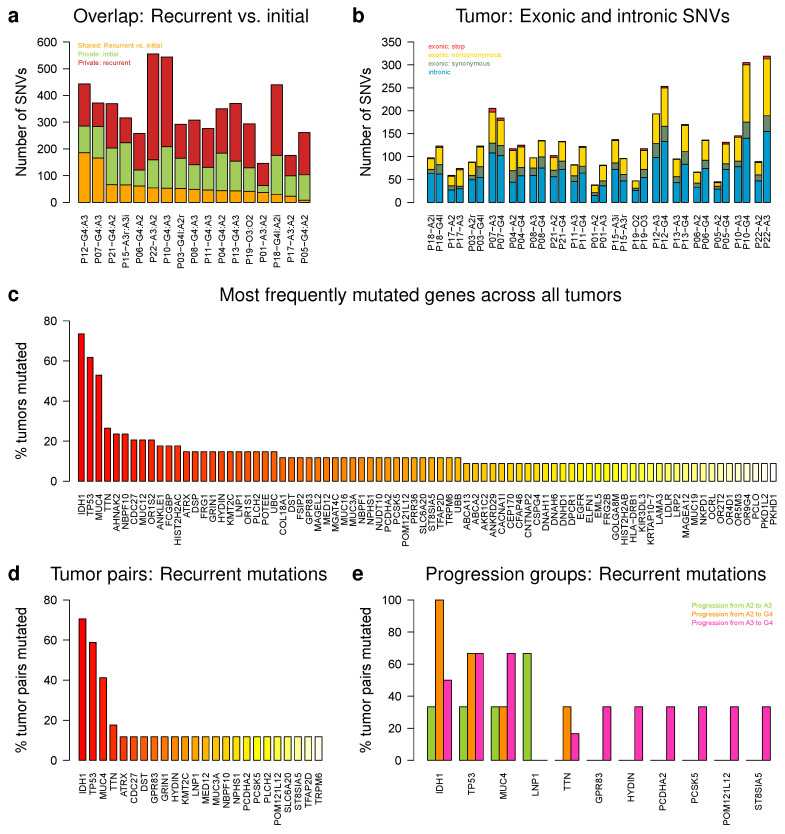
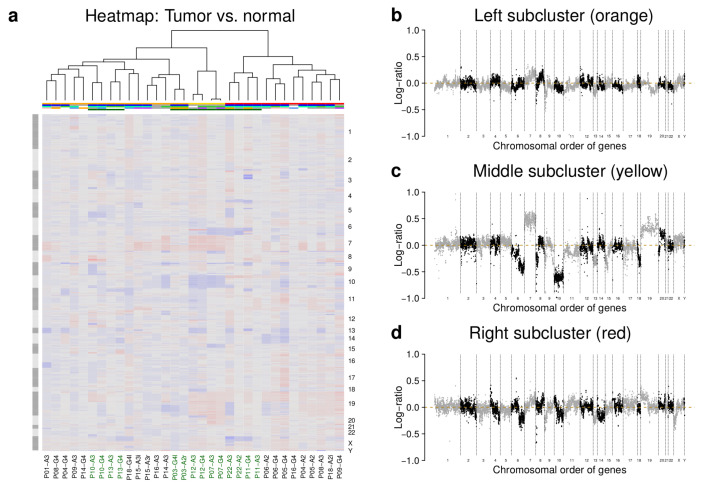
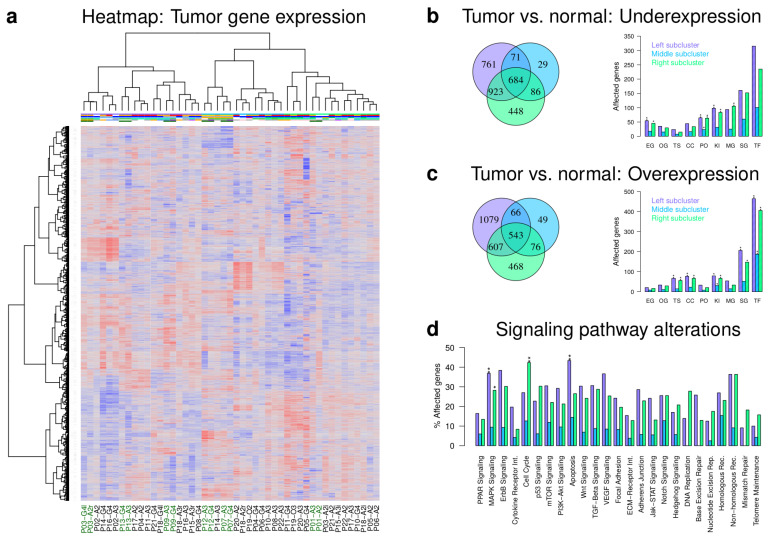
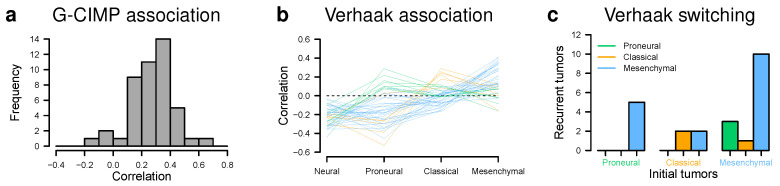
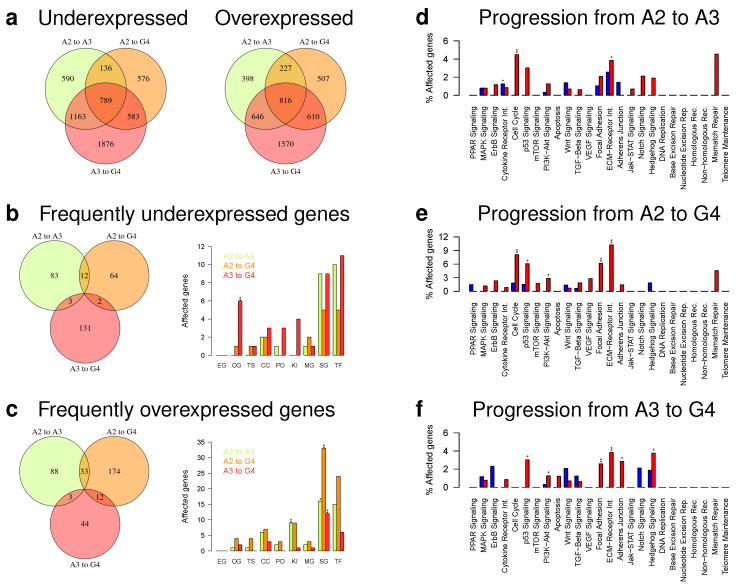
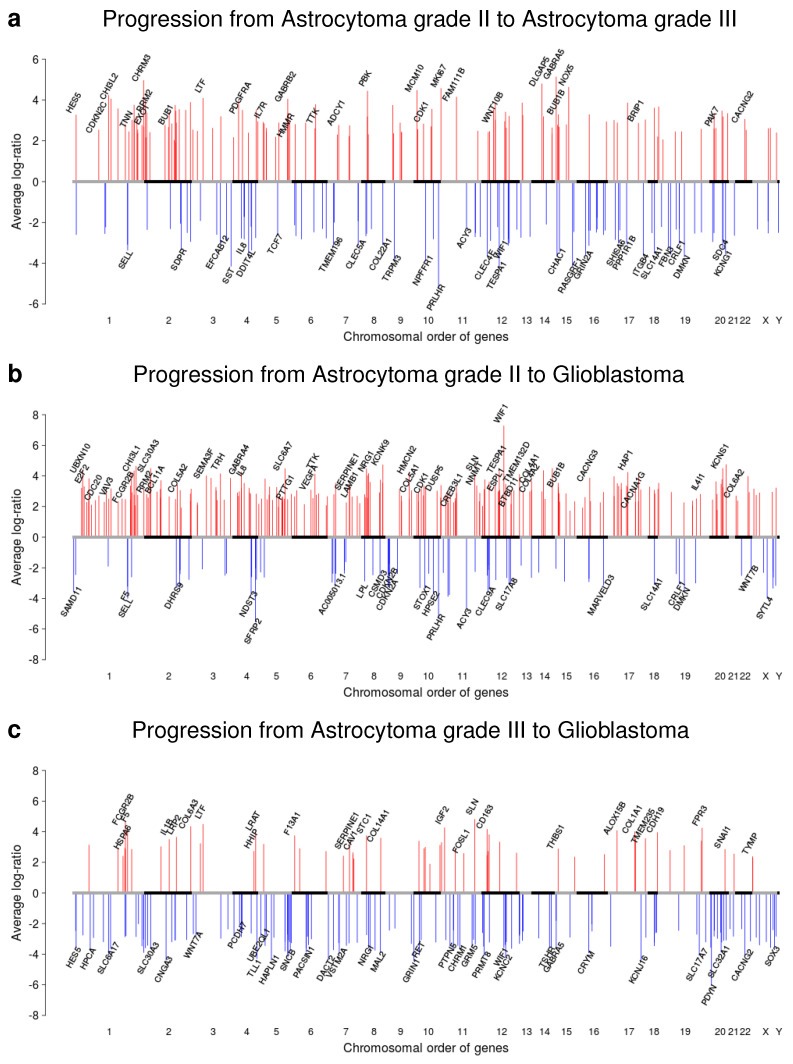
Astrocytomas are primary human brain tumors including diffuse or anaplastic astrocytomas that develop towards secondary glioblastomas over time. However, only little is known about molecular alterations that drive this progression. We measured multi-omics profiles of patient-matched astrocytoma pairs of initial and recurrent tumors from 22 patients to identify molecular alterations associated with tumor progression. Gene copy number profiles formed three major subcluters, but more than half of the patient-matched astrocytoma pairs differed in their gene copy number profiles like astrocytomas from different patients. Chromosome 10 deletions were not observed for diffuse astrocytomas, but occurred in corresponding recurrent tumors. Gene expression profiles formed three other major subclusters and patient-matched expression profiles were much more heterogeneous than their copy number profiles. Still, recurrent tumors showed a strong tendency to switch to the mesenchymal subtype. The direct progression of diffuse astrocytomas to secondary glioblastomas showed the largest number of transcriptional changes. Astrocytoma progression groups were further distinguished by signaling pathway expression signatures affecting cell division, interaction and differentiation. As expected, IDH1 was most frequently mutated closely followed by TP53, but also MUC4 involved in the regulation of apoptosis and proliferation was frequently mutated. Astrocytoma progression groups differed in their mutation frequencies of these three genes. Overall, patient-matched astrocytomas can differ substantially within and between patients, but still molecular signatures associated with the progression to secondary glioblastomas exist and should be analyzed for their potential clinical relevance in future studies.
星形细胞瘤是原发性人脑肿瘤,包括弥漫性或间变性星形细胞瘤,随着时间的推移会发展为继发性胶质母细胞瘤。然而,对于驱动这种进展的分子改变知之甚少。我们测量了22例患者初始肿瘤和复发肿瘤的配对星形细胞瘤的多组学图谱,以确定与肿瘤进展相关的分子改变。基因拷贝数图谱形成了三个主要亚群,但超过一半的患者配对星形细胞瘤在基因拷贝数图谱上存在差异,就像来自不同患者的星形细胞瘤一样。弥漫性星形细胞瘤未观察到10号染色体缺失,但在相应的复发肿瘤中出现。基因表达图谱形成了另外三个主要亚群,患者配对的表达图谱比其拷贝数图谱更加异质。尽管如此,复发肿瘤仍表现出强烈的向间充质亚型转变的趋势。弥漫性星形细胞瘤向继发性胶质母细胞瘤的直接进展显示出最大数量的转录变化。星形细胞瘤进展组通过影响细胞分裂、相互作用和分化的信号通路表达特征进一步区分。正如预期的那样,IDH1最常发生突变,其次是TP53,但参与凋亡和增殖调节的MUC4也经常发生突变。星形细胞瘤进展组在这三个基因的突变频率上存在差异。总体而言,患者配对的星形细胞瘤在患者内部和患者之间可能存在很大差异,但仍然存在与向继发性胶质母细胞瘤进展相关的分子特征,应在未来研究中分析其潜在的临床相关性。