Arango-Lasprilla Juan Carlos, Zeldovich Marina, Olabarrieta-Landa Laiene, Forslund Marit Vindal, Núñez-Fernández Silvia, von Steinbuechel Nicole, Howe Emilie Isager, Røe Cecilie, Andelic Nada
Biocruces Bizkaia Health Research Institute, 48903 Barakaldo, Spain.
IKERBASQUE Basque Foundation for Science, 48013 Bilbao, Spain.
J Clin Med. 2020 Jun 26;9(6):2007. doi: 10.3390/jcm9062007.
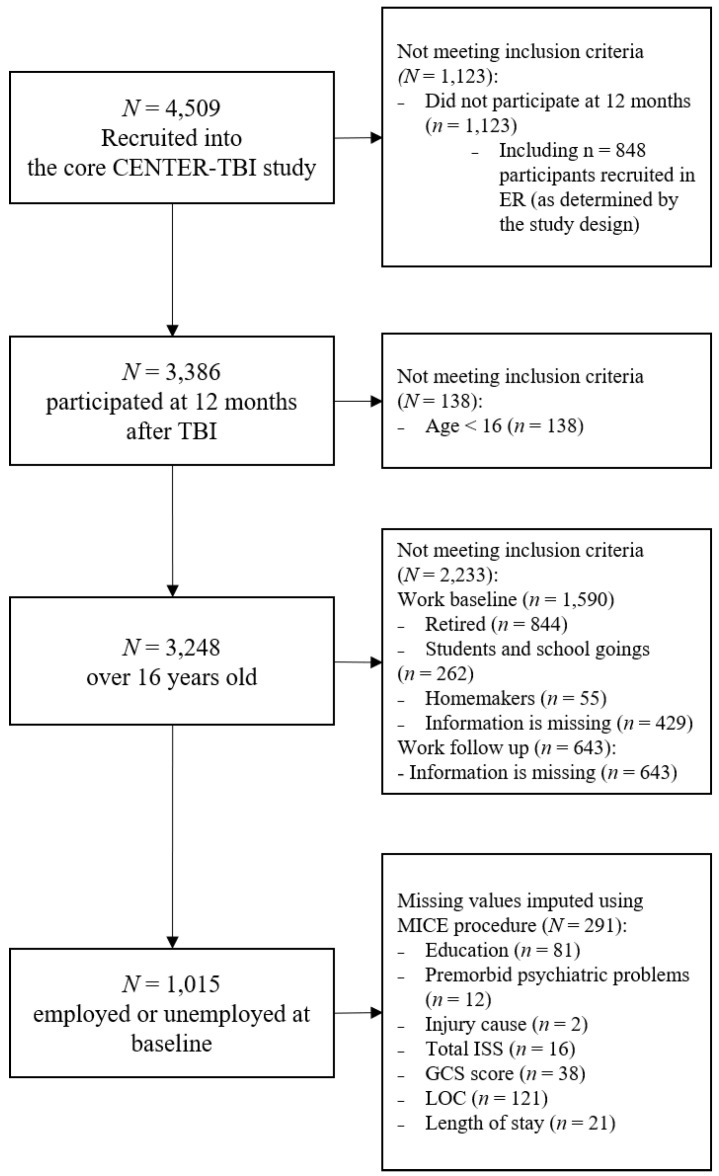
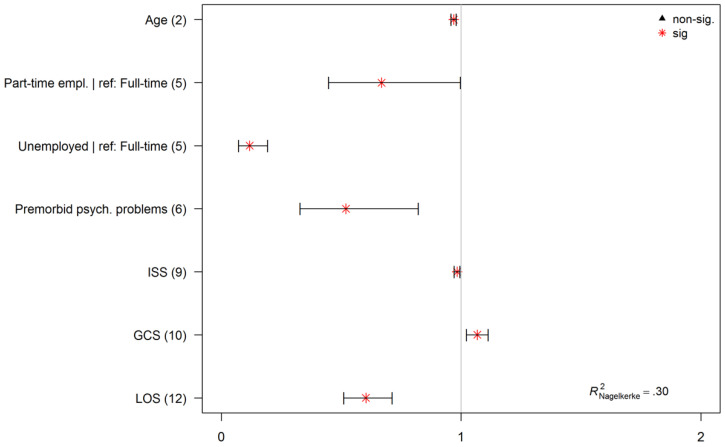
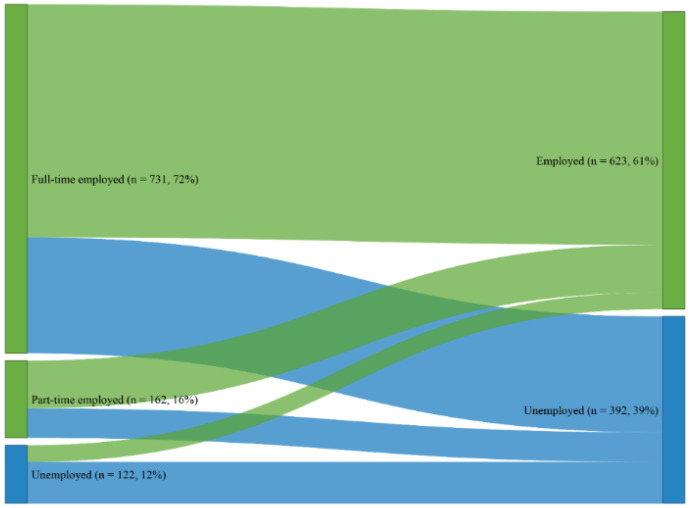
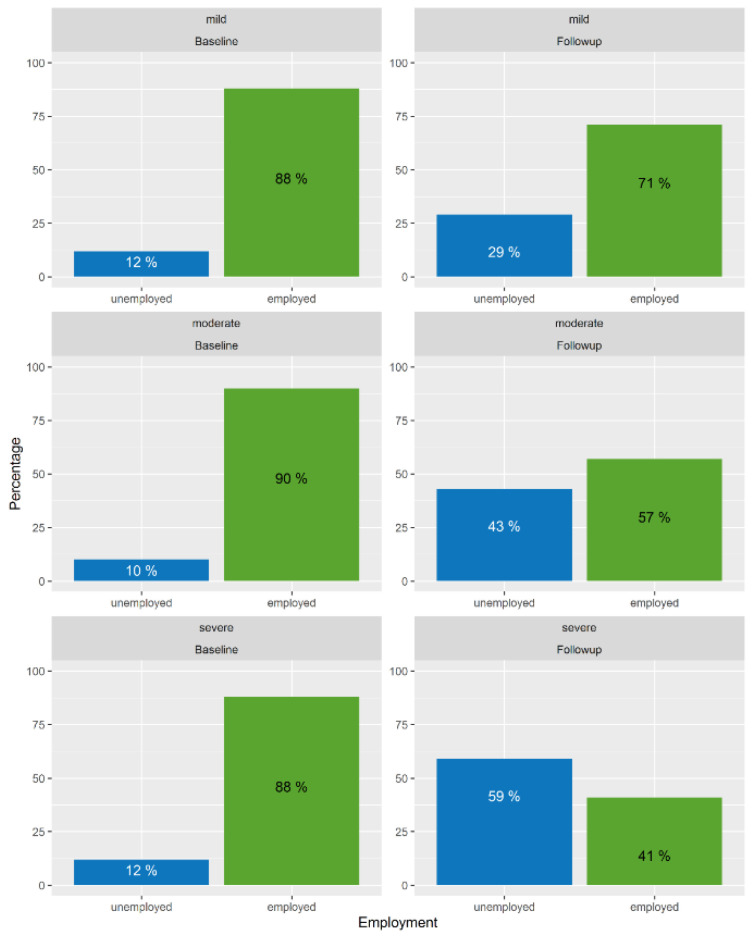
Sustaining a traumatic brain injury (TBI) often affects the individual's ability to work, reducing employment rates post-injury across all severities of TBI. The objective of this multi-country study was to assess the most relevant early predictors of employment status in individuals after TBI at one-year post-injury in European countries. Using a prospective longitudinal non-randomized observational cohort (The Collaborative European NeuroTrauma Effectiveness Research in TBI (CENTER-TBI) project), data was collected between December 2014-2019 from 63 trauma centers in 18 European countries. The 1015 individuals who took part in this study were potential labor market participants, admitted to a hospital and enrolled within 24 h of injury with a clinical TBI diagnosis and indication for a computed tomography (CT) scan, and followed up at one year. Results from a binomial logistic regression showed that older age, status of part-time employment or unemployment at time of injury, premorbid psychiatric problems, and higher injury severity (as measured with higher Injury severity score (ISS), lower Glasgow Coma Scale (GCS), and longer length of stay (LOS) in hospital) were associated with higher unemployment probability at one-year after injury. The study strengthens evidence for age, employment at time of injury, premorbid psychiatric problems, ISS, GCS, and LOS as important predictors for employment status one-year post-TBI across Europe.
遭受创伤性脑损伤(TBI)往往会影响个人的工作能力,降低各类严重程度TBI患者伤后的就业率。这项多国研究的目的是评估欧洲国家TBI患者伤后一年就业状况最相关的早期预测因素。采用前瞻性纵向非随机观察队列(创伤性脑损伤欧洲协作有效性研究(CENTER-TBI)项目),于2014年12月至2019年期间从18个欧洲国家的63个创伤中心收集数据。参与本研究的1015名个体为潜在劳动力市场参与者,因临床TBI诊断和计算机断层扫描(CT)扫描指征而入院,并在受伤后24小时内入组,随访一年。二项逻辑回归结果显示,年龄较大、受伤时的兼职或失业状态、病前精神问题以及较高的损伤严重程度(以较高的损伤严重程度评分(ISS)、较低的格拉斯哥昏迷量表(GCS)和较长的住院时间(LOS)衡量)与受伤后一年较高的失业概率相关。该研究强化了年龄、受伤时的就业情况、病前精神问题、ISS、GCS和LOS作为欧洲TBI患者伤后一年就业状况重要预测因素的证据。