van der Vlegel Marjolein, Polinder Suzanne, Mikolic Ana, Kaplan Rana, von Steinbuechel Nicole, Plass Anne Marie, Zeldovich Marina, van Praag Dominique, Bockhop Fabian, Cunitz Katrin, Mueller Isabelle, Haagsma Juanita A
Department of Public Health, Erasmus MC, 3000 CA Rotterdam, The Netherlands.
Institute of Medical Psychology and Medical Sociology, University Medical Center Göttingen (UMG), Georg-August-University, 37073 Göttingen, Germany.
J Clin Med. 2021 Jun 2;10(11):2473. doi: 10.3390/jcm10112473.
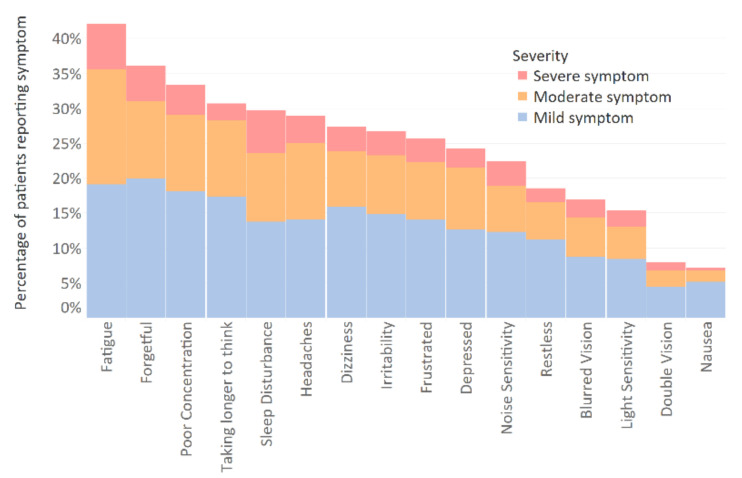
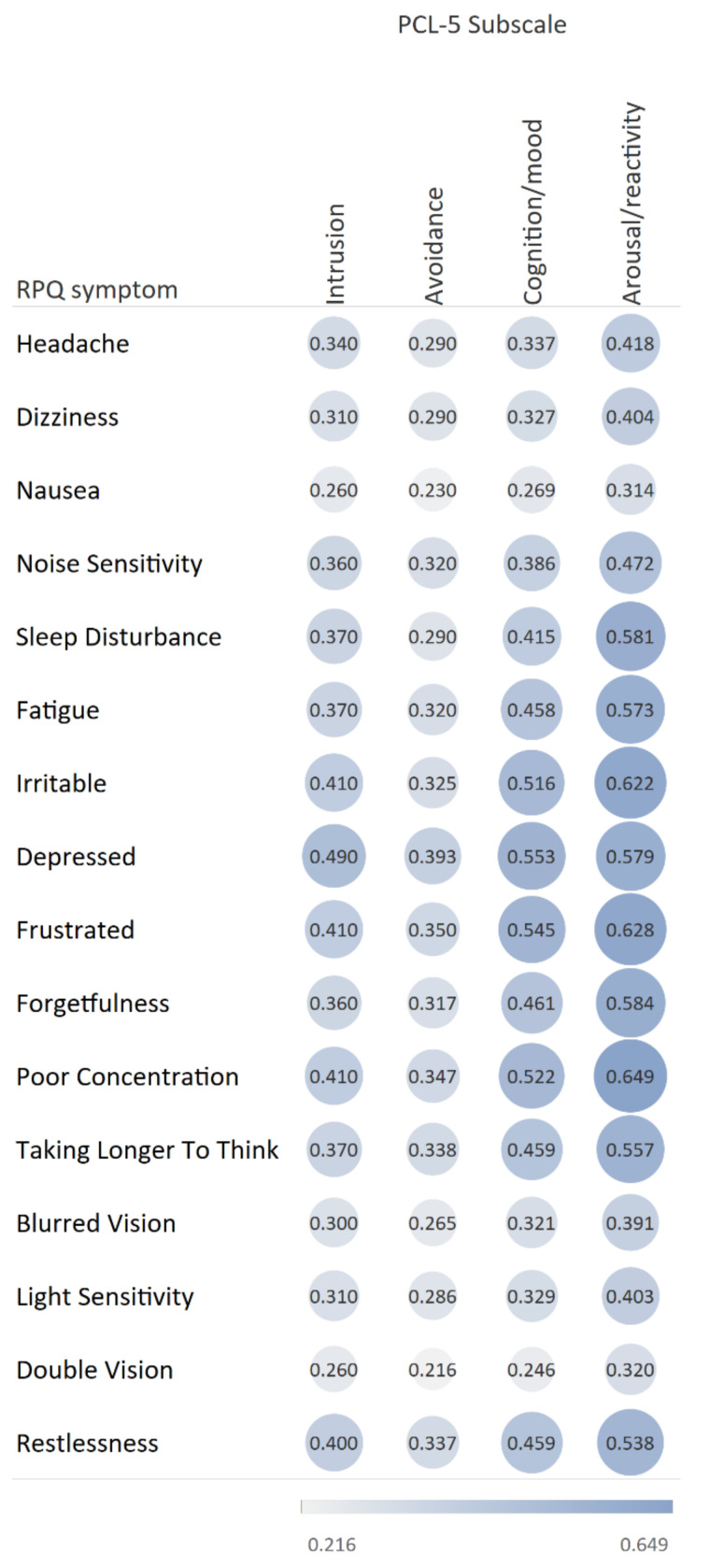
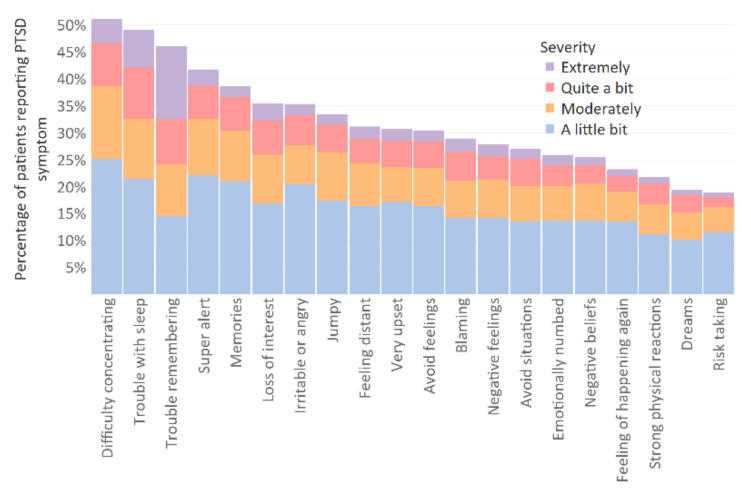
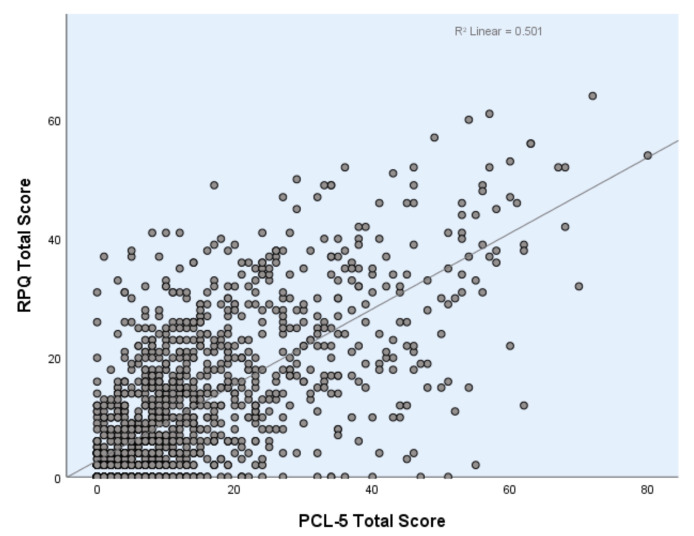
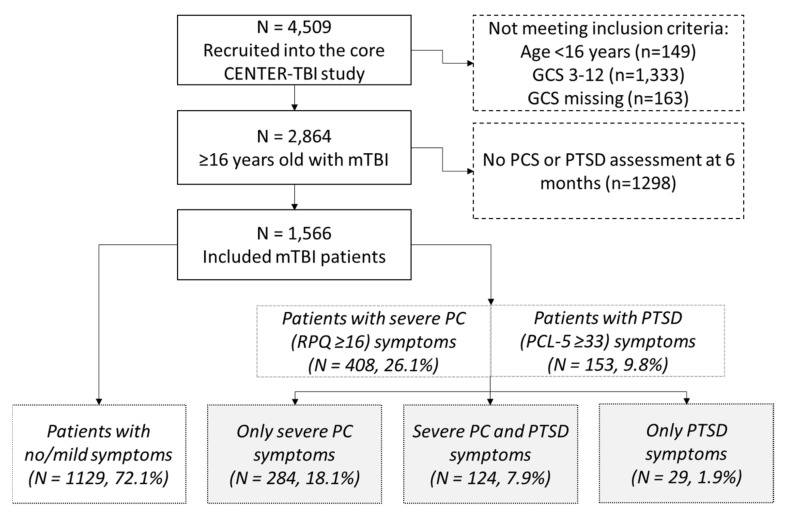
Patients with mild traumatic brain injury (mTBI) are at risk for post-concussion (PC) symptoms and post-traumatic stress disorder (PTSD). The co-occurrence of PC and PTSD symptoms after mTBI in relation to health-related quality of life (HRQoL), health care utilization, and return to work has not yet been investigated. PC and PTSD symptoms were measured six months post-TBI by respectively the Rivermead Post-Concussion Symptoms Questionnaire (RPQ) and the Post-Traumatic Stress Disorder Checklist for DSM-5 (PCL-5). Of the 1566 individuals after mTBI who met the inclusion criteria, 26.1% experienced PC symptoms (RPQ ≥16). Additionally, 9.8% experienced PTSD symptoms (PCL-5 ≥ 33), of which the vast majority (81%) also reported experiencing PC symptoms. Differences between patients with no/mild symptoms, with only PC, only PTSD, and both PC and PTSD symptoms in HRQoL, return to work, and rehabilitation were analyzed using logistic and linear regression analyses. Patients with PC and/or PTSD symptoms reported lower HRQoL, higher rates of rehabilitation, and lower return to work rates compared to patients with no/mild symptoms. Patients with both PC and PTSD symptoms reported significantly lower HRQoL (B = -2.73, CI = -4.65; -0.83, < 0.001) compared to those with only PC symptoms, while there were no significant differences in their ongoing rehabilitation care (OR = 1.39, CI = 0.77-2.49, = 0.272) and return to work rates (OR = 0.49, CI = 0.15-1.63, = 0.246) at six months. These results underline the importance of the diagnosis and appropriate treatment of patients with mTBI, experiencing PC and/or PTSD symptoms.
轻度创伤性脑损伤(mTBI)患者有发生脑震荡后(PC)症状和创伤后应激障碍(PTSD)的风险。mTBI后PC和PTSD症状的共现与健康相关生活质量(HRQoL)、医疗保健利用及重返工作岗位的关系尚未得到研究。在创伤性脑损伤后6个月,分别通过Rivermead脑震荡后症状问卷(RPQ)和《精神疾病诊断与统计手册》第5版创伤后应激障碍检查表(PCL-5)对PC和PTSD症状进行测量。在1566名符合纳入标准的mTBI患者中,26.1%出现PC症状(RPQ≥16)。此外,9.8%出现PTSD症状(PCL-5≥33),其中绝大多数(81%)也报告有PC症状。使用逻辑回归和线性回归分析,对无/轻度症状、仅患有PC、仅患有PTSD以及同时患有PC和PTSD症状的患者在HRQoL、重返工作岗位和康复方面的差异进行了分析。与无/轻度症状的患者相比,患有PC和/或PTSD症状的患者报告的HRQoL较低、康复率较高且重返工作岗位的比率较低。与仅患有PC症状的患者相比,同时患有PC和PTSD症状的患者报告的HRQoL显著更低(B=-2.73,CI=-4.65;-0.83,<0.001),而在6个月时,他们在持续康复护理(OR=1.39,CI=0.77-2.49,=0.272)和重返工作岗位比率(OR=0.49,CI=0.15-1.63,=0.246)方面没有显著差异。这些结果强调了对患有mTBI且有PC和/或PTSD症状的患者进行诊断和适当治疗的重要性。