Department of Pharmacology and Chemical Biology, University of Pittsburgh School of Medicine, Pittsburgh, PA 15261, USA.
Genes (Basel). 2020 Jun 26;11(6):711. doi: 10.3390/genes11060711.
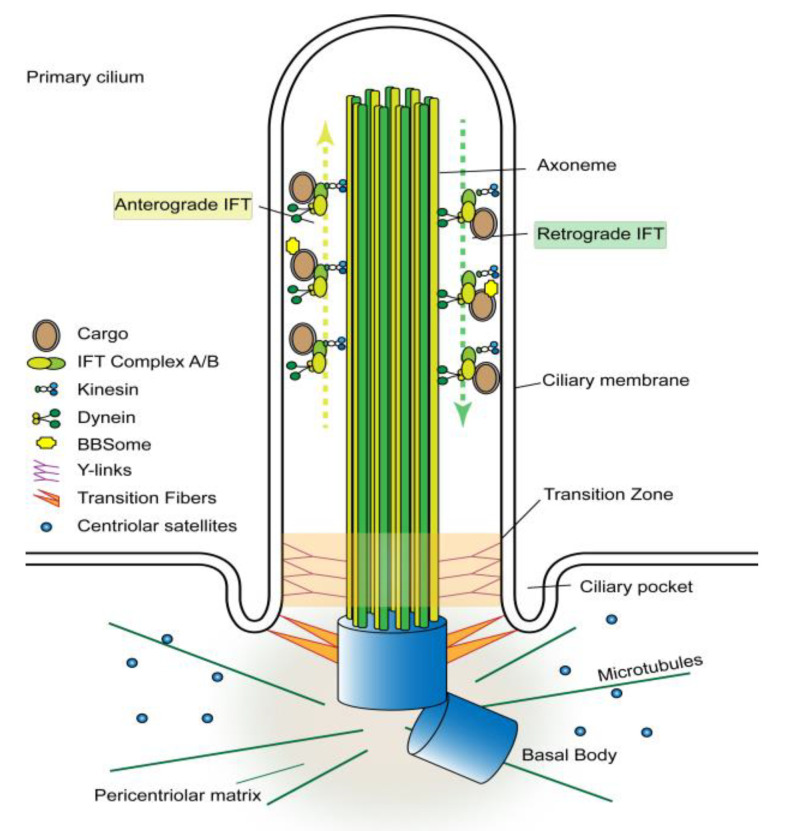
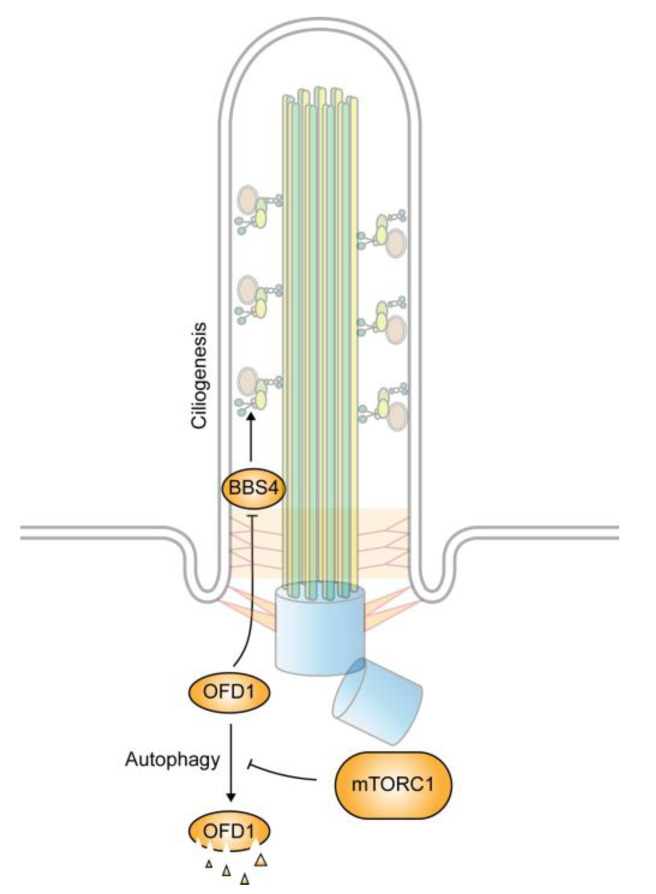
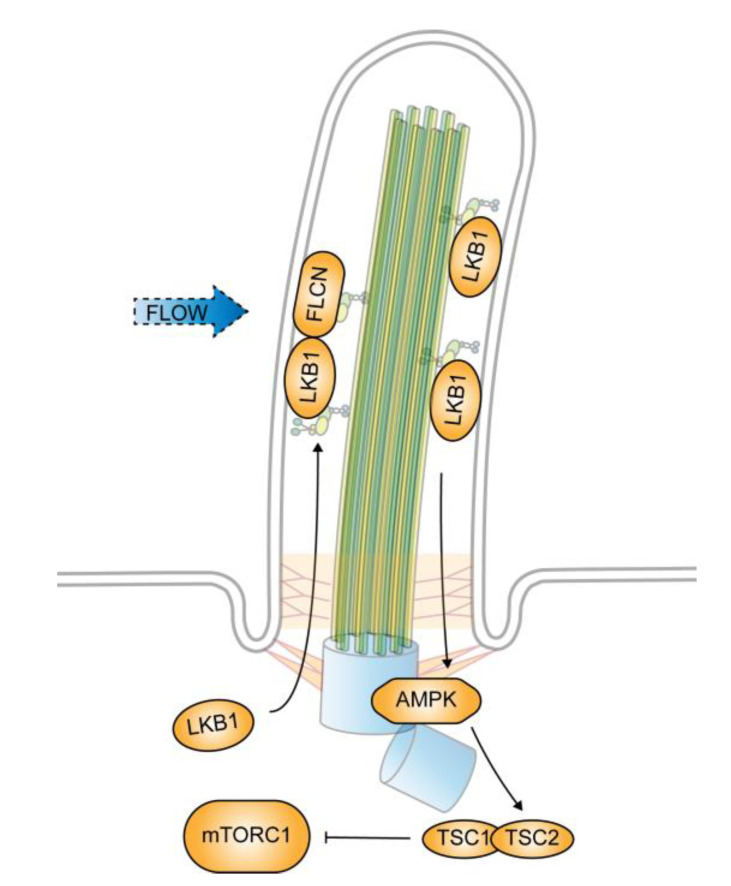
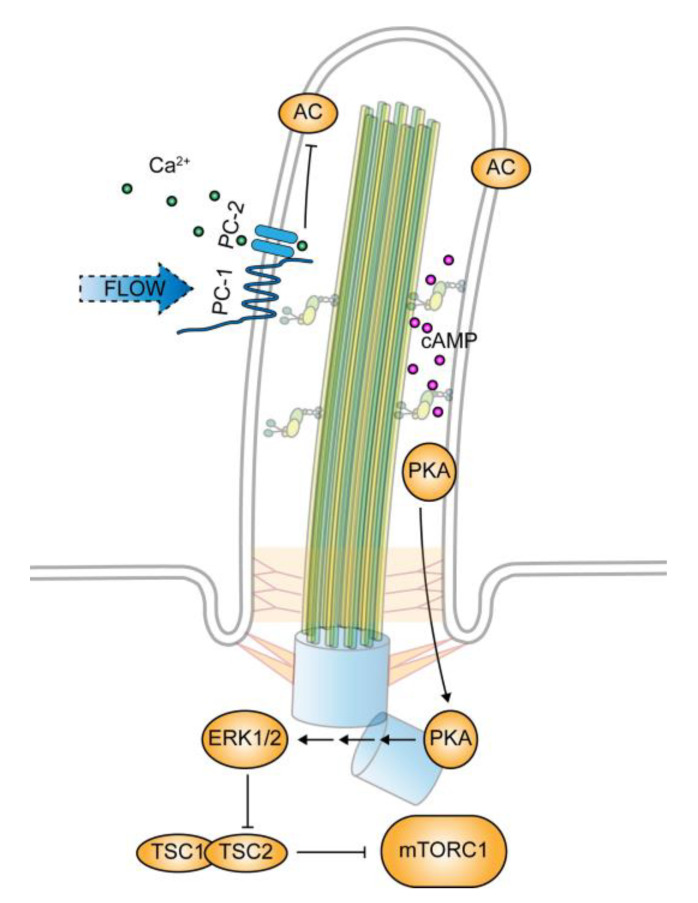
In quiescent cells, primary cilia function as a mechanosensor that converts mechanic signals into chemical activities. This unique organelle plays a critical role in restricting mechanistic target of rapamycin complex 1 (mTORC1) signaling, which is essential for quiescent cells to maintain their quiescence. Multiple mechanisms have been identified that mediate the inhibitory effect of primary cilia on mTORC1 signaling. These mechanisms depend on several tumor suppressor proteins localized within the ciliary compartment, including liver kinase B1 (LKB1), AMP-activated protein kinase (AMPK), polycystin-1, and polycystin-2. Conversely, changes in mTORC1 activity are able to affect ciliogenesis and stability indirectly through autophagy. In this review, we summarize recent advances in our understanding of the reciprocal regulation of mTORC1 and primary cilia.
在静息细胞中,初级纤毛作为一种机械感受器,将机械信号转化为化学活性。这个独特的细胞器在限制机械靶标雷帕霉素复合物 1(mTORC1)信号中起着关键作用,这对于静息细胞维持其静息状态是必不可少的。已经确定了多种机制来介导初级纤毛对 mTORC1 信号的抑制作用。这些机制依赖于几种定位于纤毛腔内的肿瘤抑制蛋白,包括肝激酶 B1(LKB1)、AMP 激活的蛋白激酶(AMPK)、多囊蛋白-1 和多囊蛋白-2。相反,mTORC1 活性的变化可以通过自噬间接影响纤毛发生和稳定性。在这篇综述中,我们总结了我们对 mTORC1 和初级纤毛相互调节的理解的最新进展。