Cho Geum Joon, Oh Michael S, Oh Min-Jeong, Park Keon Vin, Han Sung Won, Chae Young Kwang
Department of Obstetrics and Gynecology, Korea University College of Medicine, Seoul, Republic of Korea.
Department of Medicine, Northwestern University Feinberg School of Medicine, Chicago, IL 60611, USA.
Clin Epidemiol. 2020 Jun 19;12:659-666. doi: 10.2147/CLEP.S244443. eCollection 2020.
The effect of blood transfusions on the risk of developing primary cancer remains unclear, especially when administered in the peripartum period.
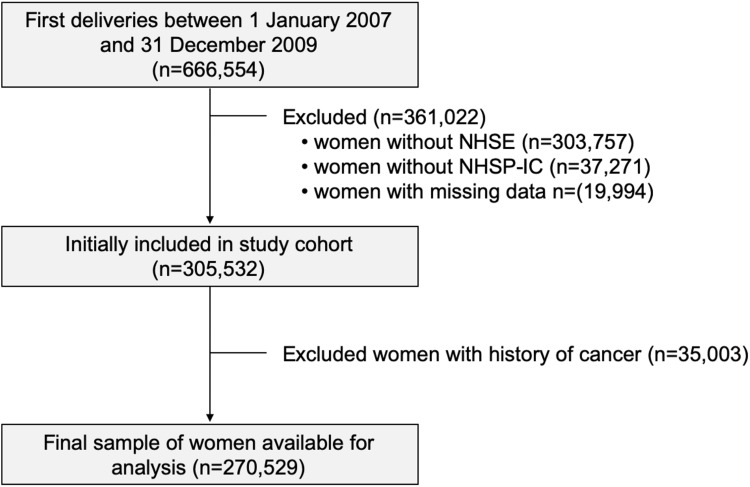
We conducted a retrospective cohort study of 270,529 pregnant women who delivered between January 1, 2007 and December 31, 2009, with data obtained from three national databases in South Korea. From this cohort, we identified 4569 patients who received peripartum blood transfusions. We calculated hazard ratios (HRs) for new diagnoses of cancer and adjusted them for relevant clinical factors using a Cox proportional hazards model.
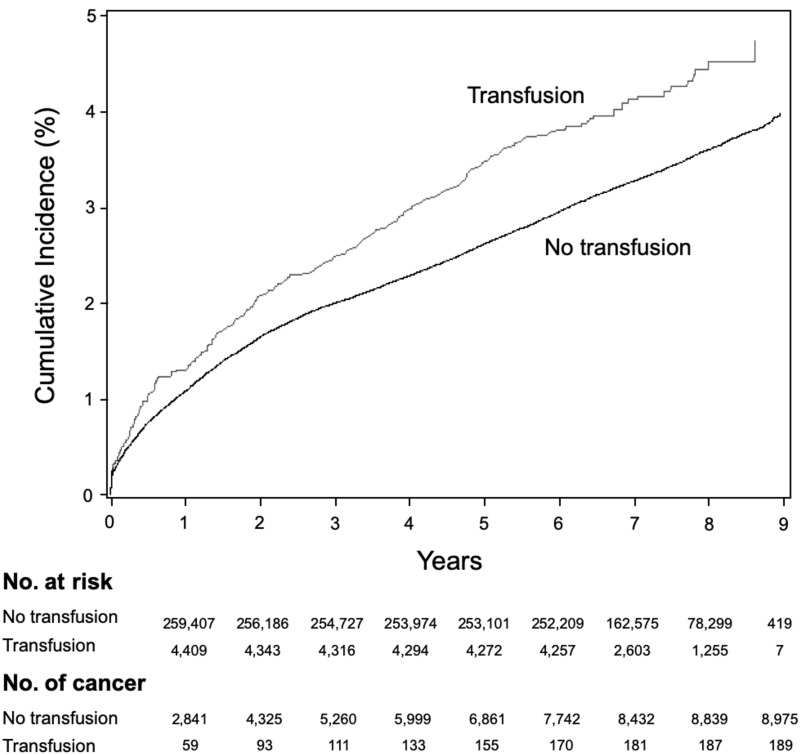
During follow-up, patients who received peripartum transfusions had an increased risk of developing cancer, with an adjusted HR of 1.16 (95% confidence interval [CI], 1.01-1.34). In a subgroup analysis, this risk was significant only among patients who received 3 or more units of blood, with an adjusted HR of 1.40 (95% CI, 1.10-1.79). Increased risk after transfusions were seen with brain, lung, ovarian, and gallbladder cancers. The difference in cancer risk between the transfusion and no-transfusion groups remained significant during both the first (1.29% vs 1.07%, p < 0.01) and second year (0.74% vs 0.56%, p < 0.01) after delivery.
Receipt of 3 or more blood transfusions in the peripartum period was associated with a significantly increased risk of developing cancer. Prospective studies should be pursued to further understand the link between blood transfusions and long-term oncologic risks.
输血对原发性癌症发生风险的影响仍不明确,尤其是在围产期输血时。
我们对2007年1月1日至2009年12月31日期间分娩的270,529名孕妇进行了一项回顾性队列研究,数据来自韩国的三个国家数据库。从该队列中,我们确定了4569名接受围产期输血的患者。我们计算了癌症新诊断的风险比(HRs),并使用Cox比例风险模型对相关临床因素进行了调整。
在随访期间,接受围产期输血的患者患癌症的风险增加,调整后的HR为1.16(95%置信区间[CI],1.01 - 1.34)。在亚组分析中,这种风险仅在接受3个或更多单位血液的患者中显著,调整后的HR为1.40(95%CI,1.10 - 1.79)。输血后,脑癌、肺癌、卵巢癌和胆囊癌的风险增加。输血组和未输血组之间的癌症风险差异在分娩后的第一年(1.29%对1.07%,p < 0.01)和第二年(0.74%对0.56%,p < 0.01)均保持显著。
围产期接受3次或更多次输血与患癌症的风险显著增加相关。应开展前瞻性研究以进一步了解输血与长期肿瘤风险之间的联系。