Martins Russell S, Saleh Raisa, Kamal Hasan, Gillani Mishal, Merchant Asma A H, Munir Muhammad M, Iftikar Hamza M, Shah Zara, Hussain Muhammad H Z, Azhar Mohammad K, Qadri Fatima, Saleem Sarah
Medical College, Aga Khan University Hospital, Karachi 74800, Pakistan.
Department of Community Health Sciences, Aga Khan University Hospital, Karachi 74800, Pakistan.
Adv Med Educ Pract. 2020 Jun 8;11:405-413. doi: 10.2147/AMEP.S255483. eCollection 2020.
The single most significant barrier to healthcare for people who identify as transgender is poor access to healthcare providers trained in trans-health. Despite this, trans-health education is far from being a routine component of the undergraduate medical curriculum in developing countries like Pakistan. This study aimed to assess knowledge and attitudes regarding people who identify as transgender, as well as the perceived need for trans-health in the curriculum, amongst medical students in Pakistan.
A cross-sectional study using a self-designed questionnaire was carried out amongst undergraduate medical students at the Aga Khan University. Stratified random sampling was used, whereby students were stratified based on their current year of medical education.
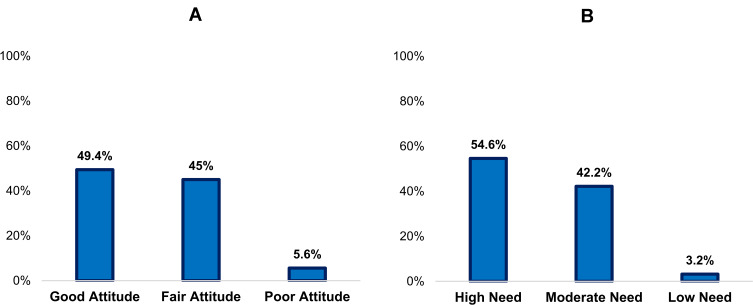
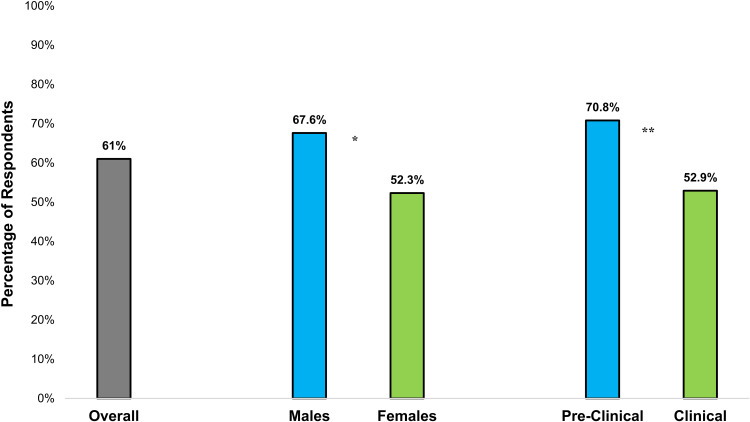
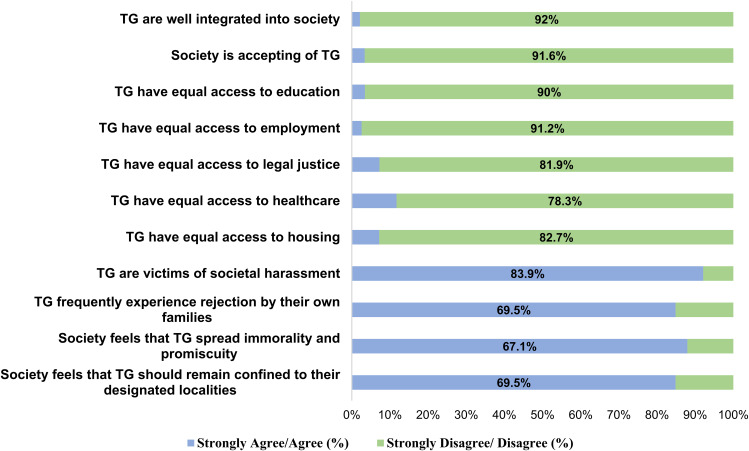
A total of 249 students were included in this survey. The majority (61%) had poor overall knowledge, with a significantly higher percentage of pre-clinical students (79.6%) having poor knowledge regarding differences in transgender health needs compared to clinical students (60.3%; p = 0.001). Most students acknowledged that individuals who identified as transgender faced a lack of access to healthcare (78.3%), were poorly integrated into society (92.0%) and were treated differently in a clinical setting (58.6%). Many students were unsure of how to address (49.8%) and clinically examine (38.2%) patients identifying as transgender. However, most students demonstrated good (49.4%) or fair (45.0%) attitudes towards individuals who identified as transgender, and the majority reported a high (54.6%) or moderate (42.2%) perceived need for the inclusion of trans-health in the medical curriculum.
Despite deficiencies in trans-health education in the medical school curriculum, positive attitudes and a high perceived need among students lay the foundation for developing a medical curriculum that gives due priority to trans-health. In developing countries, this can help bridge disparities in healthcare provision to people who identify as transgender.
对于认同自己为跨性别者的人群而言,医疗保健方面最主要的障碍是难以获得接受过跨性别健康培训的医疗服务提供者。尽管如此,在巴基斯坦等发展中国家,跨性别健康教育远非本科医学课程的常规组成部分。本研究旨在评估巴基斯坦医学生对认同自己为跨性别者的人群的知识和态度,以及他们对课程中跨性别健康内容的感知需求。
在阿迦汗大学对本科医学生开展了一项使用自行设计问卷的横断面研究。采用分层随机抽样,根据学生当前的医学教育年级进行分层。
本调查共纳入249名学生。大多数(61%)学生的总体知识水平较差,与临床学生(60.3%)相比,临床前学生中对跨性别健康需求差异知识掌握较差的比例显著更高(79.6%;p = 0.001)。大多数学生承认,认同自己为跨性别者的个体面临医疗保健获取困难(78.3%)、融入社会程度低(92.0%)以及在临床环境中受到不同对待(58.6%)。许多学生不确定如何称呼(49.8%)和对认同自己为跨性别者的患者进行临床检查(38.2%)。然而,大多数学生对认同自己为跨性别者的个体表现出良好(49.4%)或尚可(45.0%)的态度,并且大多数学生报告对将跨性别健康纳入医学课程的感知需求较高(54.6%)或中等(42.2%)。
尽管医学院课程中的跨性别健康教育存在不足,但学生们的积极态度和较高的感知需求为制定重视跨性别健康的医学课程奠定了基础。在发展中国家,这有助于缩小为认同自己为跨性别者的人群提供医疗保健方面的差距。