Department of Biological Sciences, The State University of New York at Buffalo, New York, 14260, USA.
Department of Biological Engineering, Cornell University, Ithaca, NY, USA.
Acta Neuropathol Commun. 2020 Jul 1;8(1):97. doi: 10.1186/s40478-020-00964-z.
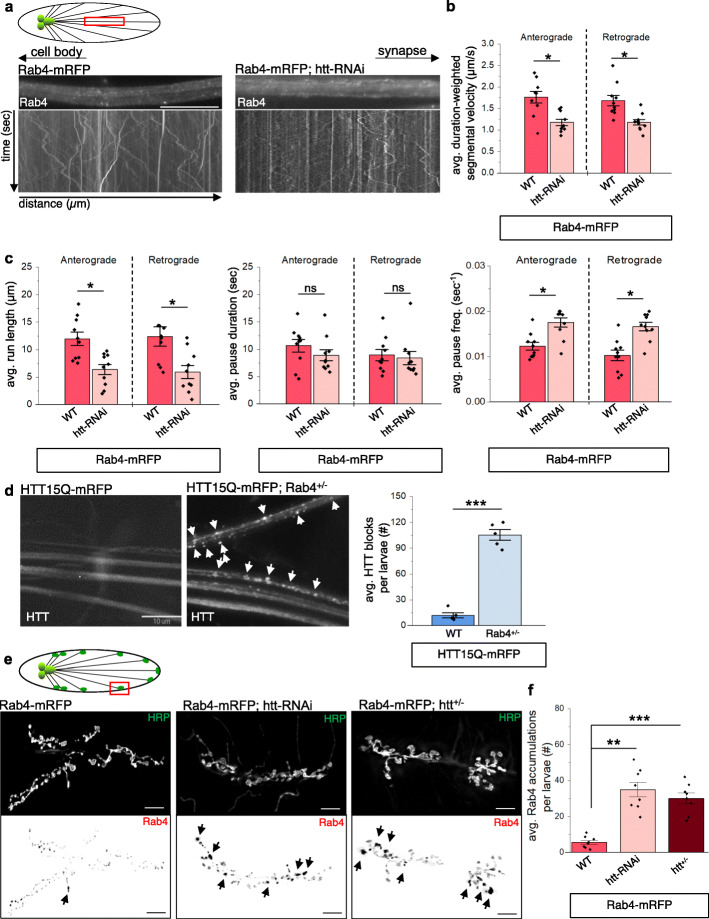
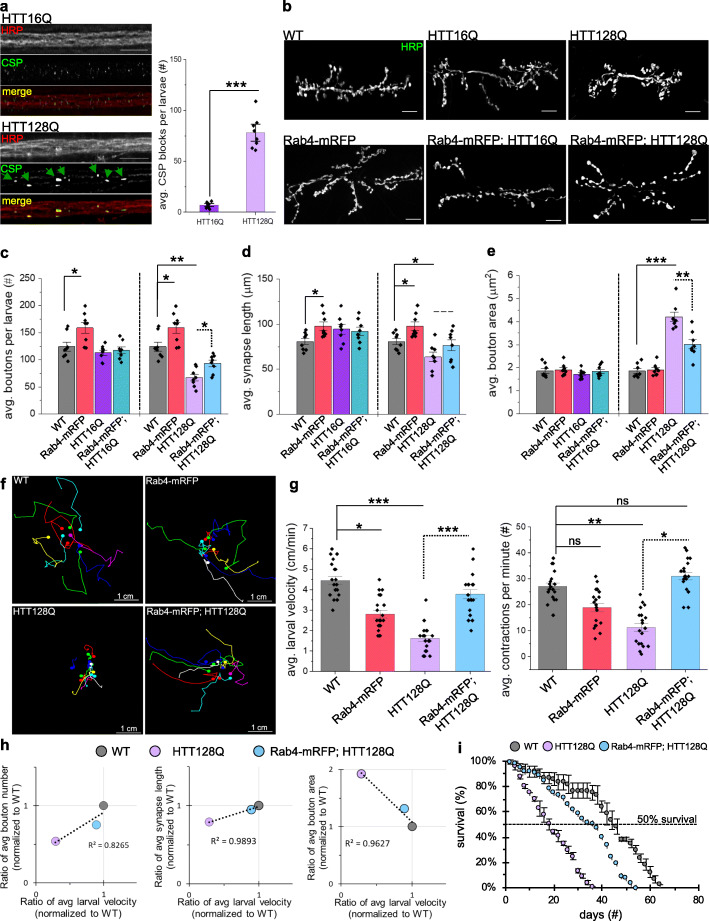
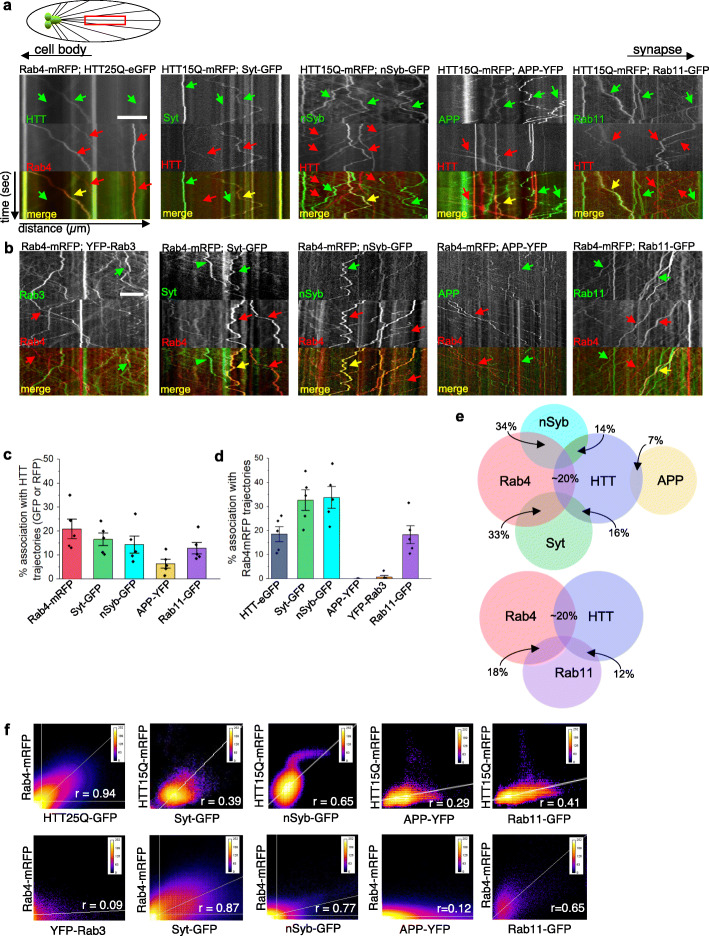
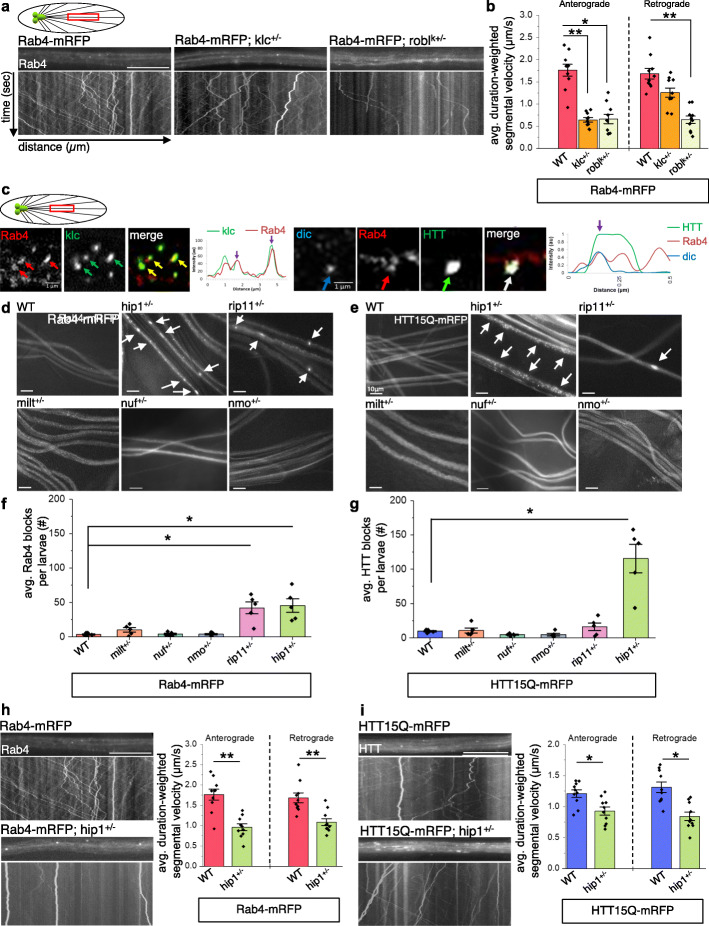
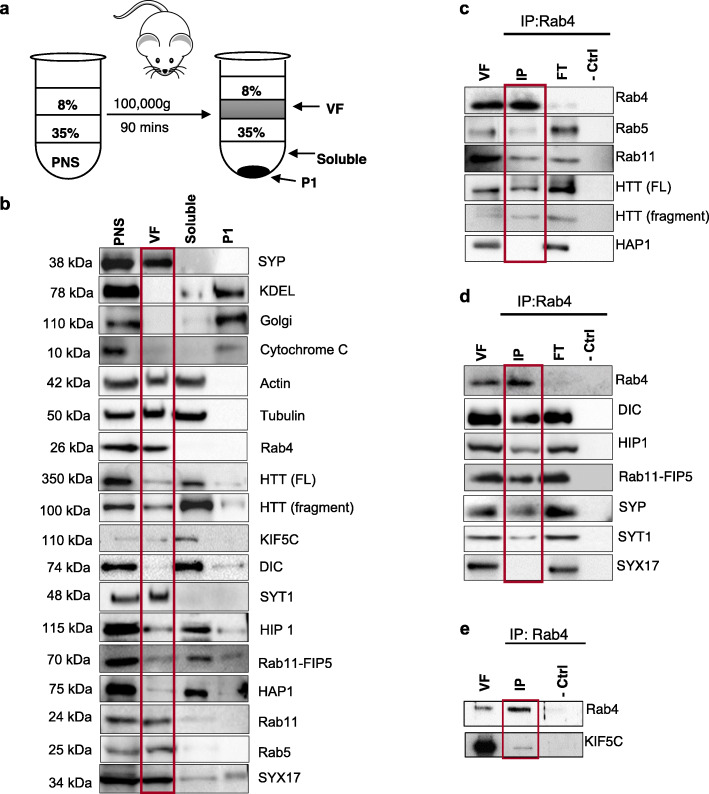
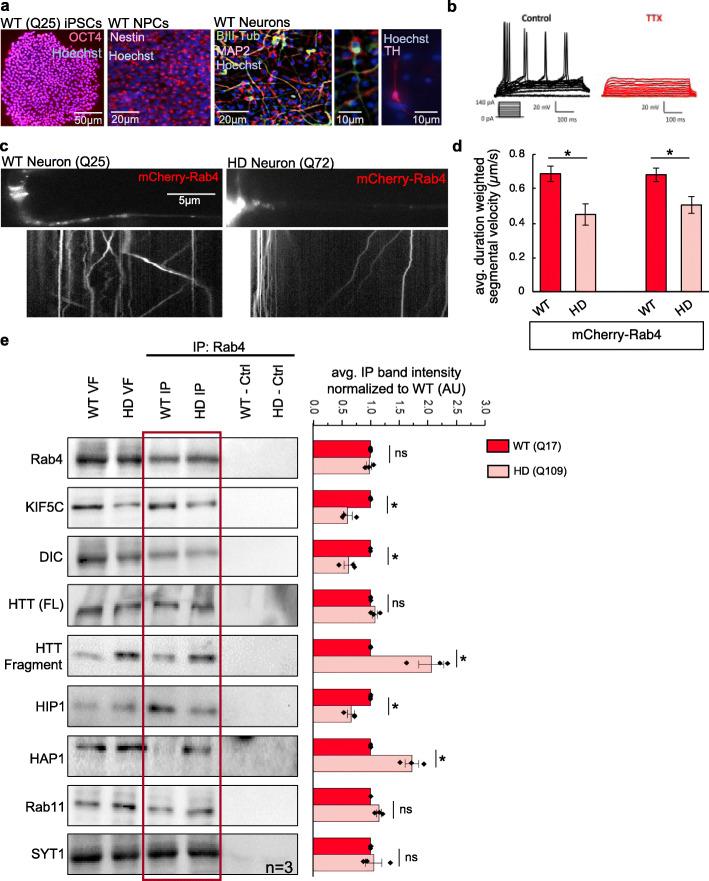
Huntington's disease (HD) is characterized by protein inclusions and loss of striatal neurons which result from expanded CAG repeats in the poly-glutamine (polyQ) region of the huntingtin (HTT) gene. Both polyQ expansion and loss of HTT have been shown to cause axonal transport defects. While studies show that HTT is important for vesicular transport within axons, the cargo that HTT transports to/from synapses remain elusive. Here, we show that HTT is present with a class of Rab4-containing vesicles within axons in vivo. Reduction of HTT perturbs the bi-directional motility of Rab4, causing axonal and synaptic accumulations. In-vivo dual-color imaging reveal that HTT and Rab4 move together on a unique putative vesicle that may also contain synaptotagmin, synaptobrevin, and Rab11. The moving HTT-Rab4 vesicle uses kinesin-1 and dynein motors for its bi-directional movement within axons, as well as the accessory protein HIP1 (HTT-interacting protein 1). Pathogenic HTT disrupts the motility of HTT-Rab4 and results in larval locomotion defects, aberrant synaptic morphology, and decreased lifespan, which are rescued by excess Rab4. Consistent with these observations, Rab4 motility is perturbed in iNeurons derived from human Huntington's Disease (HD) patients, likely due to disrupted associations between the polyQ-HTT-Rab4 vesicle complex, accessory proteins, and molecular motors. Together, our observations suggest the existence of a putative moving HTT-Rab4 vesicle, and that the axonal motility of this vesicle is disrupted in HD causing synaptic and behavioral dysfunction. These data highlight Rab4 as a potential novel therapeutic target that could be explored for early intervention prior to neuronal loss and behavioral defects observed in HD.
亨廷顿病(HD)的特征是蛋白包涵体和纹状体神经元的丧失,这是由于亨廷顿(HTT)基因的多聚谷氨酰胺(polyQ)区域中的 CAG 重复扩展引起的。polyQ 扩展和 HTT 的丧失都已被证明会导致轴突运输缺陷。虽然研究表明 HTT 对轴突内囊泡运输很重要,但 HTT 运输到/从突触的货物仍然难以捉摸。在这里,我们表明 HTT 存在于体内轴突中一类含有 Rab4 的囊泡中。HTT 的减少会扰乱 Rab4 的双向运动,导致轴突和突触堆积。体内双色成像显示,HTT 和 Rab4 一起在一种独特的假定囊泡上移动,该囊泡可能还含有突触融合蛋白、突触融合小泡蛋白和 Rab11。移动的 HTT-Rab4 囊泡使用驱动蛋白-1 和动力蛋白为其在轴突内的双向运动提供动力,以及辅助蛋白 HIP1(HTT 相互作用蛋白 1)。致病性 HTT 破坏了 HTT-Rab4 的运动性,导致幼虫运动缺陷、突触形态异常和寿命缩短,而过表达 Rab4 可挽救这些缺陷。与这些观察结果一致,源自亨廷顿病(HD)患者的 iNeurons 中的 Rab4 运动受到干扰,这可能是由于多聚 Q-HTT-Rab4 囊泡复合物、辅助蛋白和分子马达之间的关联被破坏。总之,我们的观察结果表明存在一种假定的移动 HTT-Rab4 囊泡,并且该囊泡的轴突运动在 HD 中受到破坏,导致突触和行为功能障碍。这些数据突出了 Rab4 作为一个潜在的新的治疗靶点的可能性,它可以在神经元丧失和 HD 中观察到的行为缺陷之前进行早期干预。