Zhang Jing, Shih David J H, Lin Shiaw-Yih
Department of Systems Biology, The University of Texas MD Anderson Cancer Center, Houston, TX 77030 USA.
Biomark Res. 2020 Jun 29;8:23. doi: 10.1186/s40364-020-00202-7. eCollection 2020.
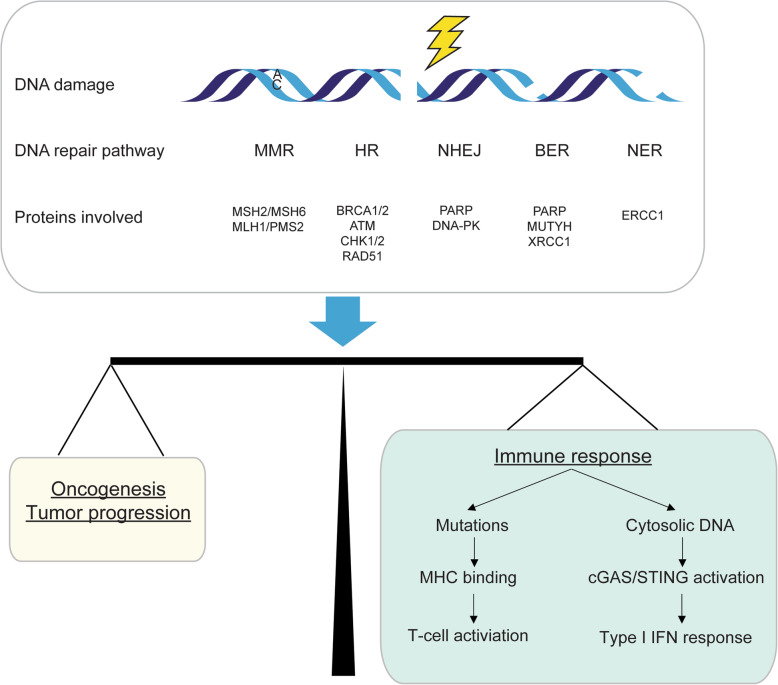
Defect in DNA damage response (DDR) is a common feature of cancer cells, which regulates tumor growth and therapeutic response. Recently, the approval of immune checkpoint blockade (ICB) for tumors with defective mismatch repair has paved the way for investigating the role of other DDR defects in sensitizing cancer to ICB therapy. Despite great progress in understanding DDR pathways, the mechanisms that link DDR defects and ICB response remain incompletely understood. Further, the clinical activity of ICB in patients with DDR defective tumors has not been well described. Here, we discuss recent studies demonstrating that biomarkers in DDR pathways may serve as potential predictors to guide the selection of patients for ICB therapy. A better understanding of the relationship between deficiency in DDR and response to ICB would facilitate efforts in optimizing the efficacy of immunotherapy.
DNA损伤反应(DDR)缺陷是癌细胞的一个常见特征,它调节肿瘤生长和治疗反应。最近,免疫检查点阻断(ICB)被批准用于错配修复缺陷的肿瘤,这为研究其他DDR缺陷在使癌症对ICB治疗敏感方面的作用铺平了道路。尽管在理解DDR通路方面取得了很大进展,但将DDR缺陷与ICB反应联系起来的机制仍未完全明了。此外,ICB在DDR缺陷肿瘤患者中的临床活性尚未得到充分描述。在此,我们讨论最近的研究,这些研究表明DDR通路中的生物标志物可能作为潜在的预测指标,以指导ICB治疗患者的选择。更好地理解DDR缺陷与ICB反应之间的关系将有助于优化免疫治疗的疗效。