Zhao Xiaotao, Thanapongtharm Weerapong, Lawawirojwong Siam, Wei Chun, Tang Yerong, Zhou Yaowu, Sun Xiaodong, Sattabongkot Jestumon, Kaewkungwal Jaranit
Department of Tropical Hygiene, Faculty of Tropical Medicine, Mahidol University, Bangkok, Thailand.
Yunnan Institute of Parasitic Diseases, Puer, Yunnan, China.
Korean J Parasitol. 2020 Jun;58(3):267-278. doi: 10.3347/kjp.2020.58.3.267. Epub 2020 Jun 26.
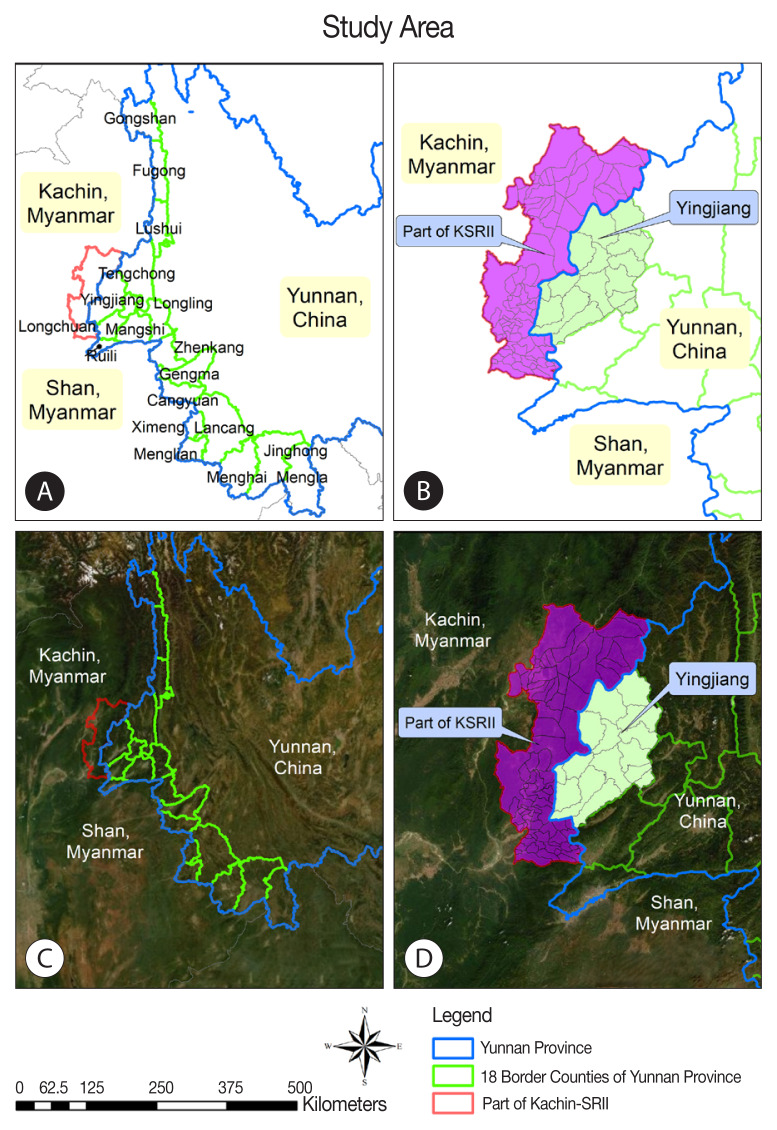
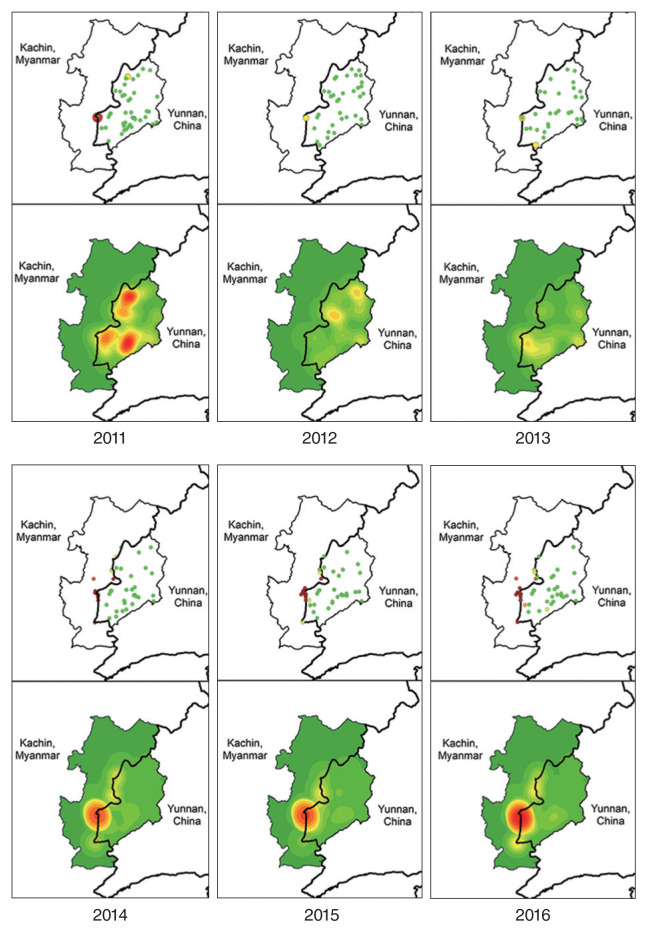
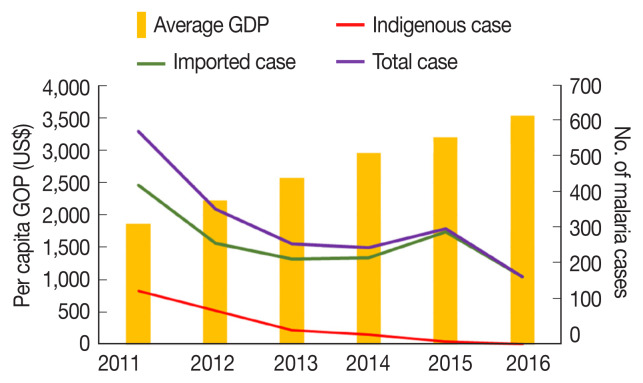
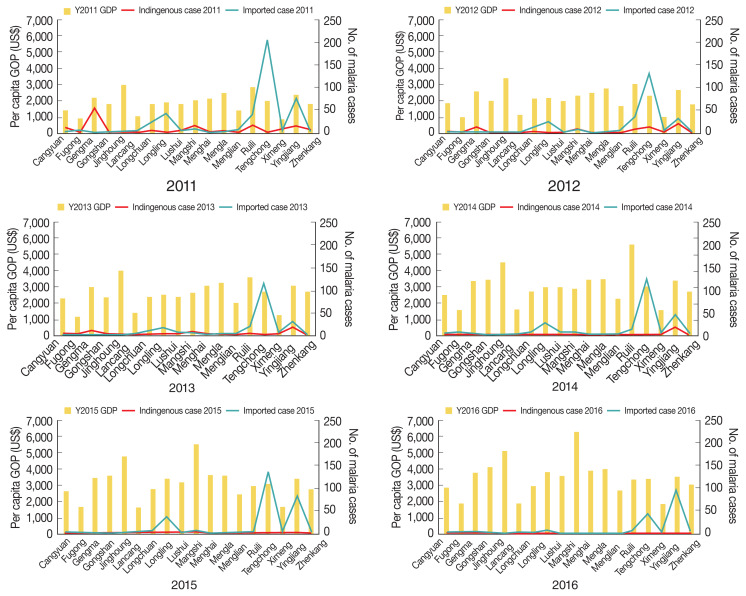
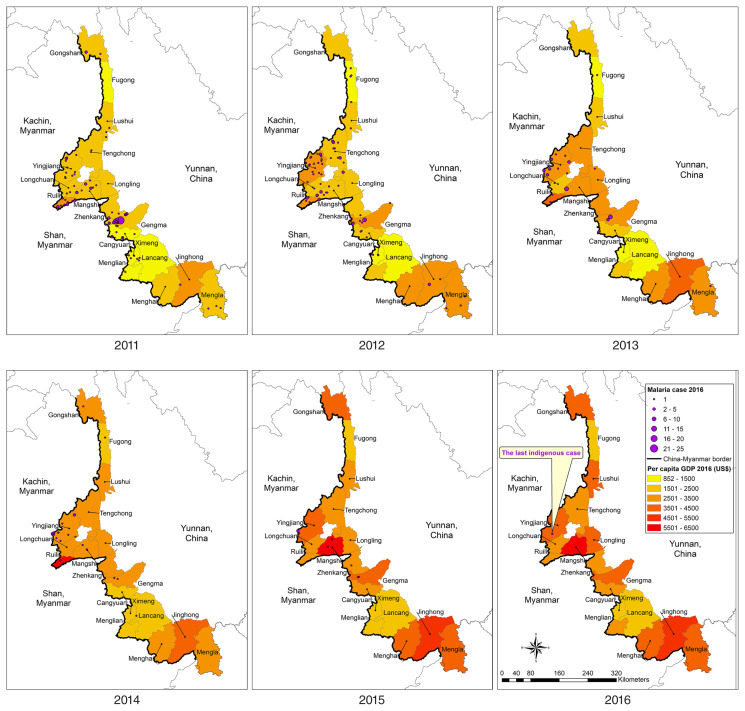
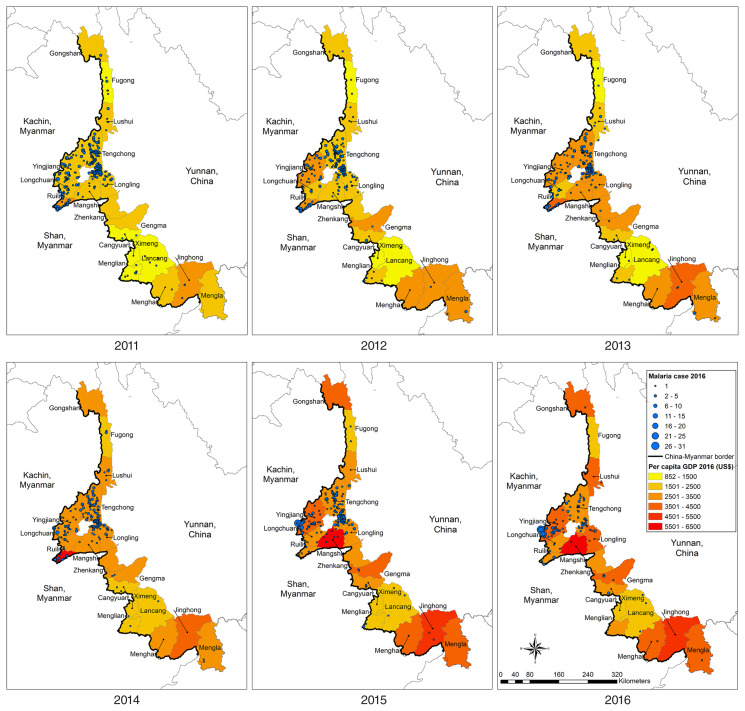
The heterogeneity and complexity of malaria involves political and natural environments, socioeconomic development, cross-border movement, and vector biology; factors that cannot be changed in a short time. This study aimed to assess the impact of economic growth and cross-border movement, toward elimination of malaria in Yunnan Province during its pre-elimination phase. Malaria data during 2011-2016 were extracted from 18 counties of Yunnan and from 7 villages, 11 displaced person camps of the Kachin Special Region II of Myanmar. Data of per-capita gross domestic product (GDP) were obtained from Yunnan Bureau of Statistics. Data were analyzed and mapped to determine spatiotemporal heterogeneity at county and village levels. There were a total 2,117 malaria cases with 85.2% imported cases; most imported cases came from Myanmar (78.5%). Along the demarcation line, malaria incidence rates in villages/camps in Myanmar were significantly higher than those of the neighboring villages in China. The spatial and temporal trends suggested that increasing per-capita GDP may have an indirect effect on the reduction of malaria cases when observed at macro level; however, malaria persists owing to complex, multi-faceted factors including poverty at individual level and cross-border movement of the workforce. In moving toward malaria elimination, despite economic growth, cooperative efforts with neighboring countries are critical to interrupt local transmission and prevent reintroduction of malaria via imported cases. Cross-border workers should be educated in preventive measures through effective behavior change communication, and investment is needed in active surveillance systems and novel diagnostic and treatment services during the elimination phase.
疟疾的异质性和复杂性涉及政治和自然环境、社会经济发展、跨境流动以及病媒生物学等因素,这些因素在短期内无法改变。本研究旨在评估经济增长和跨境流动对云南省在疟疾消除前期消除疟疾的影响。2011年至2016年期间的疟疾数据取自云南省的18个县以及缅甸克钦邦第二特区的7个村庄、11个流离失所者营地。人均国内生产总值(GDP)数据来自云南省统计局。对数据进行分析并绘制地图,以确定县和村两级的时空异质性。共有2117例疟疾病例,其中85.2%为输入性病例;大多数输入性病例来自缅甸(78.5%)。沿分界线,缅甸村庄/营地的疟疾发病率显著高于中国相邻村庄。时空趋势表明,从宏观层面观察,人均GDP的增长可能对疟疾病例的减少有间接影响;然而,由于包括个人层面的贫困和劳动力跨境流动等复杂多方面因素,疟疾仍然存在。在迈向消除疟疾的进程中,尽管经济有所增长,但与邻国的合作努力对于阻断本地传播以及预防通过输入性病例重新引入疟疾至关重要。应通过有效的行为改变沟通对跨境工人进行预防措施教育,并且在消除阶段需要对主动监测系统以及新型诊断和治疗服务进行投资。