Department of Laboratorial Science and Technology & Vaccine Research Center, School of Public Health, Peking University, No. 38, Xueyuan Road, Haidian District, Beijing, 100191, People's Republic of China.
Department of Public Health Emergency Management, School of Public Health, Peking University, Beijing, 100191, People's Republic of China.
Infect Dis Poverty. 2022 Jul 23;11(1):83. doi: 10.1186/s40249-022-01005-8.
Indoor residual spraying (IRS) is one of the key interventions recommended by World Health Organization in preventing malaria infection. We aimed to conduct a systematic review and meta-analysis of global studies about the impact of IRS on malaria control.
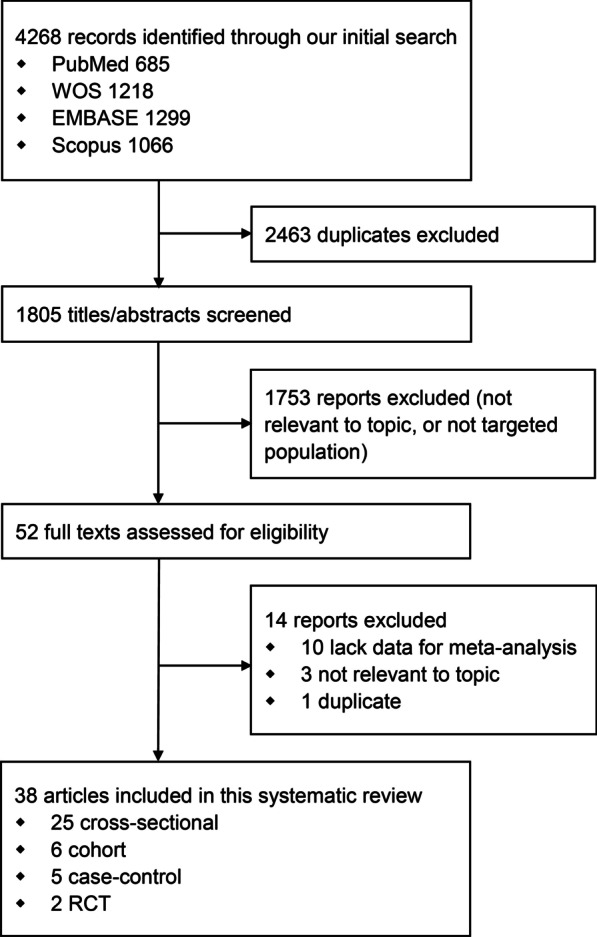
We searched PubMed, Web of Science, Embase, and Scopus for relevant studies published from database establishment to 31 December 2021. Random-effects models were used to perform meta-analysis and subgroup analysis to pool the odds ratio (OR) and 95% confidence interval (CI). Meta-regression was used to investigate potential factors of heterogeneity across studies.
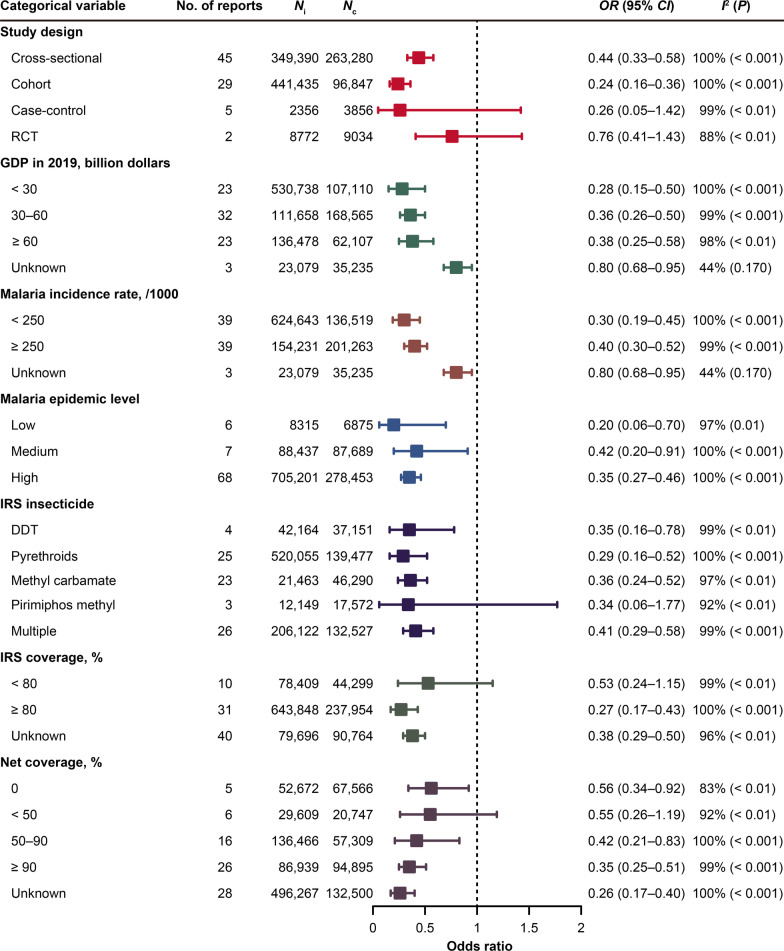
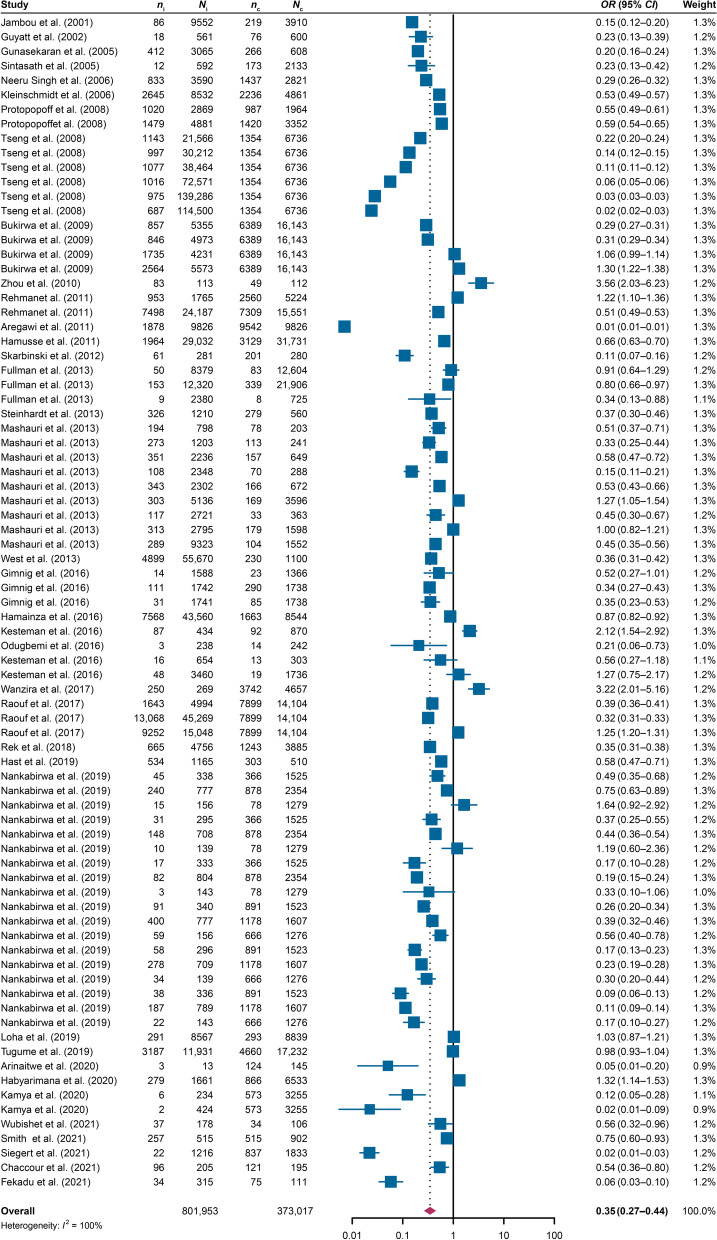
Thirty-eight articles including 81 reports and 1,174,970 individuals were included in the meta-analysis. IRS was associated with lower rates of malaria infection (OR = 0.35, 95% CI: 0.27-0.44). The significantly higher effectiveness was observed in IRS coverage ≥ 80% than in IRS coverage < 80%. Pyrethroids was identified to show the greatest performance in malaria control. In addition, higher effectiveness was associated with a lower gross domestic product as well as a higher coverage of IRS and bed net utilization.
IRS could induce a positive effect on malaria infection globally. The high IRS coverage and the use of pyrethroids are key measures to reduce malaria infection. More efforts should focus on increasing IRS coverage, developing more effective new insecticides against malaria, and using multiple interventions comprehensively to achieve malaria control goals.
室内滞留喷洒(IRS)是世界卫生组织推荐的预防疟疾感染的关键干预措施之一。我们旨在对全球关于 IRS 对疟疾控制影响的研究进行系统评价和荟萃分析。
我们检索了 PubMed、Web of Science、Embase 和 Scopus,以获取从数据库建立到 2021 年 12 月 31 日发表的相关研究。使用随机效应模型进行荟萃分析和亚组分析,以汇总优势比(OR)和 95%置信区间(CI)。Meta 回归用于调查研究之间异质性的潜在因素。
共纳入 38 篇文章,包括 81 份报告和 1174970 名个体。IRS 与较低的疟疾感染率相关(OR=0.35,95%CI:0.27-0.44)。IRS 覆盖率≥80%的效果明显优于 IRS 覆盖率<80%的效果。拟除虫菊酯类被认为在疟疾控制方面表现最佳。此外,与较低的国内生产总值以及更高的 IRS 覆盖率和蚊帐利用率相关联的是更高的有效性。
IRS 可以在全球范围内对疟疾感染产生积极影响。高 IRS 覆盖率和使用拟除虫菊酯类是降低疟疾感染的关键措施。应更加注重提高 IRS 覆盖率,开发更有效的新型抗疟疾杀虫剂,并综合使用多种干预措施,以实现疟疾控制目标。