1Department of Tropical Medicine, Center for Applied Malaria Research and Evaluation, Tulane University School of Public Health and Tropical Medicine, New Orleans, Louisiana.
2PATH Malaria Control and Elimination Partnership in Africa (MACEPA), Seattle, Washington.
Am J Trop Med Hyg. 2020 Aug;103(2_Suppl):46-53. doi: 10.4269/ajtmh.19-0661.
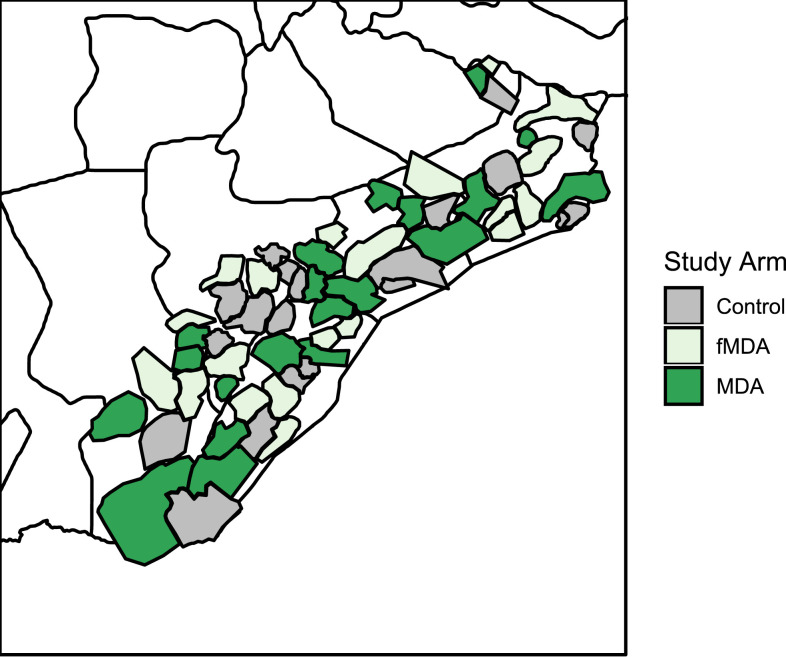
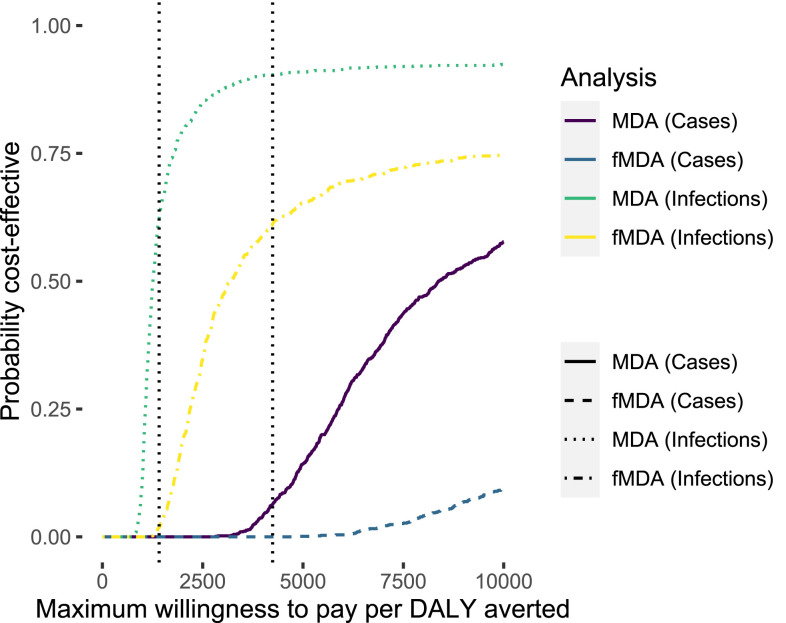
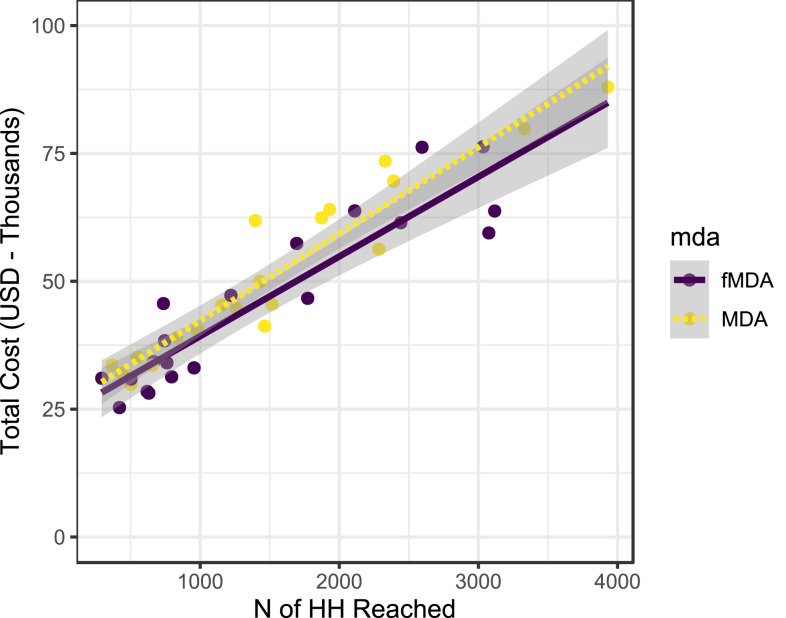
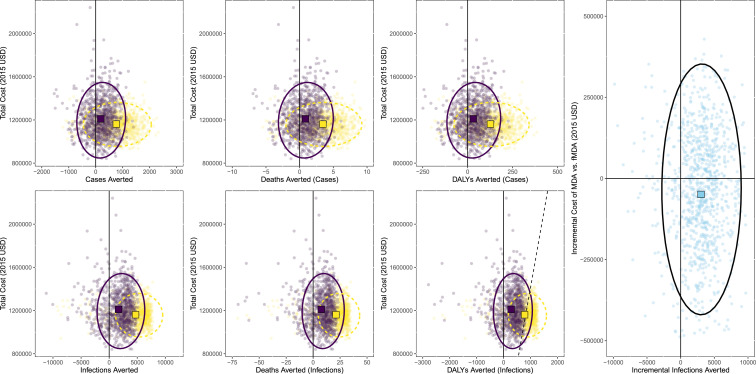
Community-wide administration of antimalarial drugs in therapeutic doses is a potential tool to prevent malaria infection and reduce the malaria parasite reservoir. To measure the effectiveness and cost of using the antimalarial drug combination dihydroartemisinin-piperaquine (DHAp) through different community-wide distribution strategies, Zambia's National Malaria Control Centre conducted a three-armed community-randomized controlled trial. The trial arms were as follows: 1) standard of care (SoC) malaria interventions, 2) SoC plus focal mass drug administration (fMDA), and 3) SoC plus MDA. Mass drug administration consisted of offering all eligible individuals DHAP, irrespective of a rapid diagnostic test (RDT) result. Focal mass drug administration consisted of offering DHAP to all eligible individuals who resided in a household where anyone tested positive by RDT. Results indicate that the costs of fMDA and MDA per person targeted and reached are similar (US$9.01 versus US$8.49 per person, respectively, = 0.87), but that MDA was superior in all cost-effectiveness measures, including cost per infection averted, cost per case averted, cost per death averted, and cost per disability-adjusted life year averted. Subsequent costing of the MDA intervention in a non-trial, operational setting yielded significantly lower costs per person reached (US$2.90). Mass drug administration with DHAp also met the WHO thresholds for "cost-effective interventions" in the Zambian setting in 90% of simulations conducted using a probabilistic sensitivity analysis based on trial costs, whereas fMDA met these criteria in approximately 50% of simulations. A sensitivity analysis using costs from operational deployment and trial effectiveness yielded improved cost-effectiveness estimates. Mass drug administration may be a cost-effective intervention in the Zambian context and can help reduce the parasite reservoir substantially. Mass drug administration was more cost-effective in relatively higher transmission settings. In all scenarios examined, the cost-effectiveness of MDA was superior to that of fMDA.
在治疗剂量下对整个社区进行抗疟药物投药是预防疟疾感染和减少疟原虫储存量的一种潜在工具。为了衡量通过不同的社区广泛分发策略使用抗疟药物二氢青蒿素-哌喹(DHAp)的效果和成本,赞比亚国家疟疾控制中心开展了一项三臂社区随机对照试验。试验组如下:1)标准护理(SoC)疟疾干预,2)SoC 加重点人群药物管理(fMDA),和 3)SoC 加 MDA。群体药物管理包括向所有符合条件的个人提供 DHAP,无论快速诊断检测(RDT)结果如何。重点人群药物管理包括向所有符合条件的个人提供 DHAP,这些人居住在任何经 RDT 检测呈阳性的家庭中。结果表明,重点人群药物管理和 MDA 的人均成本和覆盖人数相似(分别为每人 9.01 美元和每人 8.49 美元, = 0.87),但 MDA 在所有成本效益衡量指标中都具有优势,包括每避免感染的成本、每避免病例的成本、每避免死亡的成本和每避免残疾调整生命年的成本。在非试验运营环境中对 MDA 干预的后续成本计算得出,人均成本达到显著降低(每人 2.90 美元)。在使用基于试验成本的概率敏感性分析对 90%的模拟情况进行的分析中,DHAp 的群体药物管理在赞比亚环境中也符合世卫组织“具有成本效益的干预措施”的阈值,而重点人群药物管理在大约 50%的模拟中符合这些标准。使用运营部署和试验效果的成本进行的敏感性分析得出了改善的成本效益估计。在赞比亚的背景下,群体药物管理可能是一种具有成本效益的干预措施,可以帮助大大减少寄生虫储存量。在相对较高传播环境中,群体药物管理更具成本效益。在所有检查的情景中,MDA 的成本效益均优于 fMDA。