Department of Health Sociology, School of Humanities and Management, Guangdong Medical University, Dongguan, China.
School of Humanities and Management, Research Center for Quality of Life and Applied Psychology, Guangdong Medical University, 1#, Xincheng Avenue, Songshanhu District, Dongguan, Guangdong, China.
BMC Public Health. 2020 Jul 3;20(1):1054. doi: 10.1186/s12889-020-09178-3.
Utilization of primary health care is an important aspect of elderly internal migrants' access to screening and preventive services in China. It has been evident that social contacts, such as community engagement, social mobilization, and the ability to communicate were related to health service delivery, but little has been done to explore the relationship between social contacts and utilization of primary health care for this group. This study aimed to explore the factors influencing utilization of primary health care from the perspective of social contacts among elderly internal migrants in China.
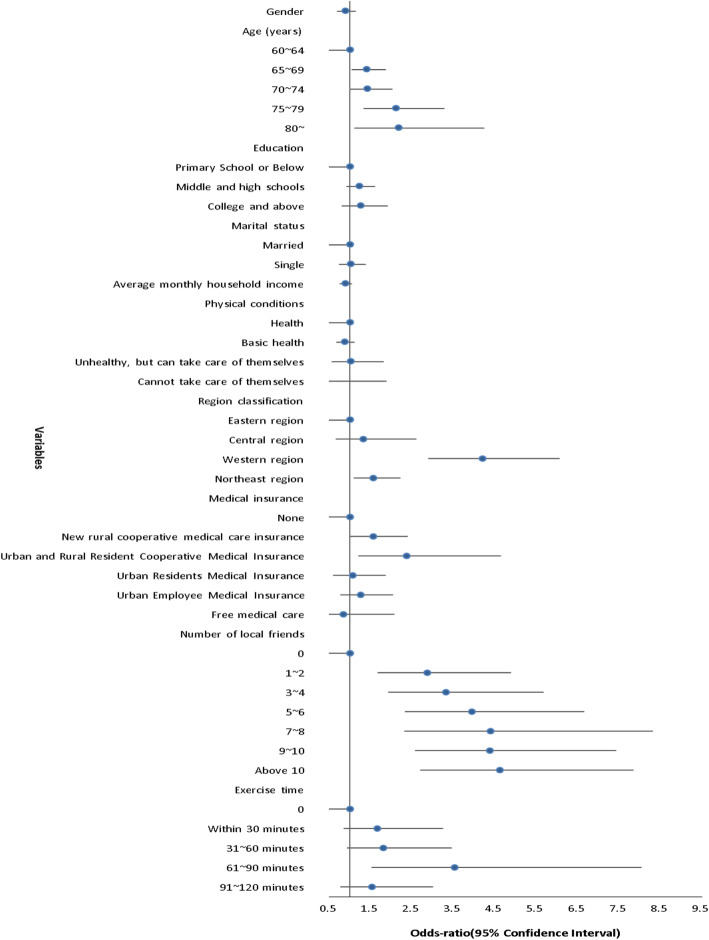
This was a cross-sectional study including 1544 elderly internal migrants in eight cities. Whether these indivdiuals had chosen to participate in the free health checkup organized in the previous year was adopted as an indicator of the utilization of primary health care. The number of local friends and amount of exercise time per day were measured as a proxy for social contacts. Multivariate binary logistic regression was used to investigate the association of social contacts with the likelihood of using primary health care.
55.6% of the respondents were men, and the mean age was 66.34 years (SD, 5.94). 88.6% had received an education of high school or below. 12.9% had no local friends. 5.2% did not exercise. Just 33.1% had participated in a free medical check-up. Social contacts, age, and medical insurance were associated with more use of primary health care among elderly internal migrants in China.
The role of the community in promoting the use of primary health care should be expanded, such as creating community-based campaigns specifically targeting elderly internal migrants or designing social or sports activities tailored to increase the opportunity for contact between local elders and their internal migrant peers.
利用基层医疗保健是中国老年内部移民获得筛查和预防服务的一个重要方面。显然,社会联系,如社区参与、社会动员和沟通能力与卫生服务提供有关,但很少有人探讨这一群体的社会联系与基层医疗保健利用之间的关系。本研究旨在从中国老年内部移民的社会联系角度探讨影响基层医疗保健利用的因素。
这是一项横断面研究,包括中国 8 个城市的 1544 名老年内部移民。是否选择参加前一年组织的免费健康检查作为利用基层医疗保健的指标。当地朋友的数量和每天的锻炼时间作为社会联系的代理指标。采用多变量二项逻辑回归分析社会联系与利用基层医疗保健的可能性之间的关联。
55.6%的受访者为男性,平均年龄为 66.34 岁(标准差为 5.94)。88.6%接受过高中及以下教育。12.9%没有当地朋友。5.2%不运动。只有 33.1%的人参加了免费体检。社会联系、年龄和医疗保险与中国老年内部移民更多地利用基层医疗保健有关。
应扩大社区在促进基层医疗保健利用方面的作用,例如开展专门针对老年内部移民的社区活动,或设计针对增加当地老年人与内部移民同龄人接触机会的社交或体育活动。