Department of Chemistry, The University of British Columbia, 2036 Main Mall, Vancouver, BC, V6T 1Z1, Canada.
Department of Chemical and Biological Engineering, The University of British Columbia, 2360 East Mall, Vancouver, BC, V6T 1Z3, Canada.
Nat Commun. 2020 Jul 3;11(1):3310. doi: 10.1038/s41467-020-17122-7.
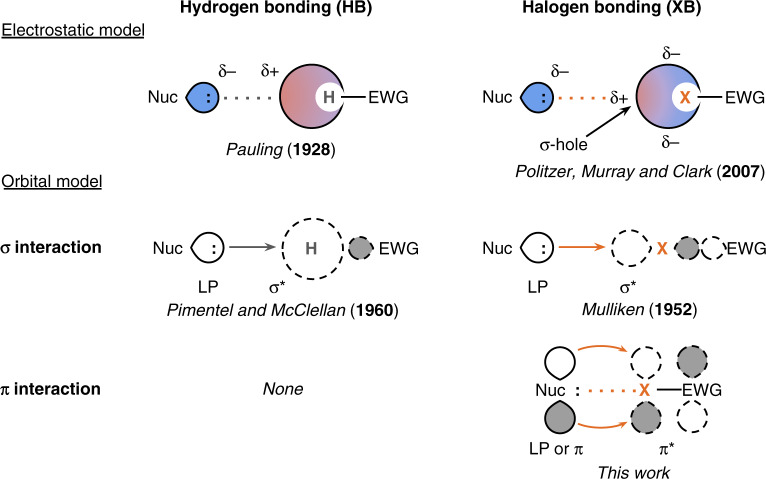
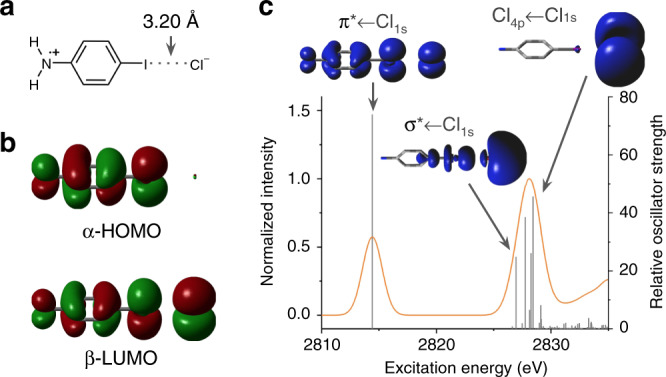
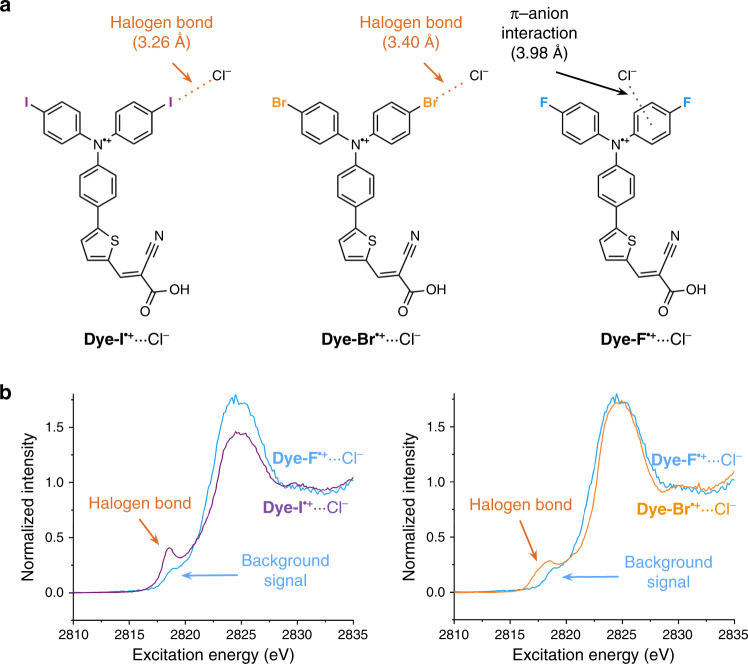
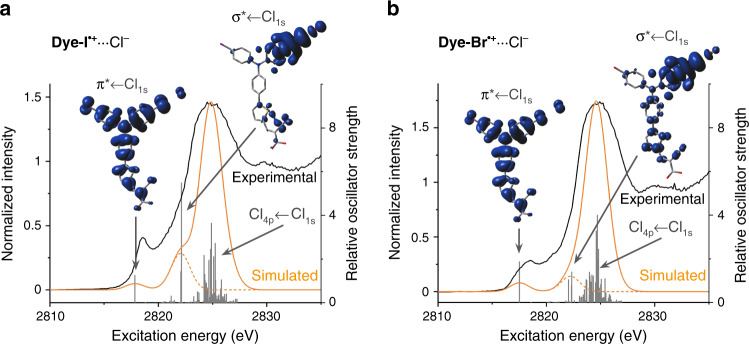
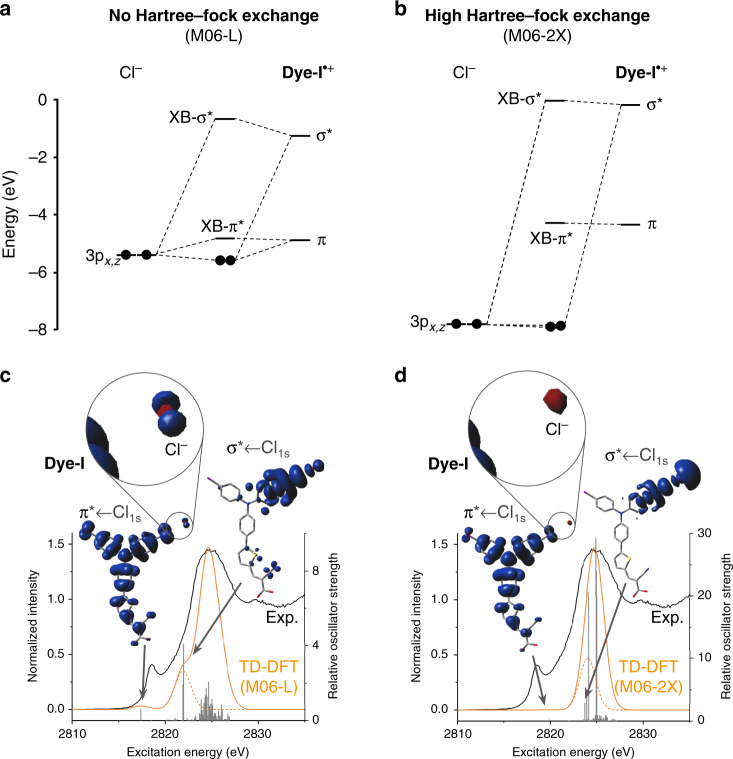
Halogen bonds are a highly directional class of intermolecular interactions widely employed in chemistry and chemical biology. This linear interaction is commonly viewed to be analogous to the hydrogen bond because hydrogen bonding models also intuitively describe the σ-symmetric component of halogen bonding. The possibility of π-covalency in a halogen bond is not contemplated in any known models. Here we present evidence of π-covalency being operative in halogen bonds formed between chloride and halogenated triphenylamine-based radical cations. We reach this conclusion through computational analysis of chlorine K-edge X-ray absorption spectra recorded on these halogen bonded pairs. In light of this result, we contend that halogen bonding is better described by analogy to metal coordination bonds rather than hydrogen bonds. Our revised description of the halogen bond suggests that these interactions could be employed to influence the electronic properties of conjugated molecules in unique ways.
卤素键是一类高度定向的分子间相互作用,广泛应用于化学和化学生物学领域。这种线性相互作用通常被认为类似于氢键,因为氢键模型也直观地描述了卤素键的σ对称部分。在任何已知的模型中,都没有考虑卤素键中的π共价键的可能性。在这里,我们提出了在氯和卤化三苯胺基自由基阳离子之间形成的卤素键中存在π共价键的证据。我们通过对这些卤素键对记录的氯 K 边 X 射线吸收光谱进行计算分析得出了这一结论。有鉴于此,我们认为卤素键的描述更类似于金属配位键,而不是氢键。我们对卤素键的修订描述表明,这些相互作用可以以独特的方式影响共轭分子的电子性质。