Department of Plant Biotechnology and Bioinformatics, Ghent University, Technologiepark 71, 9052, Ghent, Belgium.
VIB Center for Plant Systems Biology, Technologiepark 71, 9052, Ghent, Belgium.
Nat Commun. 2020 Jul 3;11(1):3320. doi: 10.1038/s41467-020-17191-8.
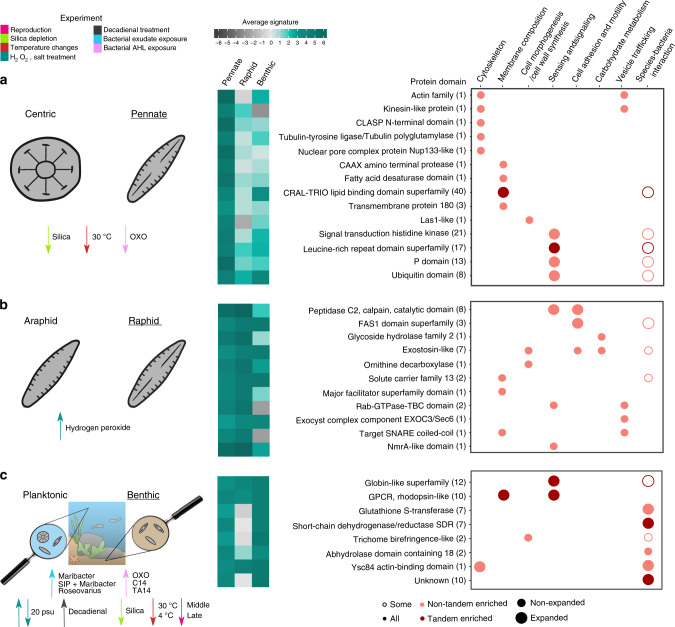
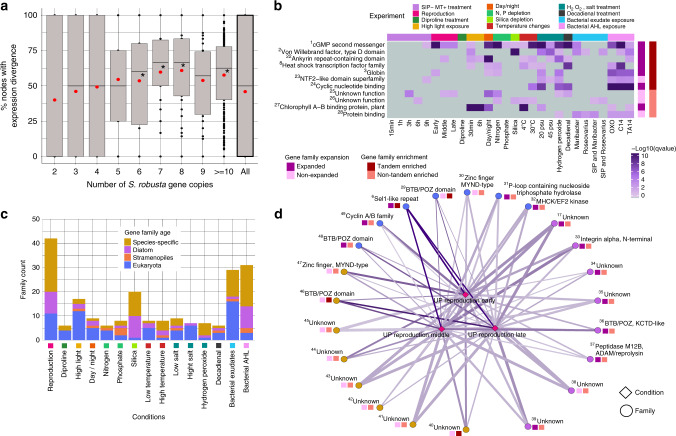
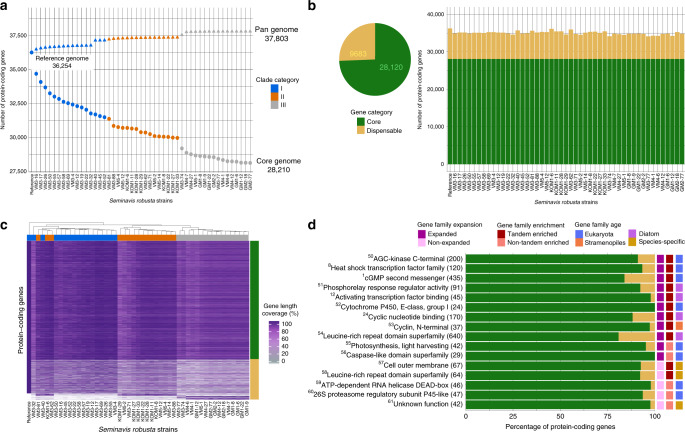
Benthic diatoms are the main primary producers in shallow freshwater and coastal environments, fulfilling important ecological functions such as nutrient cycling and sediment stabilization. However, little is known about their evolutionary adaptations to these highly structured but heterogeneous environments. Here, we report a reference genome for the marine biofilm-forming diatom Seminavis robusta, showing that gene family expansions are responsible for a quarter of all 36,254 protein-coding genes. Tandem duplications play a key role in extending the repertoire of specific gene functions, including light and oxygen sensing, which are probably central for its adaptation to benthic habitats. Genes differentially expressed during interactions with bacteria are strongly conserved in other benthic diatoms while many species-specific genes are strongly upregulated during sexual reproduction. Combined with re-sequencing data from 48 strains, our results offer insights into the genetic diversity and gene functions in benthic diatoms.
底栖硅藻是浅淡水和沿海环境中的主要初级生产者,具有重要的生态功能,如营养循环和沉积物稳定。然而,对于它们如何适应这些高度结构化但异质的环境,我们知之甚少。在这里,我们报告了一种海洋生物膜形成硅藻 Seminavis robusta 的参考基因组,表明基因家族的扩展负责所有 36254 个蛋白质编码基因的四分之一。串联重复在扩展特定基因功能的 repertoire 中起着关键作用,包括光和氧气感应,这可能是其适应底栖生境的核心。在与细菌相互作用过程中差异表达的基因在其他底栖硅藻中高度保守,而许多种特异性基因在有性生殖过程中强烈上调。结合 48 株的重测序数据,我们的结果为底栖硅藻的遗传多样性和基因功能提供了新的见解。