Department of Molecular Cell Biology, Weizmann Institute of Science, Rehovot, Israel.
Broad Institute of MIT and Harvard, Cambridge, MA, 02145, USA.
Nat Commun. 2020 Jul 3;11(1):3296. doi: 10.1038/s41467-020-17090-y.
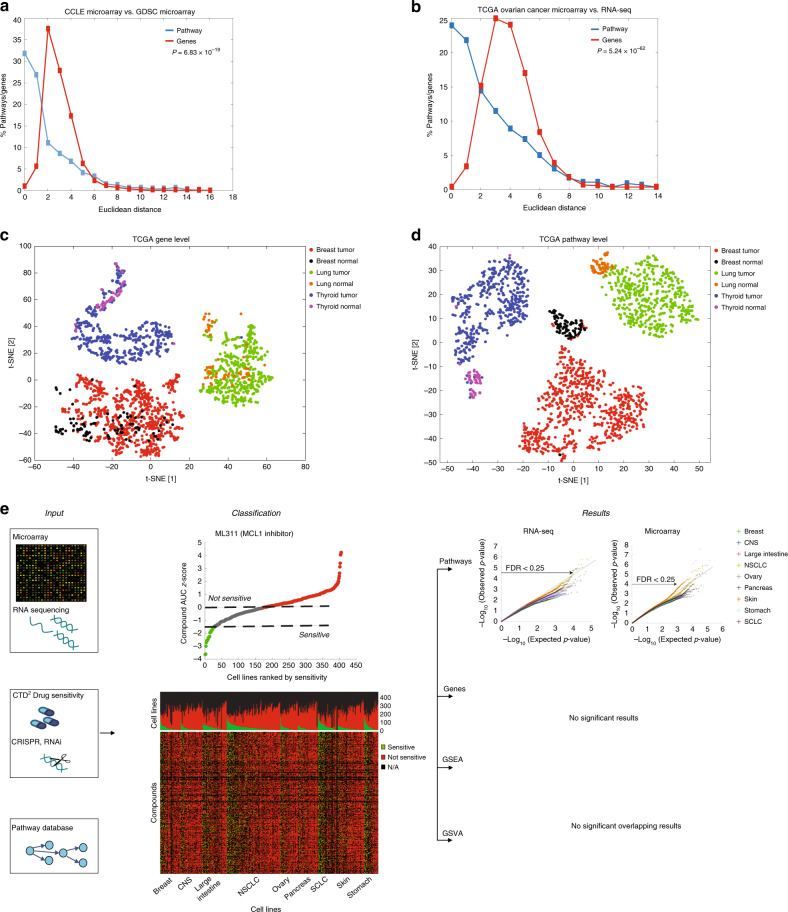
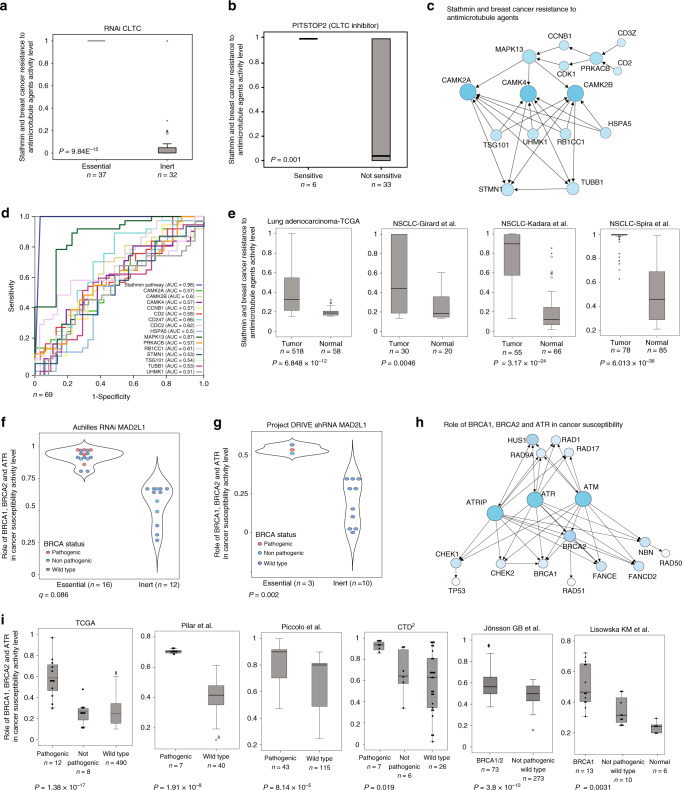
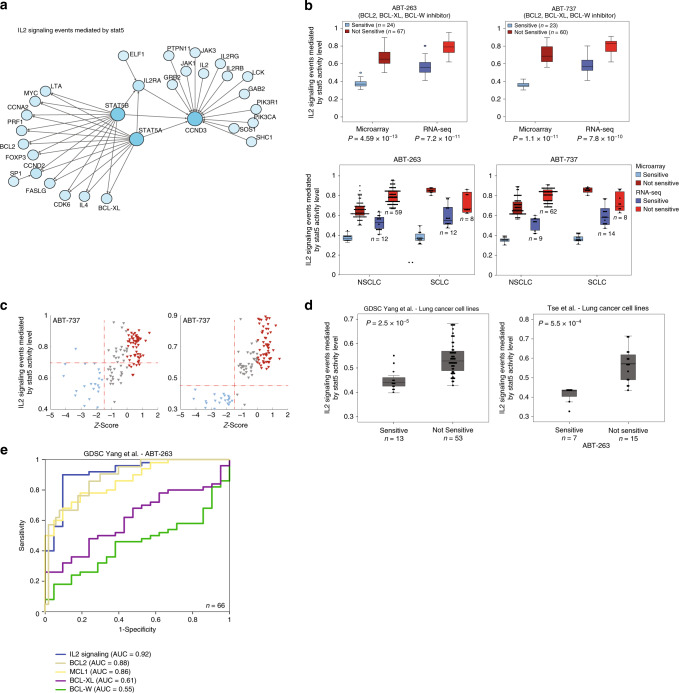
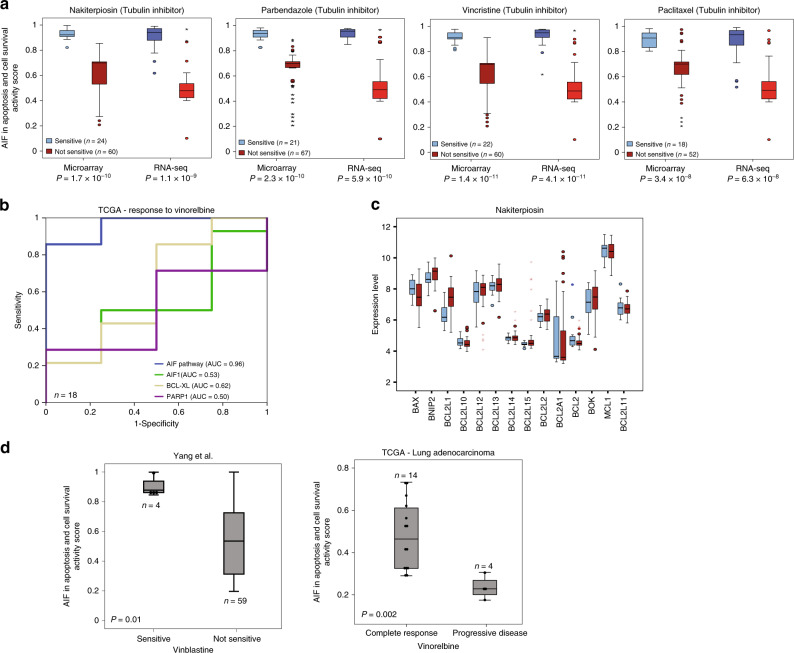
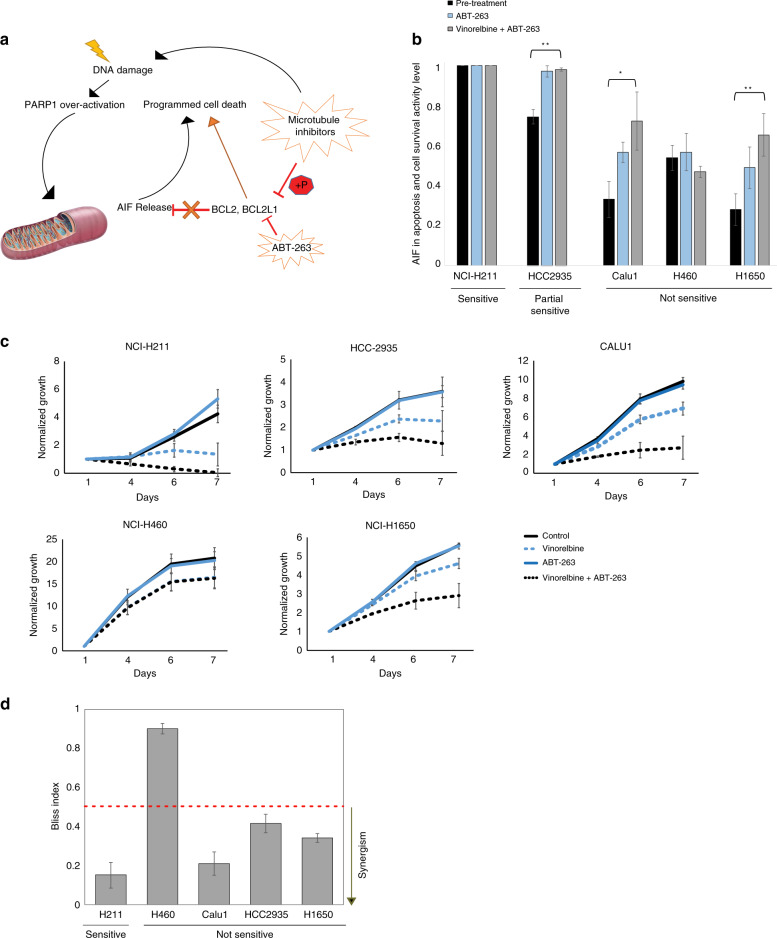
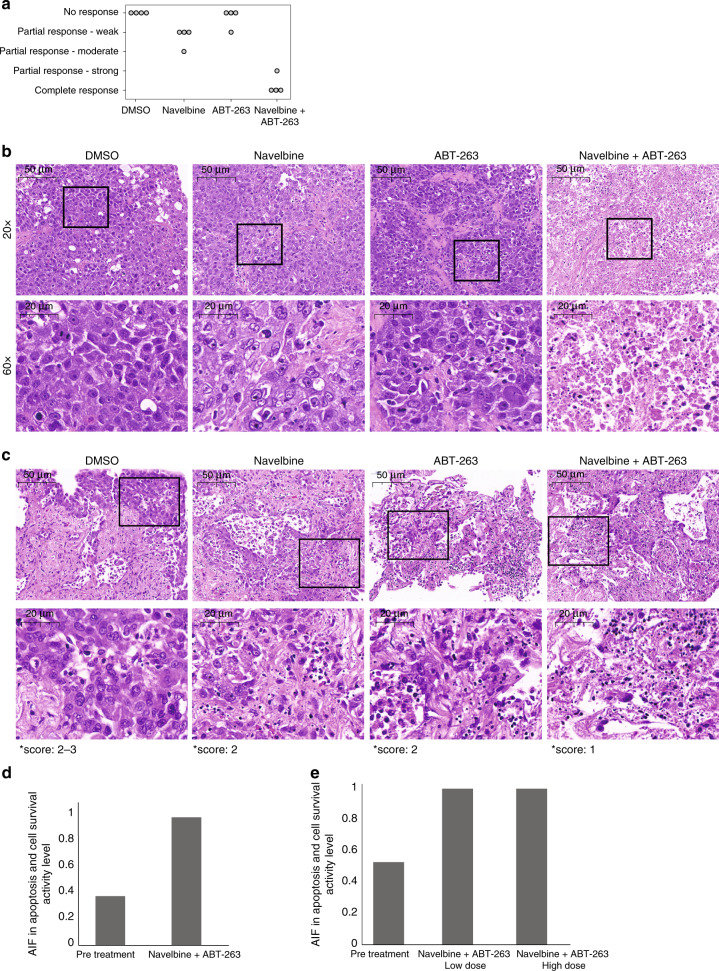
Identifying robust, patient-specific, and predictive biomarkers presents a major obstacle in precision oncology. To optimize patient-specific therapeutic strategies, here we couple pathway knowledge with large-scale drug sensitivity, RNAi, and CRISPR-Cas9 screening data from 460 cell lines. Pathway activity levels are found to be strong predictive biomarkers for the essentiality of 15 proteins, including the essentiality of MAD2L1 in breast cancer patients with high BRCA-pathway activity. We also find strong predictive biomarkers for the sensitivity to 31 compounds, including BCL2 and microtubule inhibitors (MTIs). Lastly, we show that Bcl-xL inhibition can modulate the activity of a predictive biomarker pathway and re-sensitize lung cancer cells and tumors to MTI therapy. Overall, our results support the use of pathways in helping to achieve the goal of precision medicine by uncovering dozens of predictive biomarkers.
在精准肿瘤学中,鉴定稳健、个体化且具有预测性的生物标志物是一个主要障碍。为了优化个体化的治疗策略,我们将通路知识与来自 460 个细胞系的大规模药物敏感性、RNAi 和 CRISPR-Cas9 筛选数据相结合。通路活性水平被发现是 15 种蛋白质(包括在具有高 BRCA 通路活性的乳腺癌患者中 MAD2L1 的必需性)的强预测性生物标志物。我们还发现了对 31 种化合物(包括 BCL2 和微管抑制剂(MTIs))的敏感性的强预测性生物标志物。最后,我们表明 Bcl-xL 抑制可以调节预测性生物标志物通路的活性,并使肺癌细胞和肿瘤重新对 MTI 治疗敏感。总体而言,我们的结果支持使用通路来帮助实现精准医学的目标,揭示了数十个预测性生物标志物。