CIC nanoGUNE BRTA, Tolosa Hiribidea 76, 20018, Donostia-San Sebastián, Spain.
neaspec GmbH, Eglfinger Weg 2, 85540, Munich-Haar, Germany.
Nat Commun. 2020 Jul 3;11(1):3359. doi: 10.1038/s41467-020-17034-6.
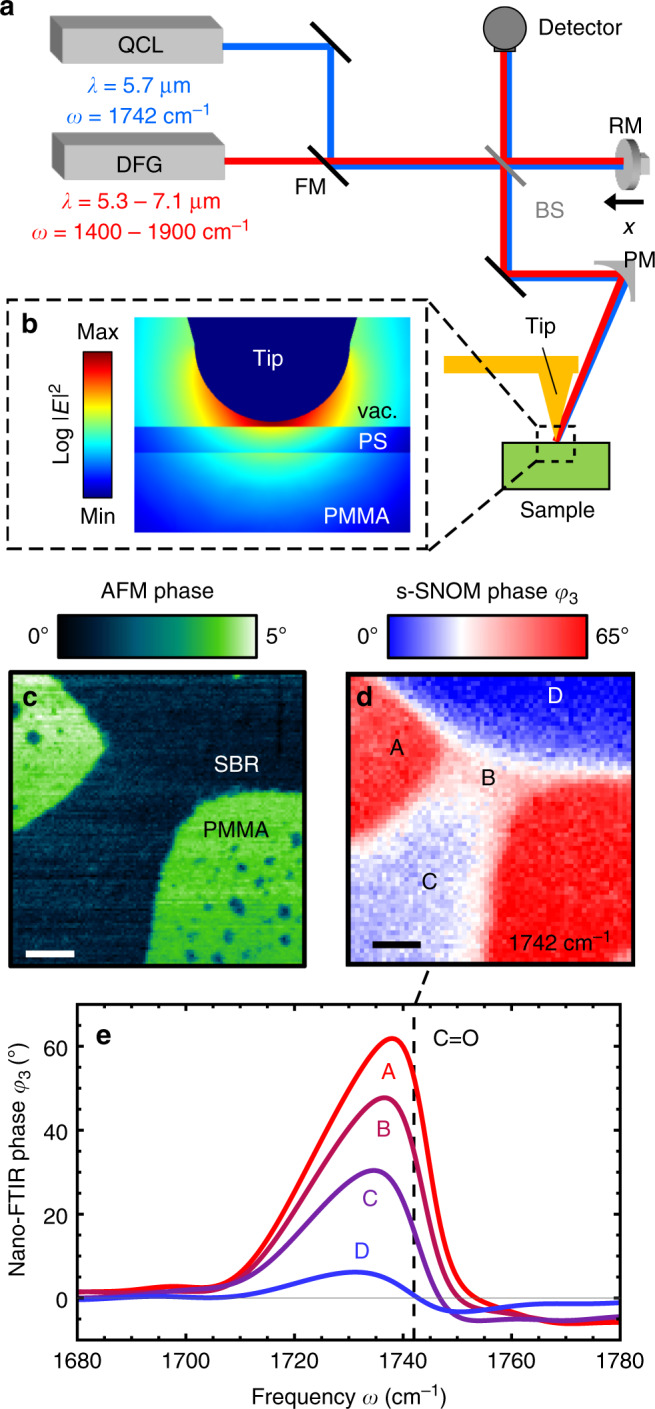
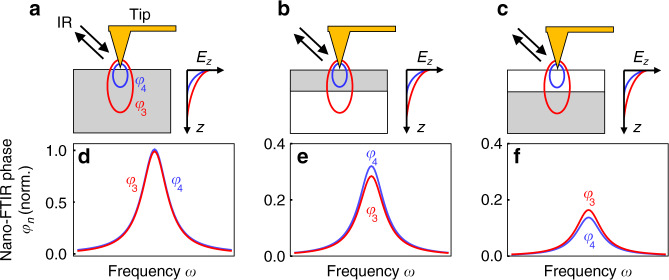
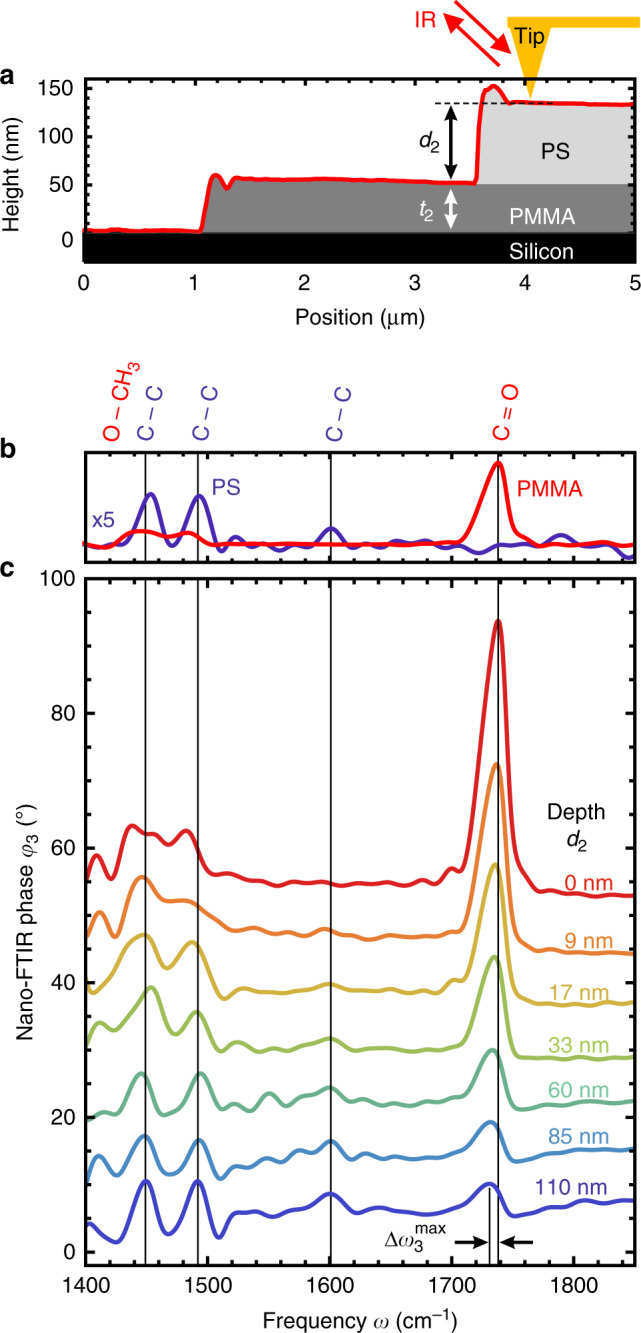
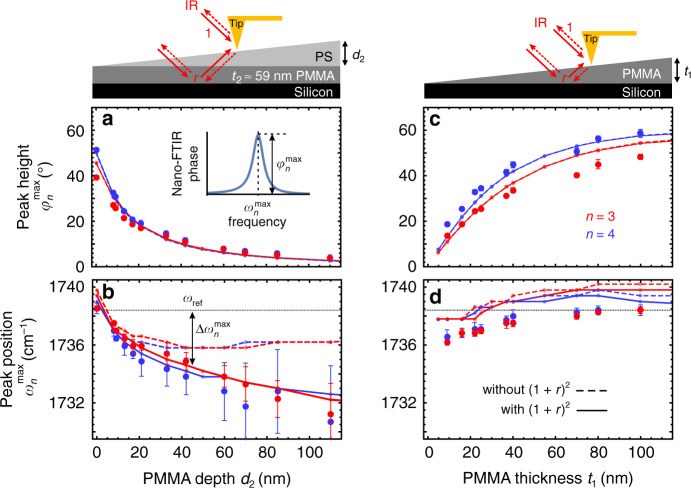
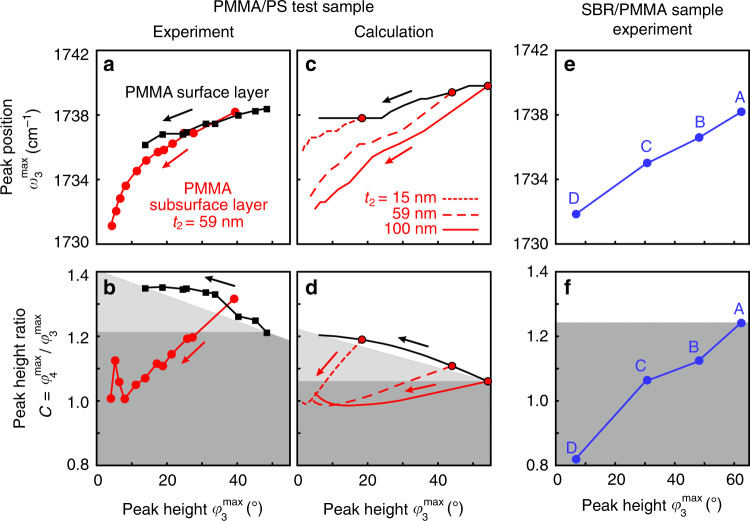
Nano-FTIR spectroscopy based on Fourier transform infrared near-field spectroscopy allows for label-free chemical nanocharacterization of organic and inorganic composite surfaces. The potential capability for subsurface material analysis, however, is largely unexplored terrain. Here, we demonstrate nano-FTIR spectroscopy of subsurface organic layers, revealing that nano-FTIR spectra from thin surface layers differ from that of subsurface layers of the same organic material. Further, we study the correlation of various nano-FTIR peak characteristics and establish a simple and robust method for distinguishing surface from subsurface layers without the need of theoretical modeling or simulations (provided that chemically induced spectral modifications are not present). Our experimental findings are confirmed and explained by a semi-analytical model for calculating nano-FTIR spectra of multilayered organic samples. Our results are critically important for the interpretation of nano-FTIR spectra of multilayer samples, particularly to avoid that geometry-induced spectral peak shifts are explained by chemical effects.
基于傅里叶变换近场光谱的纳米傅里叶变换红外光谱允许对有机和无机复合表面进行无标记的化学纳米特性分析。然而,对于亚表面材料分析的潜在能力,这仍然是一个尚未探索的领域。在这里,我们展示了亚表面有机层的纳米傅里叶变换红外光谱,揭示了来自薄表面层的纳米傅里叶变换红外光谱与相同有机材料的亚表面层的光谱不同。此外,我们研究了各种纳米傅里叶变换红外光谱峰特征的相关性,并建立了一种简单而强大的方法,无需理论建模或模拟(前提是不存在化学诱导的光谱修饰)即可区分表面和亚表面层。我们的实验结果得到了计算多层有机样品纳米傅里叶变换红外光谱的半解析模型的证实和解释。我们的结果对于解释多层样品的纳米傅里叶变换红外光谱非常重要,特别是为了避免由于几何诱导的光谱峰位移被解释为化学效应。