Univ Lyon, ENS de Lyon, Univ Claude Bernard, CNRS, LGL-TPE, 46 allée d'Italie, 69342, Lyon, France.
Muséum National D'Histoire Naturelle, Département Origines & Evolution, CR2P MNHN, CNRS, Sorbonne Université, 8 rue Buffon CP38, 75005, Paris, France.
Sci Rep. 2020 Jul 3;10(1):10974. doi: 10.1038/s41598-020-67481-w.
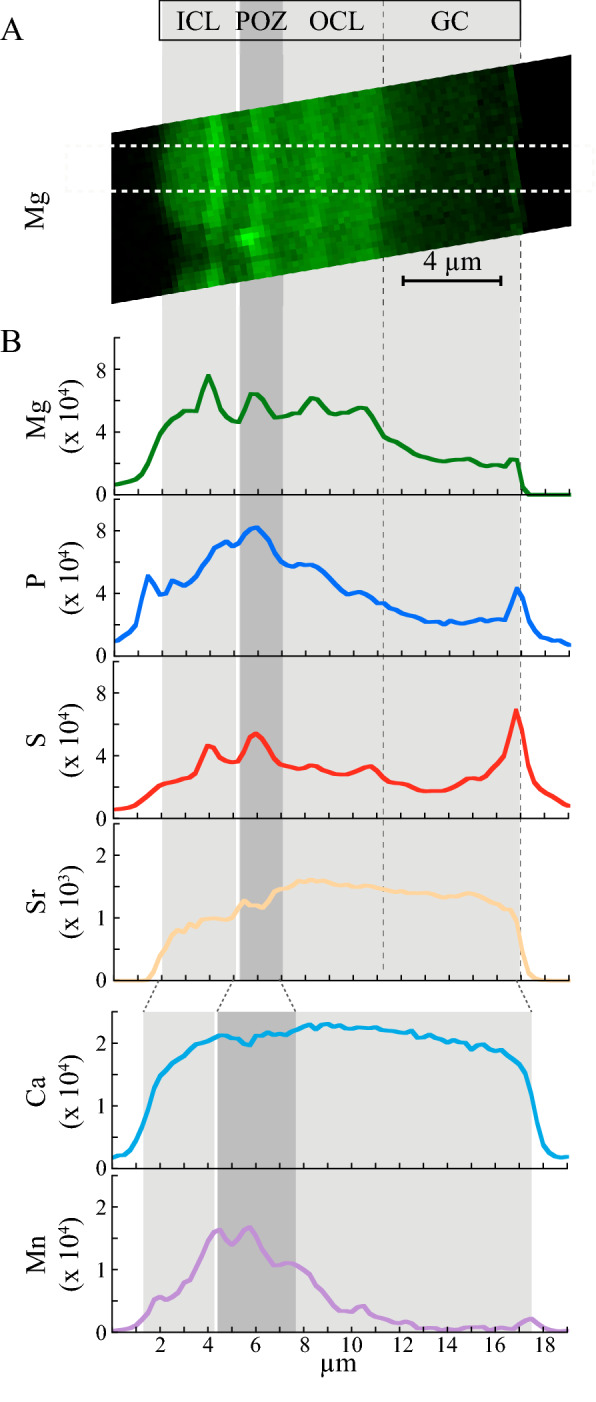
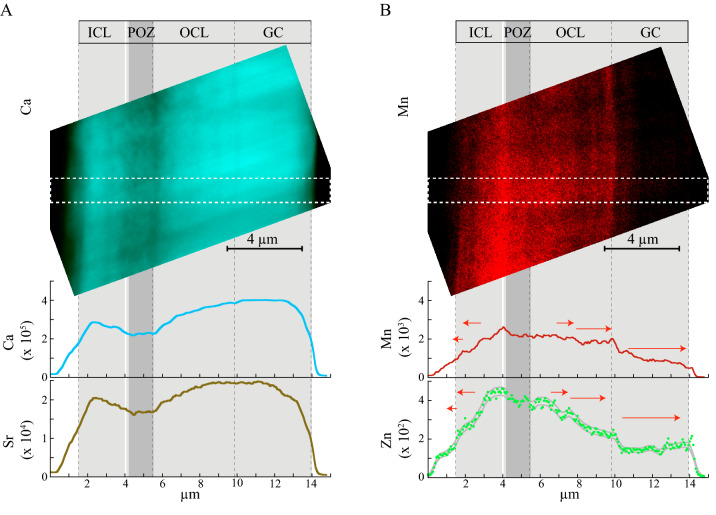
Bioactive metal releases in ocean surface water, such as those by ash falls during volcanic super-eruptions, might have a potentially toxic impact on biocalcifier planktic microorganisms. Nano-XRF imaging with the cutting-edge synchrotron hard X-ray nano-analysis ID16B beamline (ESRF) revealed for the first time a specific Zn- and Mn-rich banding pattern in the test walls of Globorotalia menardii planktic foraminifers extracted from the Young Toba Tuff layer, and thus contemporaneous with Toba's super-eruption, 74,000 years ago. The intra-test correlation of Zn and Mn patterns at the nanoscale with the layered calcareous microarchitecture, indicates that the incorporation of these metals is syngenetic to the wall growth. The preferential Mn and Zn sequestration within the incipient stages of chamber formation suggests a selective incorporation mechanism providing a resilience strategy to metal pollution in the test building of planktic foraminifers.
海洋表面水中的生物活性金属释放,如火山超级喷发期间的火山灰沉降,可能对生物钙化浮游微生物产生潜在的毒性影响。利用尖端同步加速器硬 X 射线纳米分析 ID16B 光束线(ESRF)的纳米 XRF 成像技术,首次在从年轻多巴凝灰岩层中提取的 Globorotalia menardii 浮游有孔虫测试壁中发现了特定的 Zn 和 Mn 富带模式,因此与多巴超级喷发同时发生,距今 74000 年前。纳米尺度上 Zn 和 Mn 模式与层状钙质微结构的测试内相关性表明,这些金属的掺入与壁的生长是共生的。在室形成的初始阶段优先螯合 Mn 和 Zn,表明存在一种选择性掺入机制,为浮游有孔虫测试构建体中的金属污染提供了一种弹性策略。