Department of Molecular and Human Genetics, Baylor College of Medicine, Houston, TX 77030, USA; Huffington Center on Aging, Baylor College of Medicine, Houston, TX 77030, USA.
Department of Molecular and Human Genetics, Baylor College of Medicine, Houston, TX 77030, USA; Program in Developmental Biology, Baylor College of Medicine, Houston, TX 77030, USA; Huffington Center on Aging, Baylor College of Medicine, Houston, TX 77030, USA.
Trends Biochem Sci. 2020 Nov;45(11):978-991. doi: 10.1016/j.tibs.2020.06.004. Epub 2020 Jul 2.
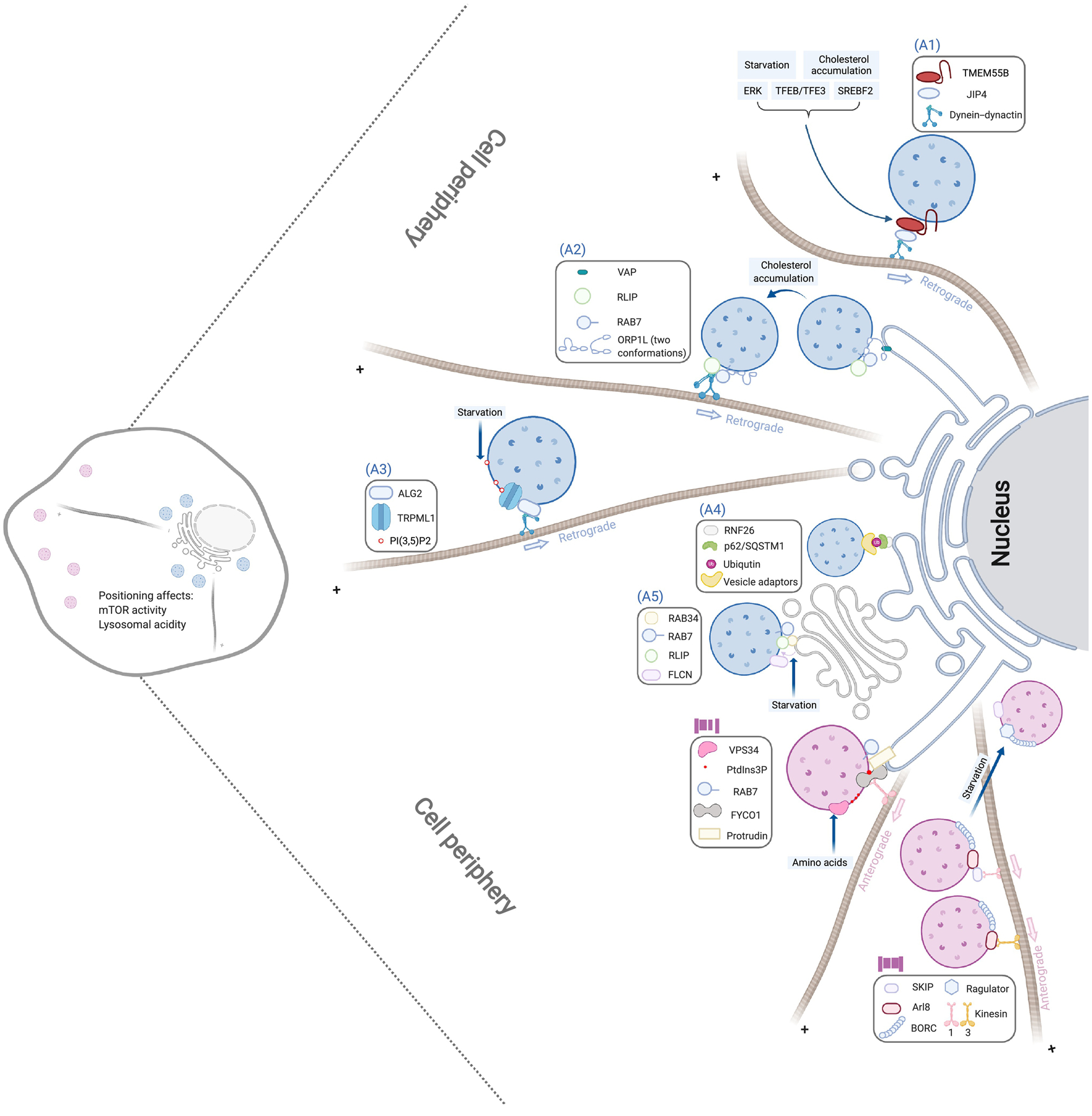
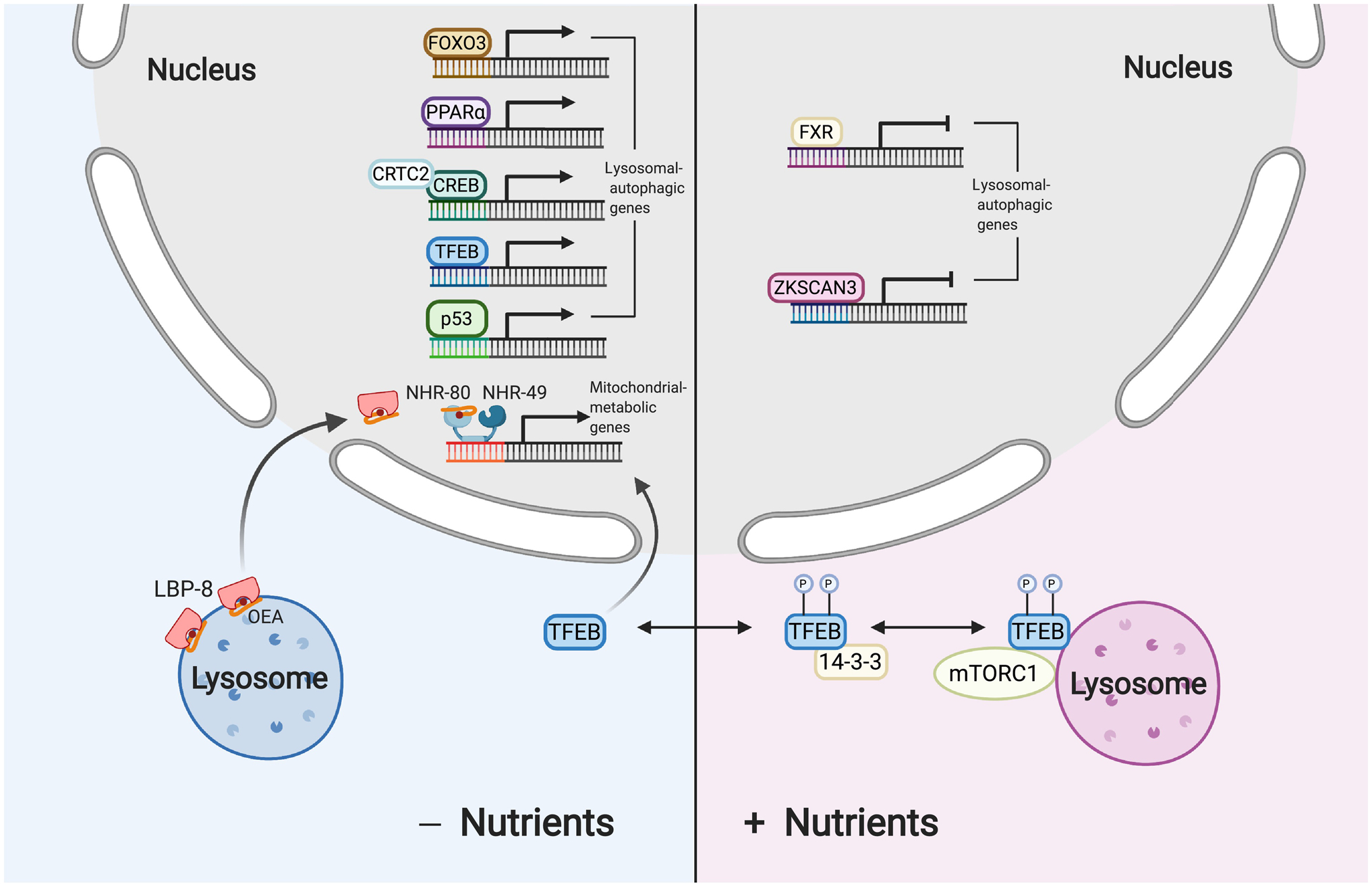
Lysosomes transcend the role of degradation stations, acting as key nodes for interorganelle crosstalk and signal transduction. Lysosomes communicate with the nucleus through physical proximity and functional interaction. In response to external and internal stimuli, lysosomes actively adjust their distribution between peripheral and perinuclear regions and modulate lysosome-nucleus signaling pathways; in turn, the nucleus fine-tunes lysosomal biogenesis and functions through transcriptional controls. Changes in coordination between these two essential organelles are associated with metabolic disorders, neurodegenerative diseases, and aging. In this review, we address recent advances in lysosome-nucleus communication by multi-tiered regulatory mechanisms and discuss how these regulations couple metabolic inputs with organellar motility, cellular signaling, and transcriptional network.
溶酶体超越了降解站的角色,充当细胞器间通讯和信号转导的关键节点。溶酶体通过物理接近和功能相互作用与核进行通讯。溶酶体能够对外界和内部刺激做出反应,主动调整其在周边和核周区域之间的分布,并调节溶酶体-核信号通路;反过来,核通过转录控制精细调节溶酶体的生物发生和功能。这两个重要细胞器之间协调的变化与代谢紊乱、神经退行性疾病和衰老有关。在这篇综述中,我们通过多层次的调节机制探讨了溶酶体-核通讯的最新进展,并讨论了这些调节如何将代谢输入与细胞器运动、细胞信号和转录网络相耦合。