El Omri Halima, Taha Ruba Yasin, Elomri Adel, Kacem Nancy, Elsabah Hesham, Ellahie Anil Yousaf, Gamil Amna, Ibrahim Firyal, Soliman Dina Sameh Abdelrahman, El Akiki Susanna Jane Lawson, Nawaz Zafar, Al Sabbagh Ahmad, El Omri Abdelfatteh
Medical Oncology-Hematology Department, National Centre for Cancer Care and Research (NCCCR), Hamad Medical Corporation (HMC), Doha, Qatar.
Division of Engineering Management and Decision Sciences, College of Science and Engineering, Hamad Bin Khalifa University, Doha, Qatar.
Front Genet. 2020 Jun 17;11:553. doi: 10.3389/fgene.2020.00553. eCollection 2020.
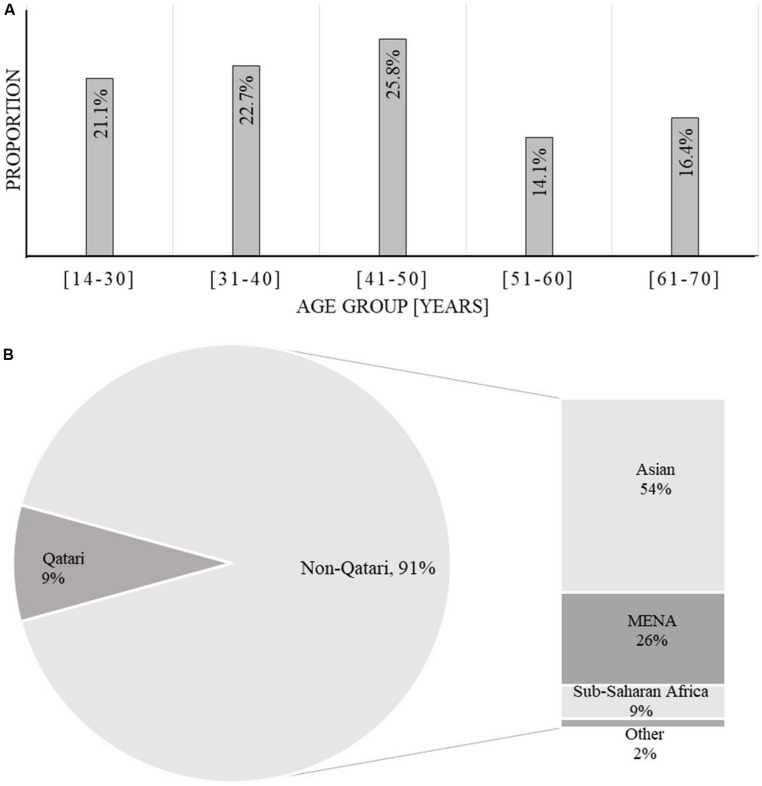
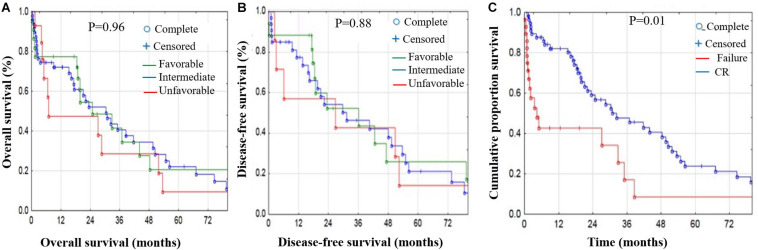
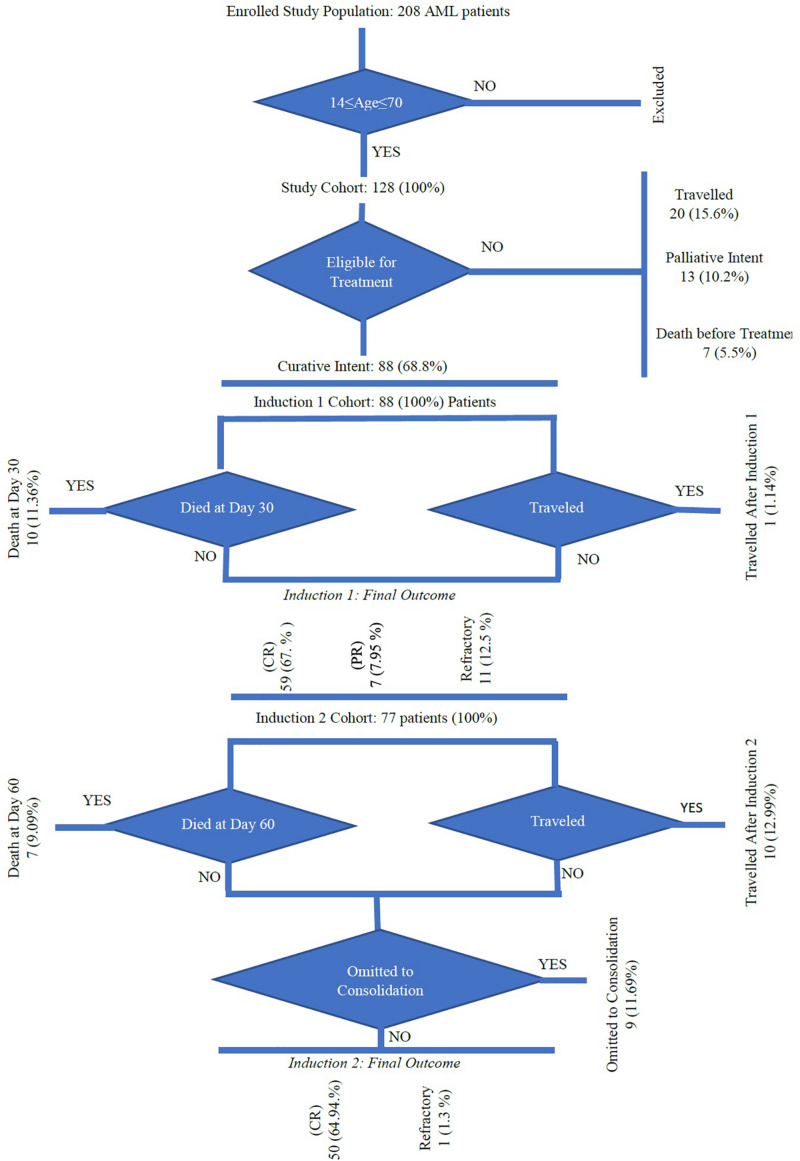
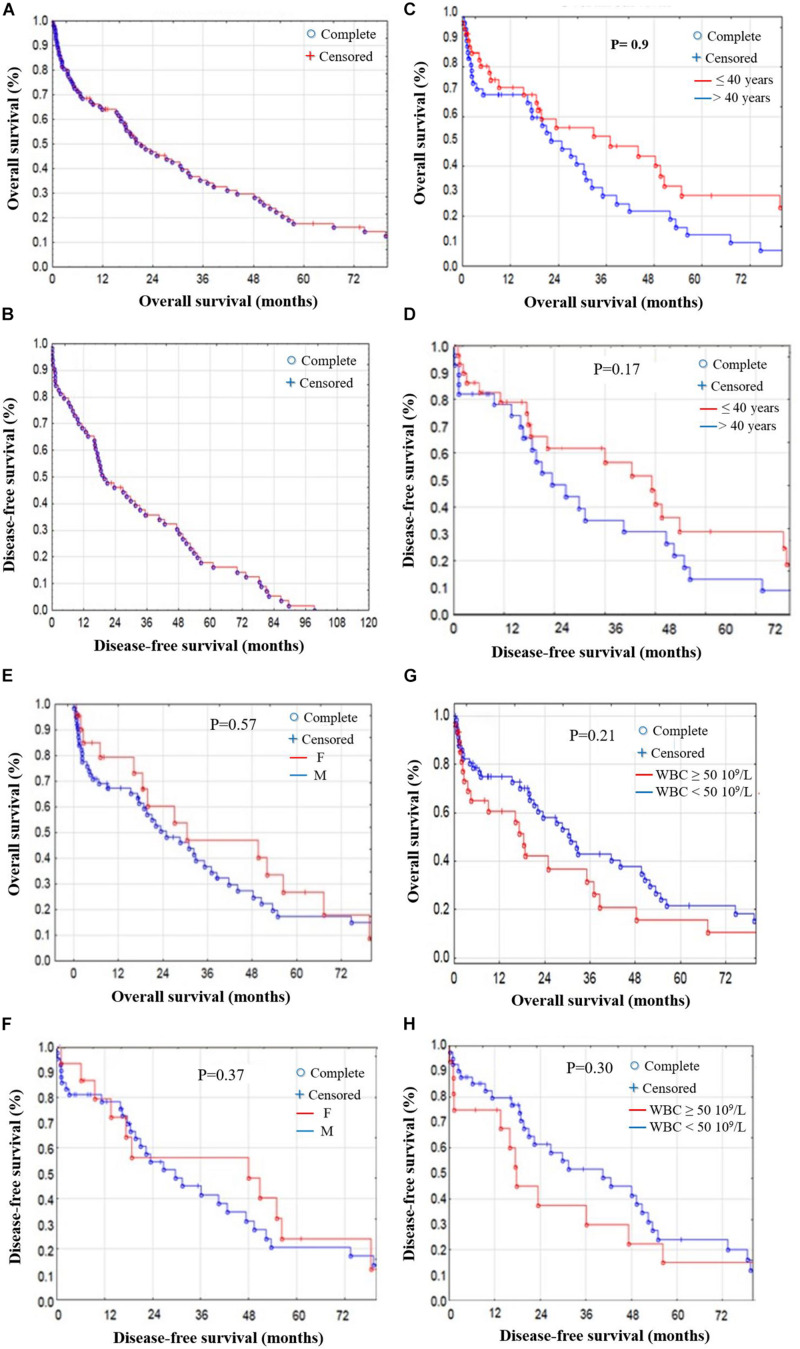
The current study retrospectively evaluated cytogenetic profiles, various prognostic factors, and survival outcomes in 128 acute myeloid leukemia (AML) patients (14 ≤ age ≤ 70 years) admitted to the National Center for Cancer Care and Research (NCCCR), Hamad Medical Corporation, Doha, Qatar, between January 2010 and December 2016. The median age at diagnosis was 43 years, and 80% were less than 60 years old; 75% of patients were male. Cytogenetic analysis was integrated into the World Health Organization 2008 classification and showed that the percentages of normal and abnormal karyotypes were similar, accounting for 48.4% of each group of patients. The AML risk stratification based on cytogenetic analysis resulted in the following distribution: 18% in the favorable risk group, 57% in the intermediate-risk group, 24% in the unfavorable risk group, and 1% unknown. Only 88 patients received therapy with curative intent; 67% achieved complete remission, increasing to 81% after inductions 1 and 2. The median overall survival (OS) and disease-free survival (DFS) in AML patients were 26.6 and 19.5 months, respectively. The 3-year OS and DFS were 40 and 36%, respectively. Prognostic factors including age, gender, white blood cell count, and risk stratification were not significantly associated with treatment outcomes, whereas response to treatment vs. failure was significantly associated with the outcome ( = 0.01). The current study supports the importance of cytogenetics as a useful tool in diagnosis, prognosis, and risk assessment in AML treatment.
本研究回顾性评估了2010年1月至2016年12月期间在卡塔尔多哈哈马德医疗公司国家癌症护理与研究中心(NCCCR)收治的128例急性髓系白血病(AML)患者(年龄14岁≤年龄≤70岁)的细胞遗传学特征、各种预后因素和生存结果。诊断时的中位年龄为43岁,80%的患者年龄小于60岁;75%的患者为男性。细胞遗传学分析纳入了世界卫生组织2008年分类,结果显示正常核型和异常核型的患者比例相似,每组患者均占48.4%。基于细胞遗传学分析的AML风险分层结果如下:低危组占18%,中危组占57%,高危组占24%,1%未知。只有88例患者接受了根治性治疗;67%的患者实现了完全缓解,在第1次和第2次诱导后增至81%。AML患者的中位总生存期(OS)和无病生存期(DFS)分别为26.6个月和19.5个月。3年OS和DFS分别为40%和36%。年龄、性别、白细胞计数和风险分层等预后因素与治疗结果无显著相关性,而治疗反应与失败与结果显著相关(P = 0.01)。本研究支持细胞遗传学作为AML治疗中诊断、预后和风险评估有用工具的重要性。