Jeger Michael, Bragard Claude, Caffier David, Candresse Thierry, Chatzivassiliou Elisavet, Dehnen-Schmutz Katharina, Gilioli Gianni, Gregoire Jean-Claude, Jaques Miret Josep Anton, Navarro Maria Navajas, Niere Björn, Parnell Stephen, Potting Roel, Rafoss Trond, Rossi Vittorio, Urek Gregor, Van Bruggen Ariena, Van der Werf Wopke, West Jonathan, Winter Stephan, Czwienczek Ewelina, Aukhojee Mitesha, MacLeod Alan
EFSA J. 2017 Jul 4;15(7):e04882. doi: 10.2903/j.efsa.2017.4882. eCollection 2017 Jul.
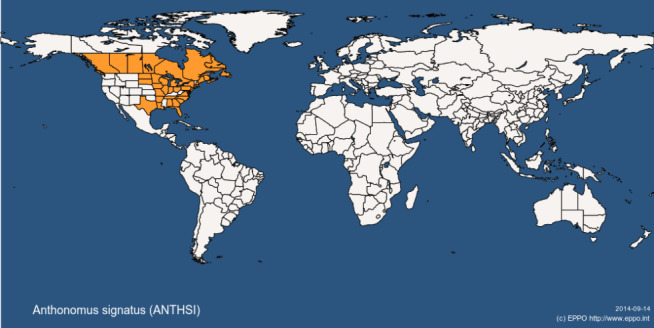
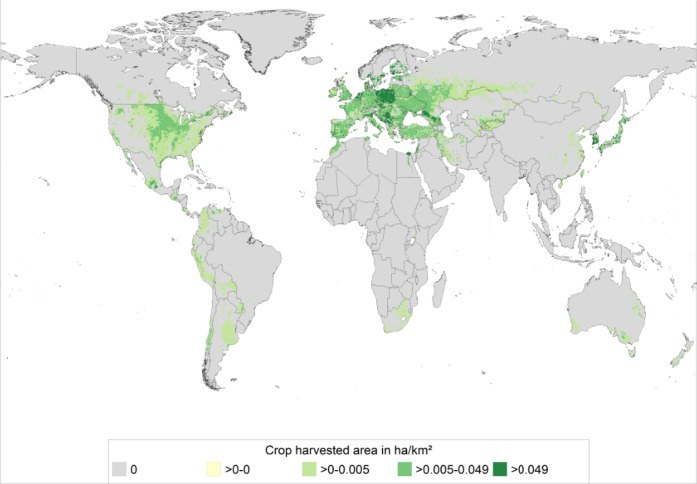
The Panel on Plant Health performed a pest categorisation of the strawberry bud weevil, Say, (Coleoptera: Curculionidae), for the EU. is a well-defined and distinguishable species, recognised as a pest of strawberry () fruit production in eastern North America where it is also a pest of . There are reports of . associated with non-rosaceous plants such as and although whether such plants are true hosts is uncertain. This pest categorisation focuses on and as hosts. is not known to occur in the EU. It is listed in Annex IIAI of Council Directive 2000/29/EC. The international trade in and plants for planting provides a potential pathway to introduce . from North America. Considering climatic similarities between North America and the EU, the thermal biology of . and host distribution in the EU, . has the potential to establish within the EU. There would be one generation per year, as in North America. As a pest of field grown and , . would not be expected to establish in EU glasshouses. In North America, adults clip developing buds, preventing fruit development and reducing yield. Losses are variable and depend on the cultivars attacked. Severe crop losses have been reported. However, some cultivars can compensate the loss of buds, e.g. by increasing the weight of fruits developing on remaining buds. Phytosanitary measures are available to reduce the likelihood of introduction of . from North America. All criteria assessed by EFSA for consideration as a potential Union quarantine pest are met. As . is not known to occur in the EU, this criterion assessed by EFSA to consider it as a Union regulated non-quarantine pest is not met.
植物健康小组针对欧盟对草莓芽象甲(Say,鞘翅目:象甲科)进行了有害生物分类。这是一个定义明确且可区分的物种,在北美东部被认为是草莓()果实生产的有害生物,在那里它也是 的有害生物。有关于 与非蔷薇科植物如 和 相关的报道,尽管这些植物是否为真正的寄主尚不确定。本次有害生物分类主要关注 和 作为寄主的情况。目前已知该有害生物在欧盟未发生。它被列入理事会指令2000/29/EC的附件IIAI中。 和 种植用植物的国际贸易为从北美引入 提供了潜在途径。考虑到北美与欧盟气候的相似性、 的热生物学特性以及其在欧盟的寄主分布情况, 有可能在欧盟境内定殖。与北美一样,每年会有一代。作为露地种植的 和 的有害生物,预计 不会在欧盟温室中定殖。在北美,成虫会啃食发育中的芽,阻止果实发育并降低产量。损失程度各不相同,取决于受侵害的品种。已有严重作物损失的报道。然而,一些 品种能够弥补芽的损失,例如通过增加剩余芽上发育的果实重量。可以采取植物检疫措施来降低从北美引入 的可能性。欧洲食品安全局评估的作为潜在欧盟检疫性有害生物的所有标准均已满足。由于目前已知 在欧盟未发生,欧洲食品安全局评估其作为欧盟管制的非检疫性有害生物的这一标准未满足。