Jeger Michael, Bragard Claude, Caffier David, Candresse Thierry, Chatzivassiliou Elisavet, Dehnen-Schmutz Katharina, Gilioli Gianni, Grégoire Jean-Claude, Jaques Miret Josep Anton, MacLeod Alan, Navajas Navarro Maria, Niere Björn, Parnell Stephen, Potting Roel, Rafoss Trond, Urek Gregor, Van Bruggen Ariena, Van der Werf Wopke, West Jonathan, Winter Stephan, Armengol Forti Josep, Vloutoglou Irene, Bottex Bernard, Rossi Vittorio
EFSA J. 2018 Mar 12;16(3):e05183. doi: 10.2903/j.efsa.2018.5183. eCollection 2018 Mar.
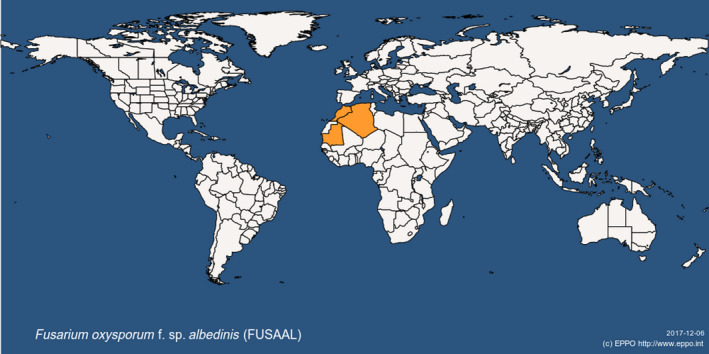
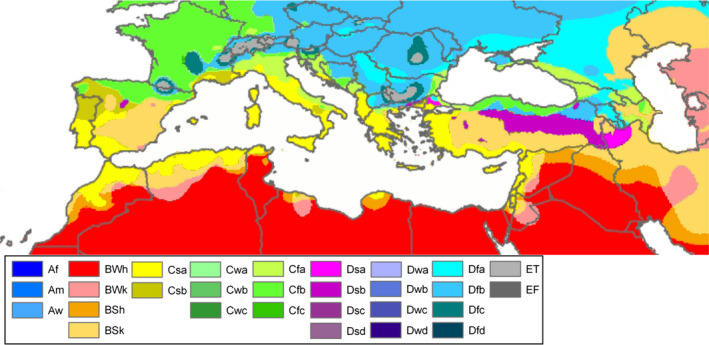
The Panel on Plant Health performed a pest categorisation of the soil-borne fungus f. sp. , the causal agent of Fusarium wilt of date palm, for the EU. The identity of the pest is well established and reliable methods exist for its detection/identification. The pest is listed in Annex IIAI of Directive 2000/29/EC and is not known to occur in the EU. f. sp. is present in Morocco, Algeria and Mauritania. Its major host is , which is the only species known to be affected by the pest. Uncertainty exists about the host status of , and spp. cultivated as intercrops in the infested areas and reported as being symptomless carriers of the pest. The pest could potentially enter the EU on host plants and soil/growing media originating in infested Third countries. The current pest distribution and climate matching suggest that the pest could establish and spread in the EU wherever the host is present. In the infested areas, the pest causes vascular wilt resulting in yield/quality losses and plant death. It is expected that pest introduction and spread in the EU could impact date production. The pest is expected to have high environmental consequences in the Elche area (Spain), which is a UNESCO World Heritage Site, as well as other EU areas where is grown as an amenity tree. Current EU phytosanitary measures are not fully effective at mitigating the risk of introduction and spread of the pest in the EU. f. sp. meets all the criteria assessed by EFSA for consideration as potential Union quarantine pest. As the pest is not known to occur in the EU, this criterion to consider it as Union regulated non-quarantine pest is not met.
植物健康小组针对欧盟对土壤传播真菌枣椰树尖镰孢菌(Fusarium oxysporum f. sp. albedinis)进行了有害生物分类。该有害生物的身份已明确确立,并且存在可靠的检测/鉴定方法。该有害生物列于2000/29/EC号指令的附件IIAI中,在欧盟境内尚无发生记录。枣椰树尖镰孢菌存在于摩洛哥、阿尔及利亚和毛里塔尼亚。其主要寄主是枣椰树,这是已知受该有害生物影响的唯一物种。对于在受侵染地区作为间作作物种植且被报告为该有害生物无症状携带者的海枣属(Phoenix)其他物种、刺葵属(Phoenix)物种和菜棕属(Sabal)物种的寄主状况存在不确定性。该有害生物可能随源自受侵染第三国的寄主植物以及土壤/栽培介质进入欧盟。当前有害生物的分布情况和气候匹配表明,只要有寄主存在,该有害生物就可能在欧盟定殖并扩散。在受侵染地区,该有害生物会导致维管束萎蔫,从而造成产量/质量损失以及植株死亡。预计该有害生物传入并在欧盟扩散可能会影响枣椰生产。预计该有害生物在西班牙埃尔切地区(一处联合国教科文组织世界遗产地)以及其他将枣椰作为观赏树种植的欧盟地区会产生重大环境影响。当前欧盟的植物检疫措施在降低该有害生物传入和在欧盟扩散风险方面并不完全有效。枣椰树尖镰孢菌符合欧洲食品安全局评估的所有作为潜在欧盟检疫性有害生物的标准。由于该有害生物在欧盟尚无发生记录,因此不符合将其视为欧盟管制的非检疫性有害生物的这一标准。