Department of Neurology, Hebei General Hospital, Shijiazhuang, Hebei 050050, P.R. China.
Mol Med Rep. 2020 Aug;22(2):792-802. doi: 10.3892/mmr.2020.11143. Epub 2020 May 14.
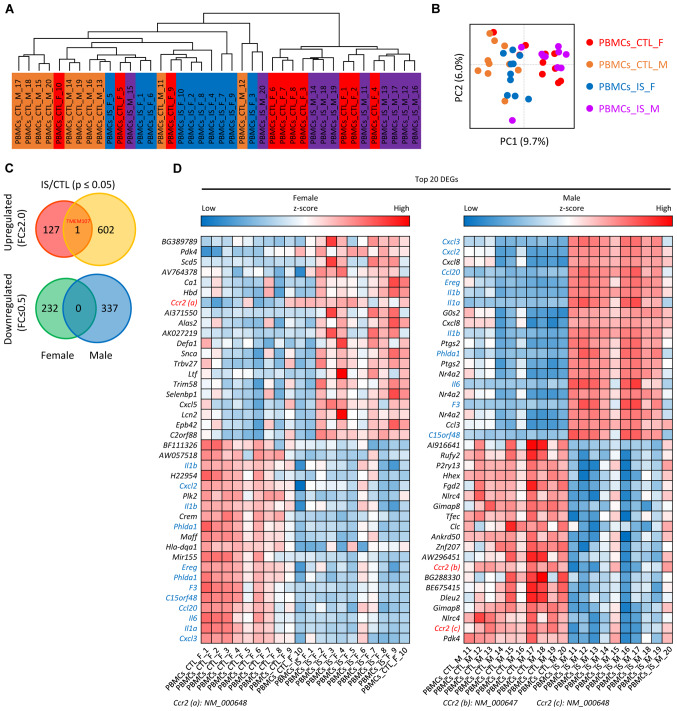
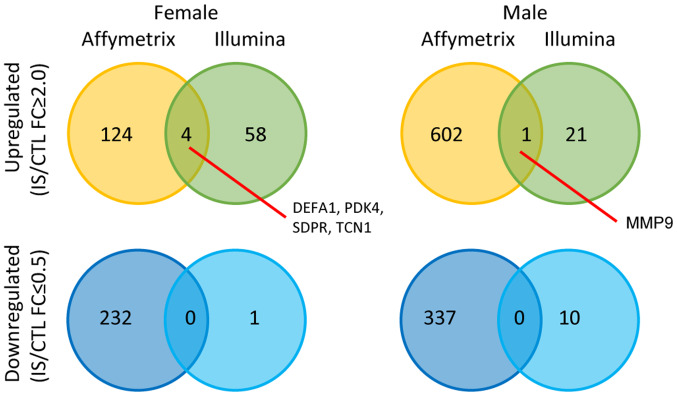
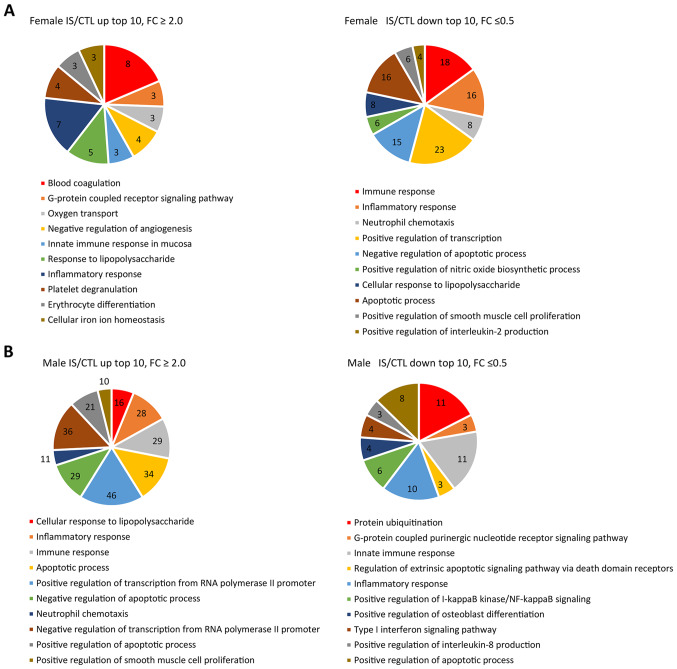
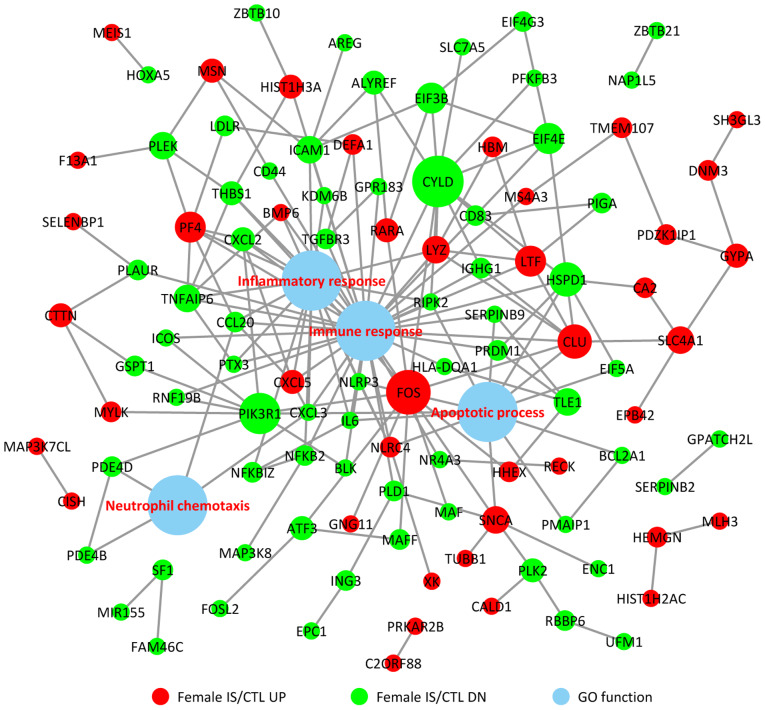
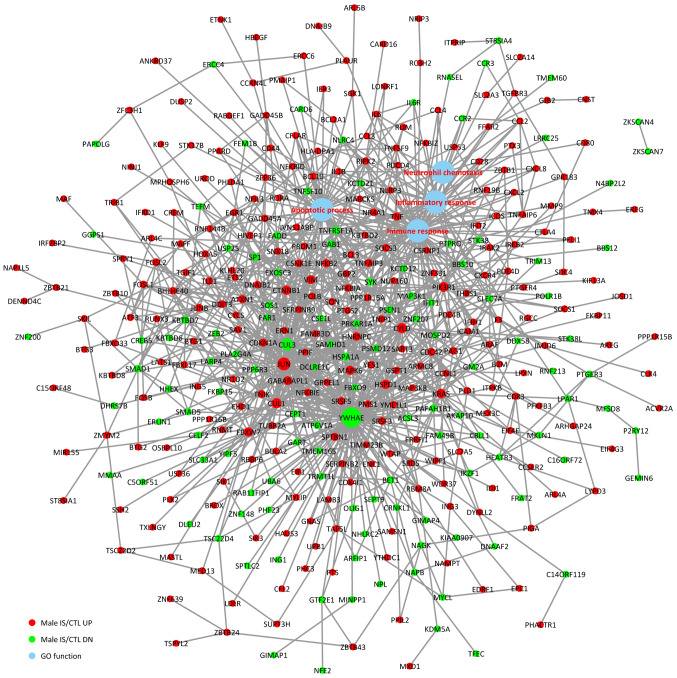
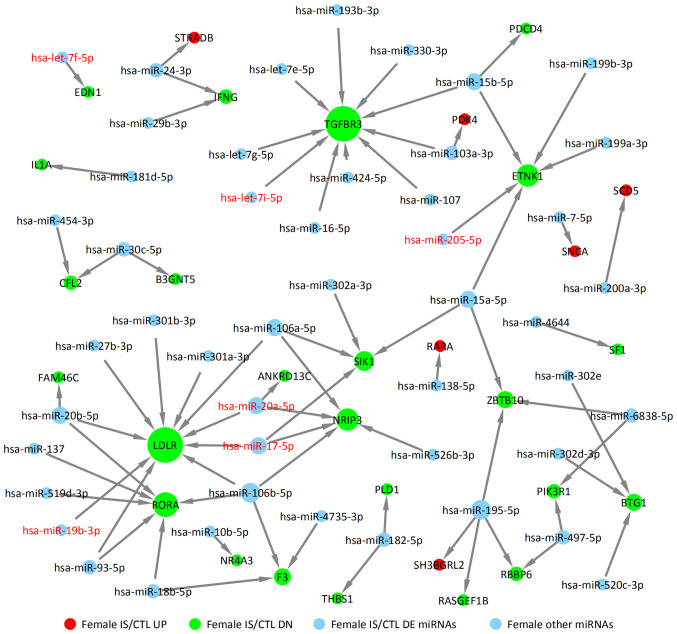
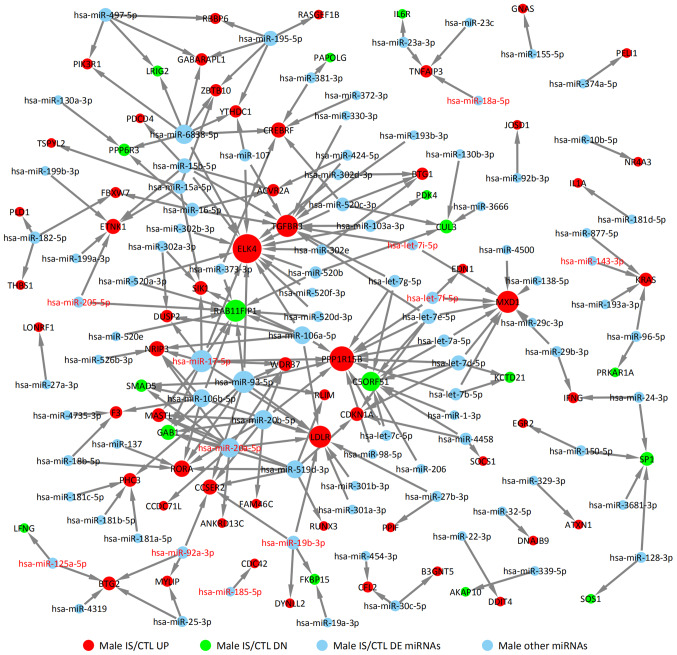
To provide insight into molecular diagnosis and individualized treatment of ischemic stroke (IS), several available datasets in IS were analyzed to identify the differentially expressed genes and microRNAs (miRNAs). Series matrix files from GSE22255 and GSE16561 (mRNA profiles), a well as GSE110993 (miRNA profile) were downloaded from the Gene Expression Omnibus database. System‑level clustering was performed with GeneCluster 3.0 software, and gene annotation and pathway enrichment were performed with gene ontology analysis and Database for Annotation, Visualization and Integrated Discovery software. For a protein‑protein interaction (PPI) network, Biological General Repository for Interaction Datasets and IntAct interaction information were integrated to determine the interaction of differentially expressed genes. The selected miRNA candidates were imported into the TargetScan, miRDB and miRecords databases for the prediction of target genes. The present study identified 128 upregulated and 231 downregulated genes in female stroke patients, and 604 upregulated and 337 downregulated genes in male stroke patients compared with sex‑ and age‑matched controls. The construction of a PPI network demonstrated that male stroke patients exhibited YWHAE, CUL3 and JUN as network center nodes, and in female patients CYLD, FOS and PIK3R1 interactions were the strongest. Notably, these interactions are mainly involved in immune inflammatory response, apoptosis and other biological pathways, such as blood coagulation. Female and male upregulated genes were cross‑validated with another set of Illumina HumanRef‑8 v3.0 expression beadchip (GSE16561). Functional item association networks, gene function networks and transcriptional regulatory networks were successfully constructed, and the relationships between miRNAs and target genes were successfully predicted. The present study identified a number of transcription factors, including DEFA1, PDK4, SDPR, TCN1 and MMP9, and miRNAs, including miRNA (miR)‑21, miR‑143/145, miR‑125‑5p and miR‑122, which may serve important roles in the development of cerebral stroke and may be important molecular indicators for the treatment of IS.
为深入了解缺血性脑卒中(IS)的分子诊断和个体化治疗,对多个 IS 相关数据集进行了分析,以鉴定差异表达基因和 microRNAs(miRNAs)。从基因表达综合数据库(GEO)下载 GSE22255 和 GSE16561 的系列矩阵文件(mRNA 谱)和 GSE110993(miRNA 谱)。使用 GeneCluster 3.0 软件进行系统聚类,使用基因本体分析和数据库注释、可视化和综合发现软件进行基因注释和通路富集。为构建蛋白质-蛋白质相互作用(PPI)网络,整合了生物综合交互数据集和 IntAct 交互信息,以确定差异表达基因的相互作用。将选定的 miRNA 候选物导入 TargetScan、miRDB 和 miRecords 数据库,以预测靶基因。与性别和年龄匹配的对照组相比,本研究在女性脑卒中患者中鉴定出 128 个上调基因和 231 个下调基因,在男性脑卒中患者中鉴定出 604 个上调基因和 337 个下调基因。构建的 PPI 网络显示,男性脑卒中患者以 YWHAE、CUL3 和 JUN 为网络中心节点,而女性患者以 CYLD、FOS 和 PIK3R1 相互作用最强。值得注意的是,这些相互作用主要涉及免疫炎症反应、细胞凋亡等生物学通路,如凝血。女性和男性上调基因与另一组 Illumina HumanRef-8 v3.0 表达芯片(GSE16561)进行了交叉验证。成功构建了功能项目关联网络、基因功能网络和转录调控网络,并成功预测了 miRNA 与靶基因的关系。本研究鉴定了一些转录因子,包括 DEFA1、PDK4、SDPR、TCN1 和 MMP9,以及 miRNA,包括 miRNA(miR)-21、miR-143/145、miR-125-5p 和 miR-122,它们可能在脑卒中的发展中发挥重要作用,并且可能是 IS 治疗的重要分子指标。