Amsterdam Center for Learning Analytics, Vrije Universiteit Amsterdam, Amsterdam, The Netherlands.
Department of Clinical, Neuro- and Developmental Psychology, Section Clinical Psychology, Vrije Universiteit Amsterdam, Amsterdam, The Netherlands.
PLoS One. 2020 Jul 6;15(7):e0234349. doi: 10.1371/journal.pone.0234349. eCollection 2020.
The importance of randomization in clinical trials has long been acknowledged for avoiding selection bias. Yet, bias concerns re-emerge with selective attrition. This study takes a causal inference perspective in addressing distinct scenarios of missing outcome data (MCAR, MAR and MNAR).
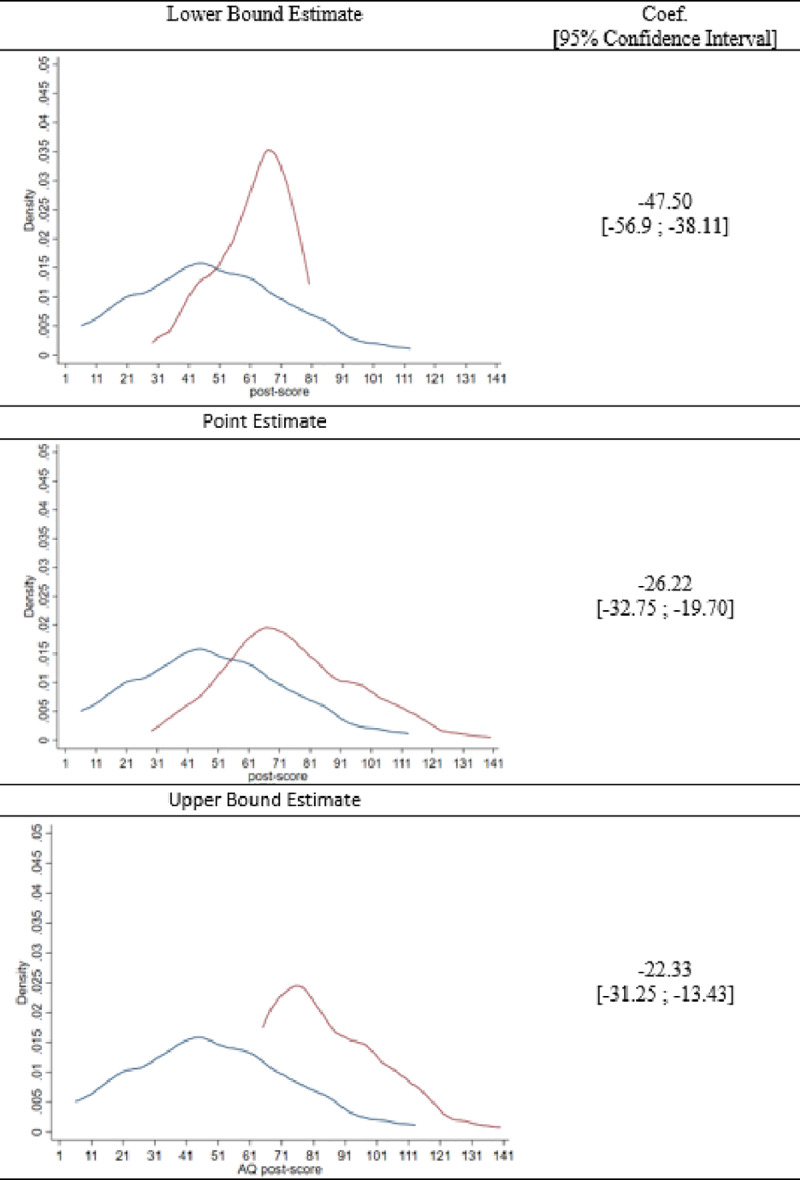
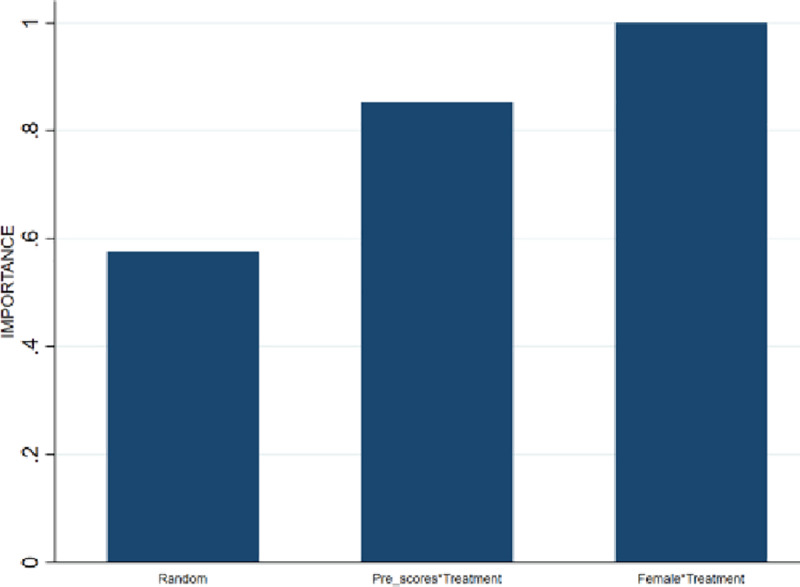
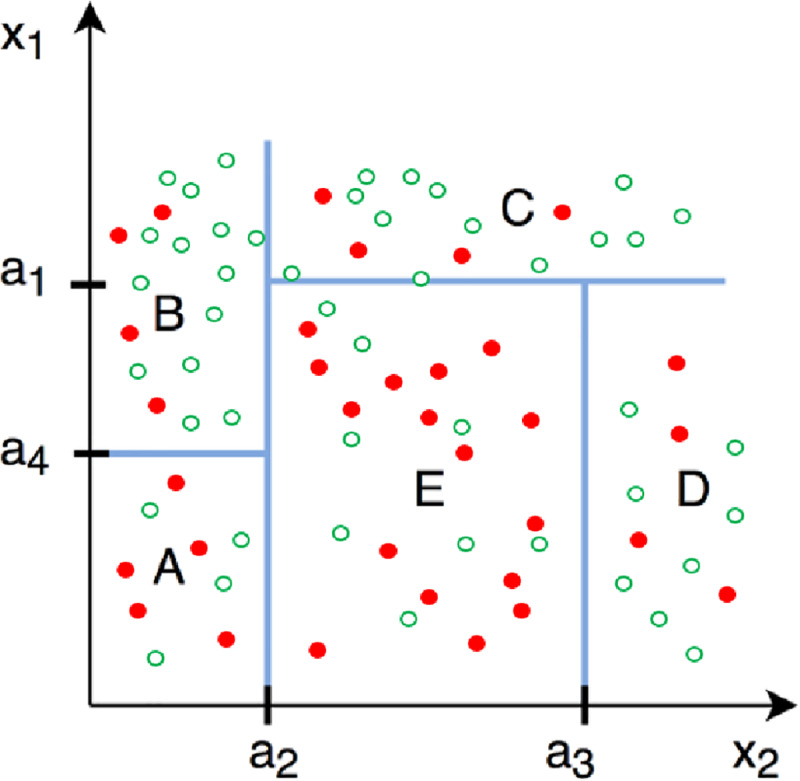
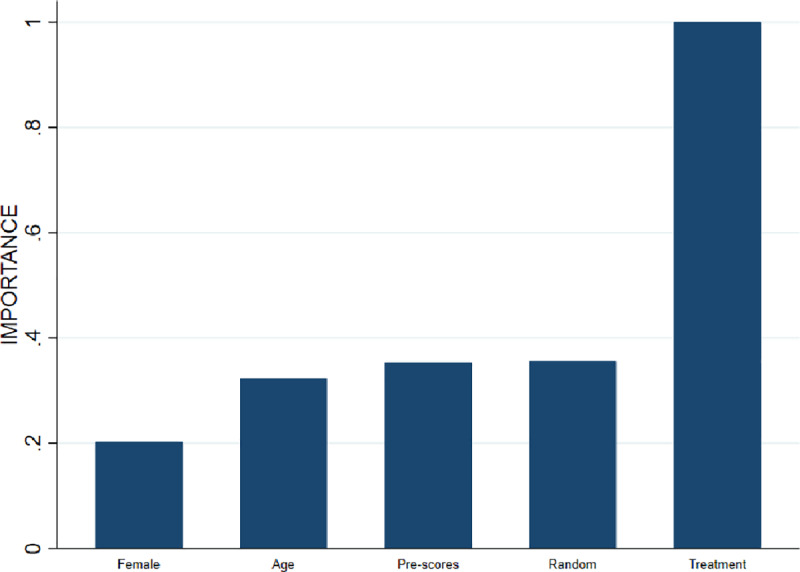
This study adopts a causal inference perspective in providing an overview of empirical strategies to estimate the average treatment effect, improve precision of the estimator, and to test whether the underlying identifying assumptions hold. We propose to use Random Forest Lee Bounds (RFLB) to address selective attrition and to obtain more precise average treatment effect intervals.
When assuming MCAR or MAR, the often untenable identifying assumptions with respect to causal inference can hardly be verified empirically. Instead, missing outcome data in clinical trials should be considered as potentially non-random unobserved events (i.e. MNAR). Using simulated attrition data, we show how average treatment effect intervals can be tightened considerably using RFLB, by exploiting both continuous and discrete attrition predictor variables.
Bounding approaches should be used to acknowledge selective attrition in randomized clinical trials in acknowledging the resulting uncertainty with respect to causal inference. As such, Random Forest Lee Bounds estimates are more informative than point estimates obtained assuming MCAR or MAR.
随机化在临床试验中的重要性早已得到认可,可以避免选择偏倚。然而,选择性缺失又带来了偏倚问题。本研究从因果推理的角度出发,针对缺失结局数据(MCAR、MAR 和 MNAR)的不同情况进行了研究。
本研究从因果推理的角度出发,对估计平均处理效应、提高估计精度以及检验基本识别假设是否成立的经验策略进行了综述。我们提出使用随机森林李界(RFLB)来处理选择性缺失,并获得更精确的平均处理效应区间。
当假设为 MCAR 或 MAR 时,因果推理中通常难以实际验证的识别假设几乎无法成立。相反,临床试验中的缺失结局数据应被视为潜在的非随机未观测事件(即 MNAR)。我们使用模拟的缺失数据,展示了如何使用 RFLB 通过利用连续和离散的缺失预测变量来显著收紧平均处理效应区间。
在承认随机临床试验中选择性缺失的情况下,应使用界估计方法来承认因果推理方面由此产生的不确定性。因此,与假设 MCAR 或 MAR 相比,随机森林李界估计更能提供信息。