Agallou Maria, Margaroni Maritsa, Kotsakis Stathis D, Karagouni Evdokia
Immunology of Infectious Diseases Laboratory, Department of Microbiology, Hellenic Pasteur Institute, 11521 Athens, Greece.
Laboratory of Bacteriology, Department of Microbiology, Hellenic Pasteur Institute, 11521 Athens, Greece.
Vaccines (Basel). 2020 Jun 30;8(3):350. doi: 10.3390/vaccines8030350.
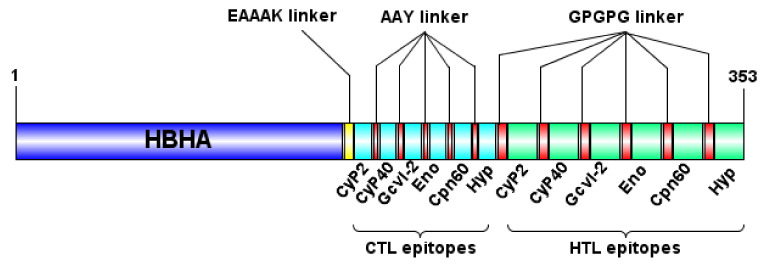
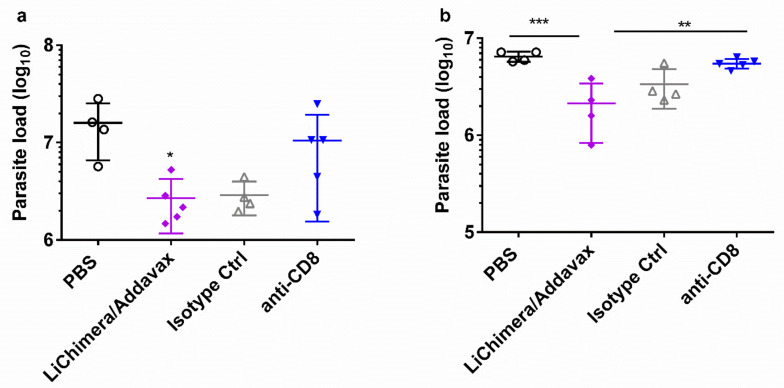
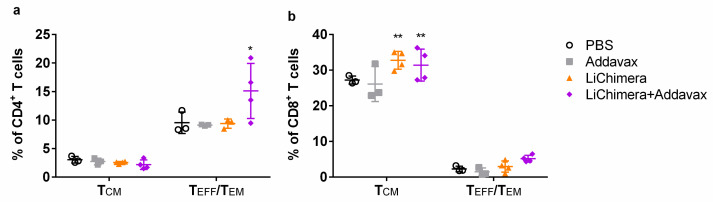
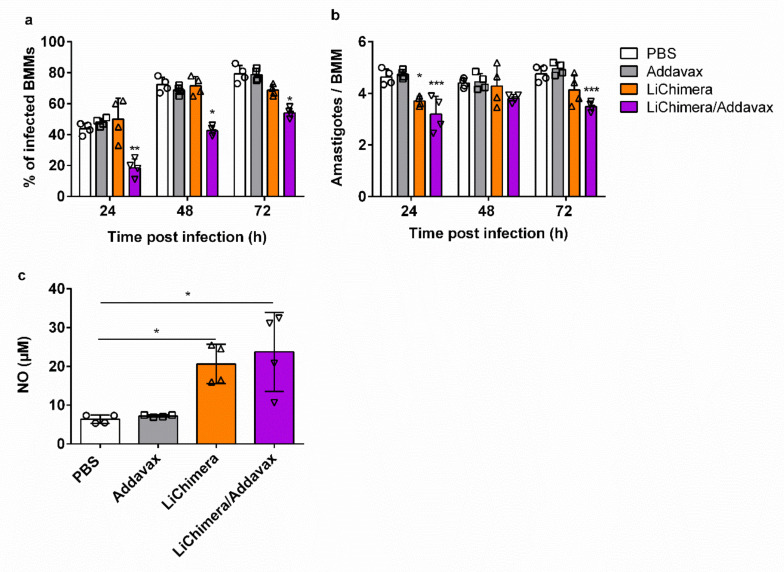
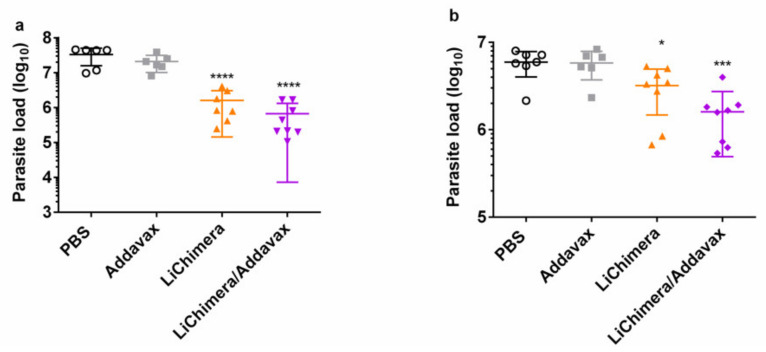
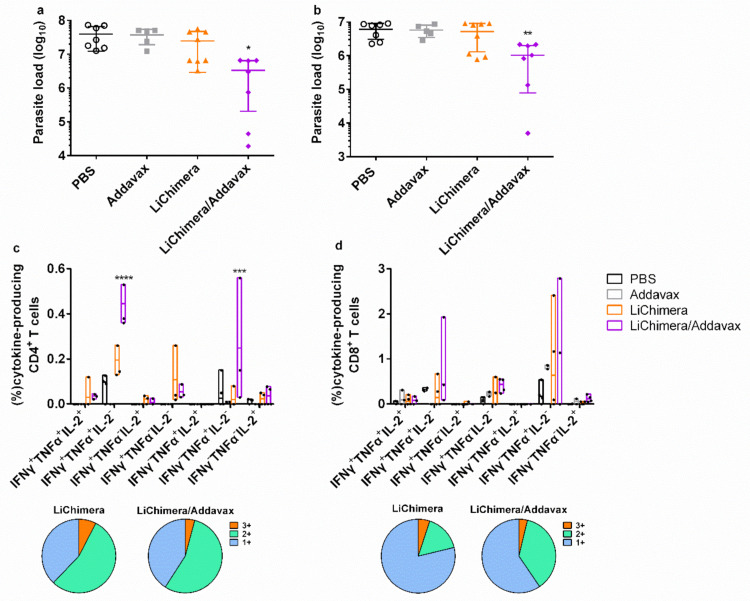
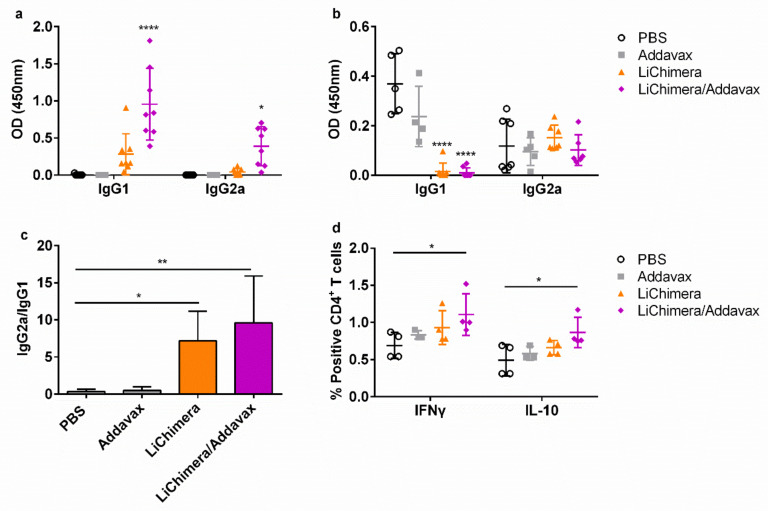
Leishmaniases are complex vector-borne diseases caused by intracellular parasites of the genus . The visceral form of the disease affects both humans and canids in tropical, subtropical, and Mediterranean regions. One health approach has suggested that controlling zoonotic visceral leishmaniasis (ZVL) could have an impact on the reduction of the human incidence of visceral leishmaniasis (VL). Despite the fact that a preventive vaccination could help with leishmaniasis elimination, effective vaccines that are able to elicit protective immune responses are currently lacking. In the present study, we designed a chimeric multi-epitope protein composed of multiple CD8 and CD4 T cell epitopes which were obtained from six highly immunogenic proteins previously identified by an immunoproteomics approach, and the N-termini of the heparin-binding hemagglutinin (HBHA) of served as an adjuvant. A preclinical evaluation of the candidate vaccine in BALB/c mice showed that when it was given along with the adjuvant Addavax it was able to induce strong immune responses. Cellular responses were dominated by the presence of central and effector multifunctional CD4 and CD8 T memory cells. Importantly, the vaccination reduced the parasite burden in both short-term and long-term vaccinated mice challenged with . Protection was characterized by the continuing presence of IFN-γTNFα-producing CD8 and CD4 T cells and increased NO levels. The depletion of CD8 T cells in short-term vaccinated mice conferred a significant loss of protection in both target organs of the parasite, indicating a significant involvement of this population in the protection against challenge. Thus, the overall data could be considered to be a proof-of-concept that the design of efficacious T cell vaccines with the help of reverse vaccinology approaches is possible.
利什曼病是由利什曼原虫属的细胞内寄生虫引起的复杂的媒介传播疾病。该疾病的内脏型在热带、亚热带和地中海地区同时影响人类和犬科动物。“同一健康”方法表明,控制人畜共患内脏利什曼病(ZVL)可能会对降低人类内脏利什曼病(VL)的发病率产生影响。尽管预防性疫苗接种有助于消除利什曼病,但目前仍缺乏能够引发保护性免疫反应的有效疫苗。在本研究中,我们设计了一种嵌合多表位蛋白,其由多个CD8和CD4 T细胞表位组成,这些表位来自先前通过免疫蛋白质组学方法鉴定的六种高度免疫原性蛋白,并且 的肝素结合血凝素(HBHA)的N末端用作佐剂。在BALB/c小鼠中对候选疫苗进行的临床前评估表明,当它与佐剂Addavax一起给药时,能够诱导强烈的免疫反应。细胞反应以中央和效应多功能CD4和CD8 T记忆细胞的存在为主。重要的是,接种疫苗降低了短期和长期接种疫苗的小鼠在用 攻击后体内的寄生虫负担。保护的特征是持续存在产生IFN-γTNFα的CD8和CD4 T细胞以及NO水平升高。短期接种疫苗的小鼠中CD8 T细胞的耗竭导致寄生虫的两个靶器官中的保护作用显著丧失,表明该细胞群在抵抗 攻击的保护中起重要作用。因此,总体数据可被视为一个概念验证,即借助反向疫苗学方法设计有效的T细胞疫苗是可行的。