Yu Wendan, Hua Yijun, Qiu Huijuan, Hao Jiaojiao, Zou Kun, Li Zongjuan, Hu Sheng, Guo Ping, Chen Manyu, Sui Silei, Xiong Yuqing, Li Fengzhou, Lu Jianjun, Guo Wei, Luo Guangyu, Deng Wuguo
Institute of Cancer Stem Cells & The First Affiliated Hospital, Dalian Medical University, Dalian, China.
Sun Yat-sen University Cancer Center, State Key Laboratory of Oncology in South China, Collaborative Innovation Center of Cancer Medicine, Guangzhou, China.
Cell Death Dis. 2020 Jul 6;11(7):506. doi: 10.1038/s41419-020-2701-z.
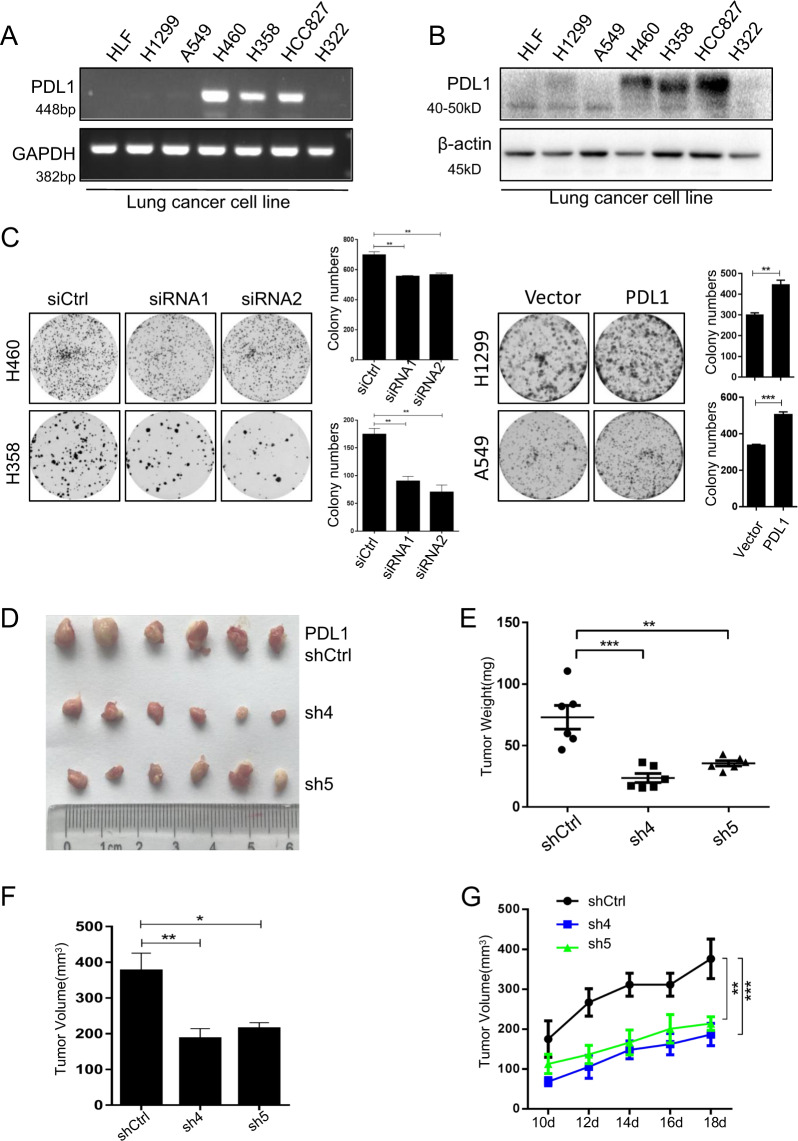
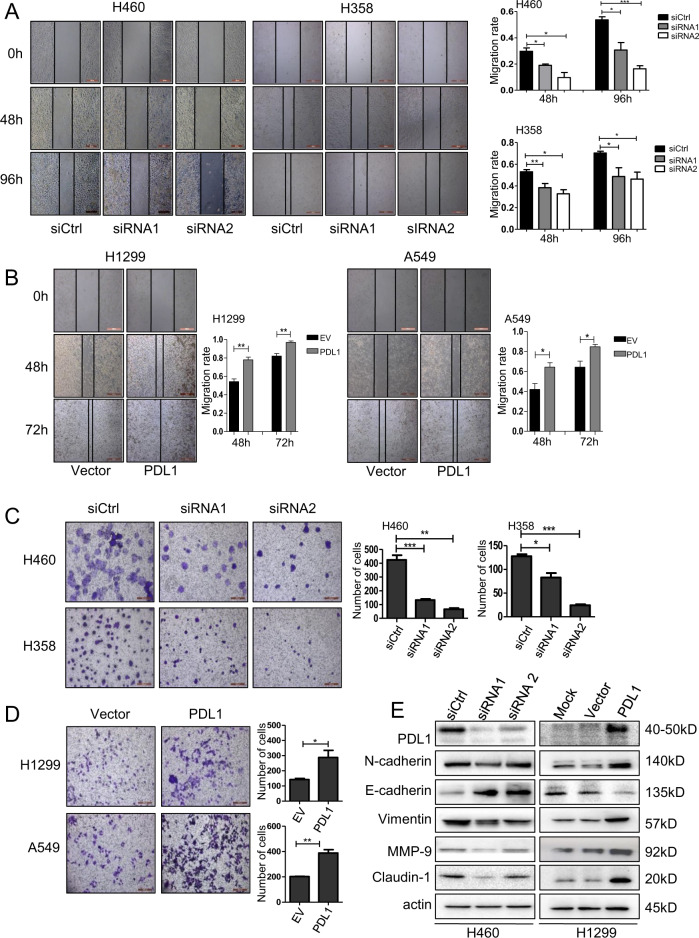
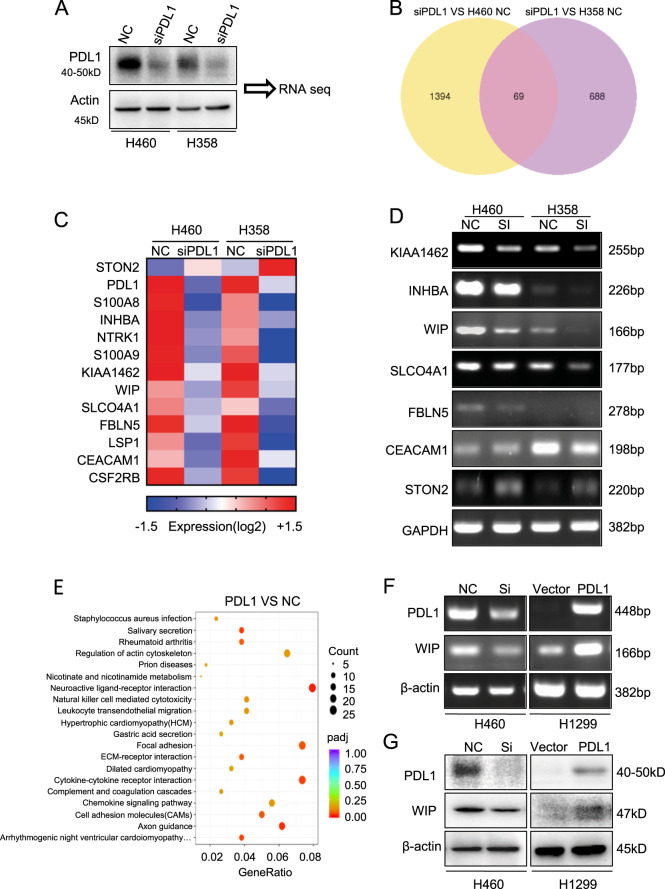
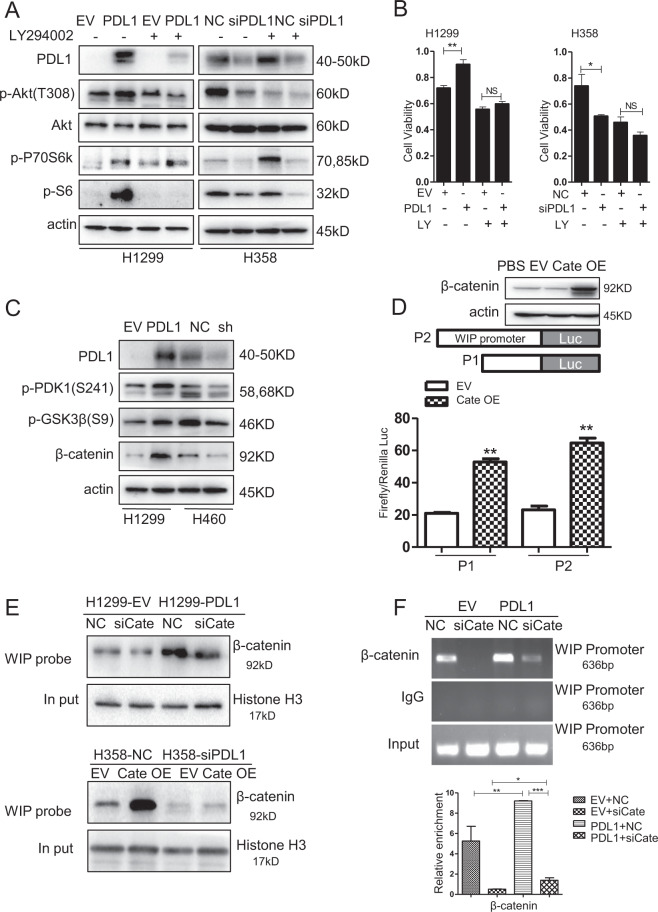
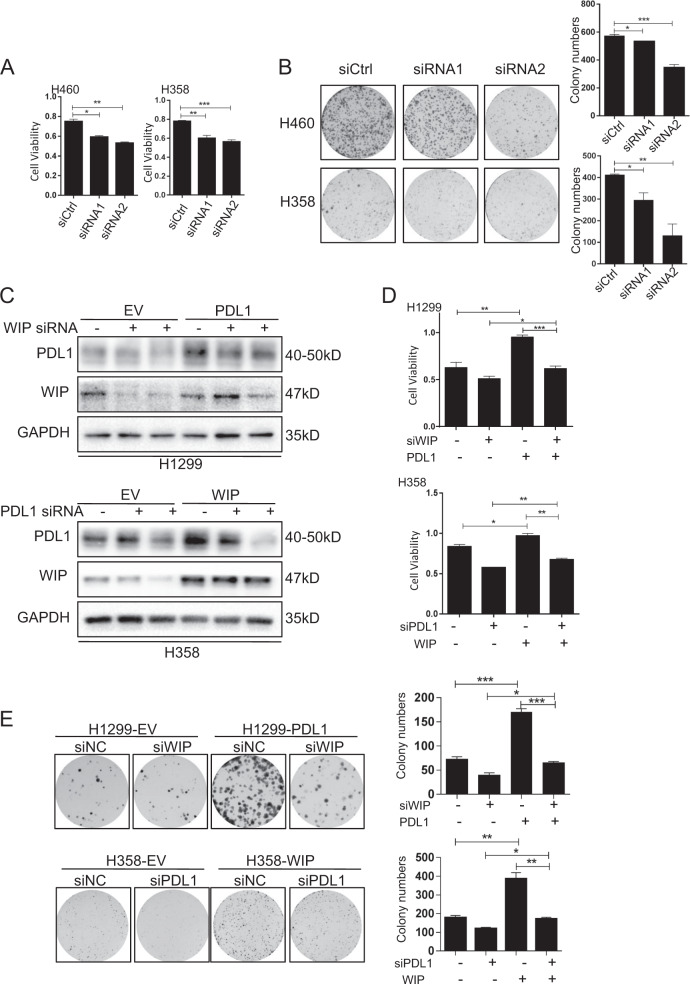
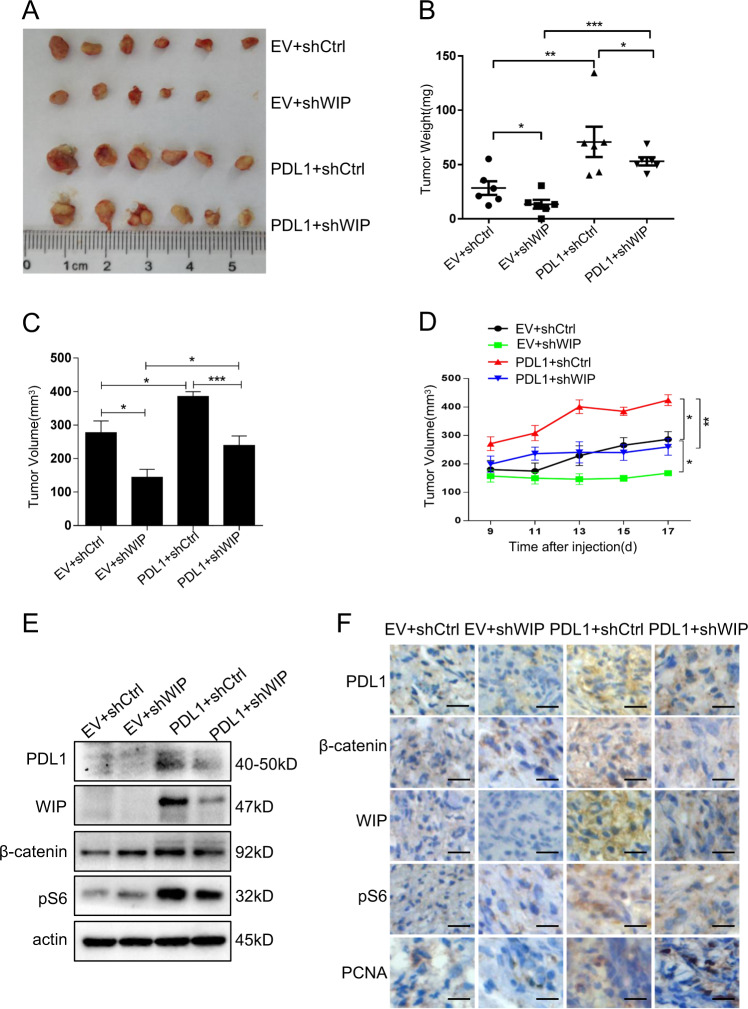
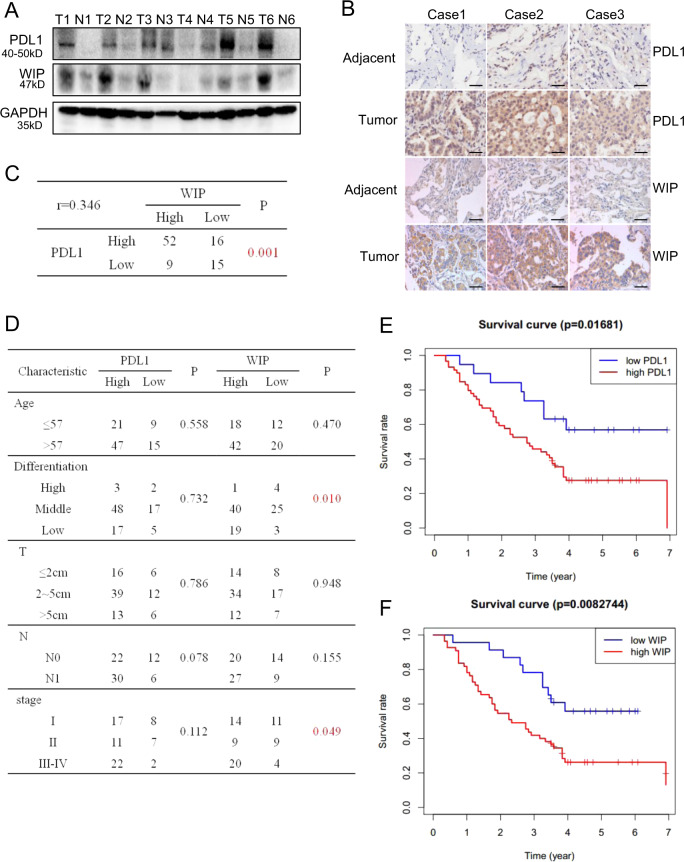
PD-L1 is overexpressed in tumor cells and contributes to cancer immunoevasion. However, the role of the tumor cell-intrinsic PD-L1 in cancers remains unknown. Here we show that PD-L1 regulates lung cancer growth and progression by targeting the WIP and β-catenin signaling. Overexpression of PD-L1 promotes tumor cell growth, migration and invasion in lung cancer cells, whereas PD-L1 knockdown has the opposite effects. We have also identified WIP as a new downstream target of PD-L1 in lung cancer. PD-L1 positively modulates the expression of WIP. Knockdown of WIP also inhibits cell viability and colony formation, whereas PD-L1 overexpression can reverse this inhibition effects. In addition, PD-L1 can upregulate β-catenin by inhibiting its degradation through PI3K/Akt signaling pathway. Moreover, we show that in lung cancer cells β-catenin can bind to the WIP promoter and activate its transcription, which can be promoted by PD-L1 overexpression. The in vivo experiments in a human lung cancer mouse model have also confirmed the PD-L1-mediated promotion of tumor growth and progression through activating the WIP and β-catenin pathways. Furthermore, we demonstrate that PD-L1 expression is positively correlated with WIP in tumor tissues of human adenocarcinoma patients and the high expression of PD-L1 and WIP predicts poor prognosis. Collectively, our results provide new insights into understanding the pro-tumorigenic role of PD-L1 and its regulatory mechanism on WIP in lung cancer, and suggest that the PD-L1/Akt/β-catenin/WIP signaling axis may be a potential therapeutic target for lung cancers.
程序性死亡配体1(PD-L1)在肿瘤细胞中过表达,有助于癌症免疫逃逸。然而,肿瘤细胞内源性PD-L1在癌症中的作用仍不清楚。在此,我们表明PD-L1通过靶向WIP和β-连环蛋白信号通路来调节肺癌的生长和进展。PD-L1的过表达促进肺癌细胞的肿瘤细胞生长、迁移和侵袭,而PD-L1的敲低则产生相反的效果。我们还确定WIP是肺癌中PD-L1的一个新的下游靶点。PD-L1正向调节WIP的表达。WIP的敲低也会抑制细胞活力和集落形成,而PD-L1的过表达可以逆转这种抑制作用。此外,PD-L1可以通过PI3K/Akt信号通路抑制β-连环蛋白的降解,从而上调β-连环蛋白。此外,我们表明在肺癌细胞中,β-连环蛋白可以与WIP启动子结合并激活其转录,这可以被PD-L1的过表达所促进。在人肺癌小鼠模型中的体内实验也证实了PD-L1通过激活WIP和β-连环蛋白通路介导促进肿瘤生长和进展。此外,我们证明在人类腺癌患者的肿瘤组织中,PD-L1表达与WIP呈正相关,PD-L1和WIP的高表达预示着预后不良。总的来说,我们的结果为理解PD-L1在肺癌中的促肿瘤作用及其对WIP的调控机制提供了新的见解,并表明PD-L1/Akt/β-连环蛋白/WIP信号轴可能是肺癌的一个潜在治疗靶点。