The George Washington University, Washington D.C., USA.
Sci Rep. 2020 Jul 6;10(1):11088. doi: 10.1038/s41598-020-67851-4.
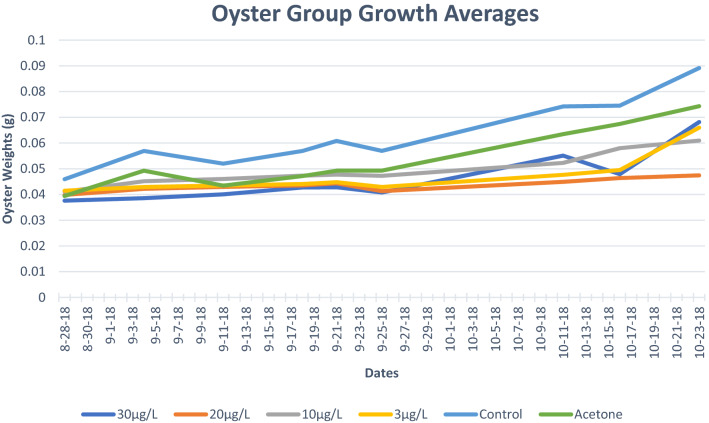
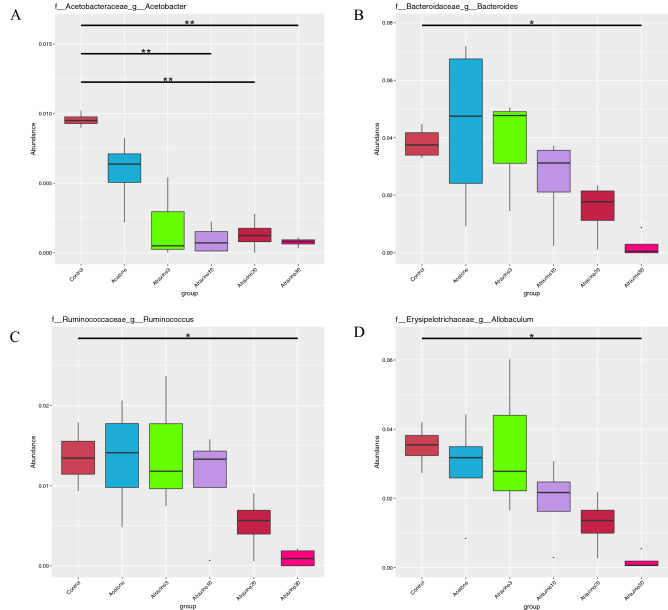
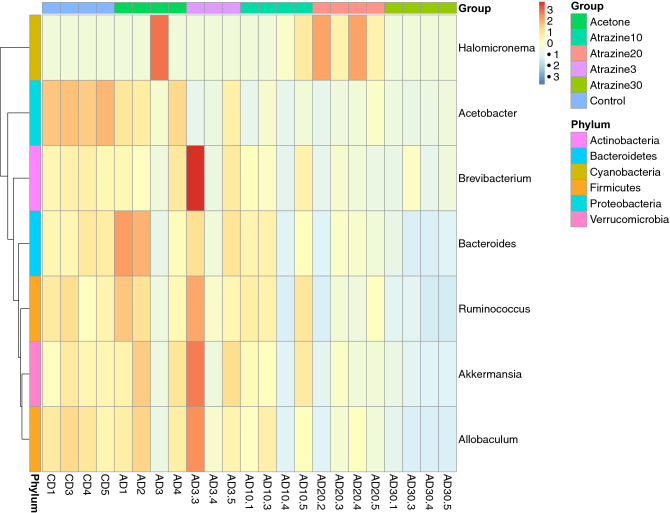
Long-standing evidence supports the importance of maintaining healthy populations of microbiota for the survival, homeostasis, and complete development of marine mollusks. However, the long-term ecological effects of agricultural runoff on these populations remains largely unknown. Atrazine (6-Chloro-n-ethyl-n'-(1-methylethyl)-triazine-2,4-diamine), a prevalent herbicide in the United States, is often used along tributaries of the Chesapeake Bay where oyster breeding programs are concentrated. To investigate any potential effects atrazine maybe having on mollusk-prokaryote interactions, we used 16S rRNA gene amplicons to evaluate how microbial compositions shift in response to exposure of environmentally relevant concentrations of atrazine previously found within the Chesapeake Bay. The dominant bacterial genera found within all groups included those belonging to Pseudoalteromonas, Burkholderia, Bacteroides, Lactobacillis, Acetobacter, Allobaculum, Ruminococcus, and Nocardia. Our results support previously published findings of a possible core microbial community in Crassostrea virginica. We also report a novel finding: oysters exposed to atrazine concentrations as low as 3 µg/L saw a significant loss of a key mutualistic microbial species and a subsequent colonization of a pathogenic bacteria Nocardia. We conclude that exposure to atrazine in the Chesapeake Bay may be contributing to a significant shift in the microbiomes of juvenile oysters that reduces fitness and impedes natural and artificial repopulation of the oyster species within the Bay.
长期以来的证据表明,维持微生物群的健康种群对于海洋软体动物的生存、内稳态和完全发育至关重要。然而,农业径流对这些种群的长期生态影响在很大程度上仍不清楚。在美国,莠去津(6-氯-N-乙基-N'-(1-甲基乙基)-1,3,5-三嗪-2,4-二胺)是一种普遍存在的除草剂,常用于切萨皮克湾的支流,那里集中了牡蛎养殖计划。为了研究莠去津可能对软体动物-原核生物相互作用产生的任何潜在影响,我们使用 16S rRNA 基因扩增子来评估微生物组成如何响应暴露于先前在切萨皮克湾发现的环境相关浓度的莠去津而发生变化。在所有组中发现的主要细菌属包括假交替单胞菌属、伯克霍尔德菌属、拟杆菌属、乳杆菌属、醋杆菌属、Allobaculum 属、瘤胃球菌属和诺卡氏菌属。我们的研究结果支持了先前关于贻贝中可能存在核心微生物群落的发现。我们还报告了一个新的发现:暴露于低至 3µg/L 莠去津浓度的牡蛎中,一种关键的共生微生物物种显著减少,随后一种致病性细菌诺卡氏菌定植。我们得出结论,切萨皮克湾暴露于莠去津可能导致幼年牡蛎的微生物组发生重大变化,从而降低其适应性,并阻碍该海湾内牡蛎物种的自然和人工重新繁殖。