Department of Pre-Clinical Sciences, Faculty of Medicine and Health Sciences, Universiti Tunku Abdul Rahman, Jalan Sungai Long, Bandar Sungai Long, 43000 Kajang, Selangor, Malaysia.
Institute of Biomedical Sciences, Academia Sinica, 128, Academia Road, Section 2, Nankang, Taipei, Taiwan.
BMC Genomics. 2020 Jul 7;21(1):467. doi: 10.1186/s12864-020-06868-5.
Mesangial cells play an important role in the glomerulus to provide mechanical support and maintaine efficient ultrafiltration of renal plasma. Loss of mesangial cells due to pathologic conditions may lead to impaired renal function. Mesenchymal stem cells (MSC) can differentiate into many cell types, including mesangial cells. However transcriptomic profiling during MSC differentiation into mesangial cells had not been studied yet. The aim of this study is to examine the pattern of transcriptomic changes during MSC differentiation into mesangial cells, to understand the involvement of transcription factor (TF) along the differentiation process, and finally to elucidate the relationship among TF-TF and TF-key gene or biomarkers during the differentiation of MSC into mesangial cells.
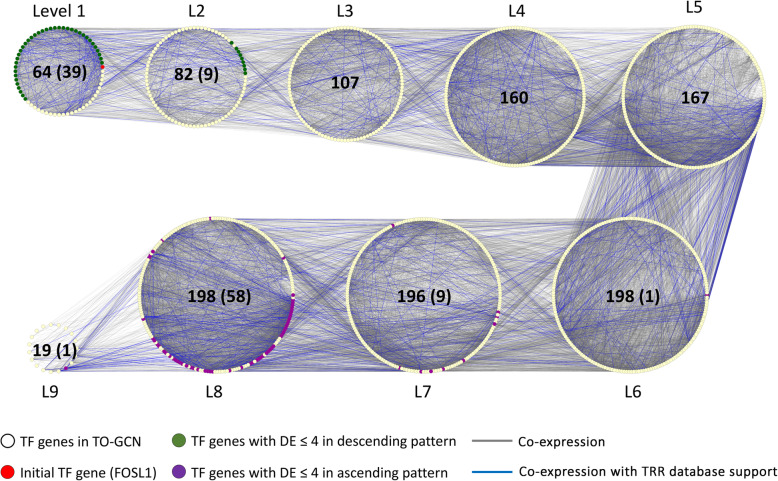
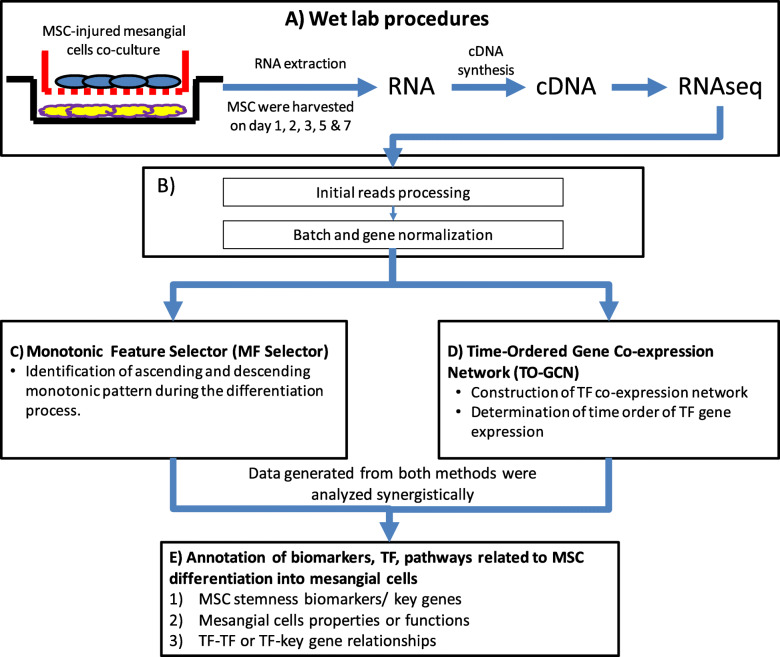
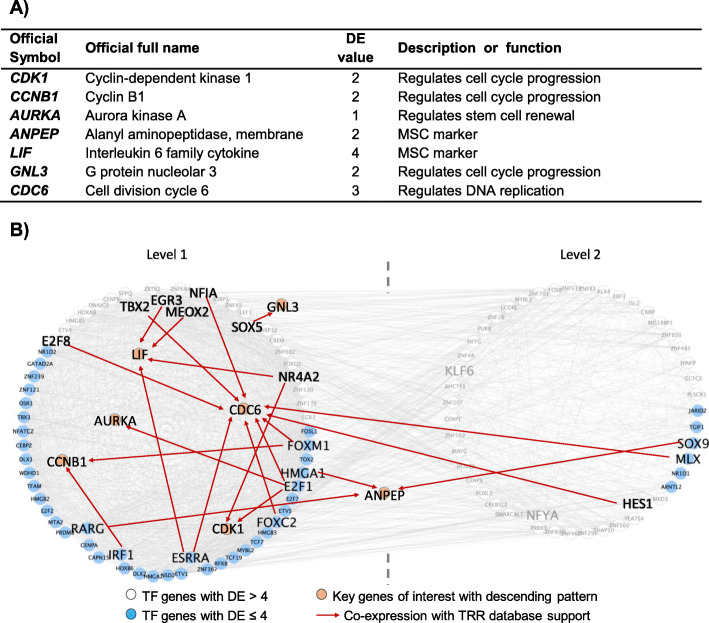
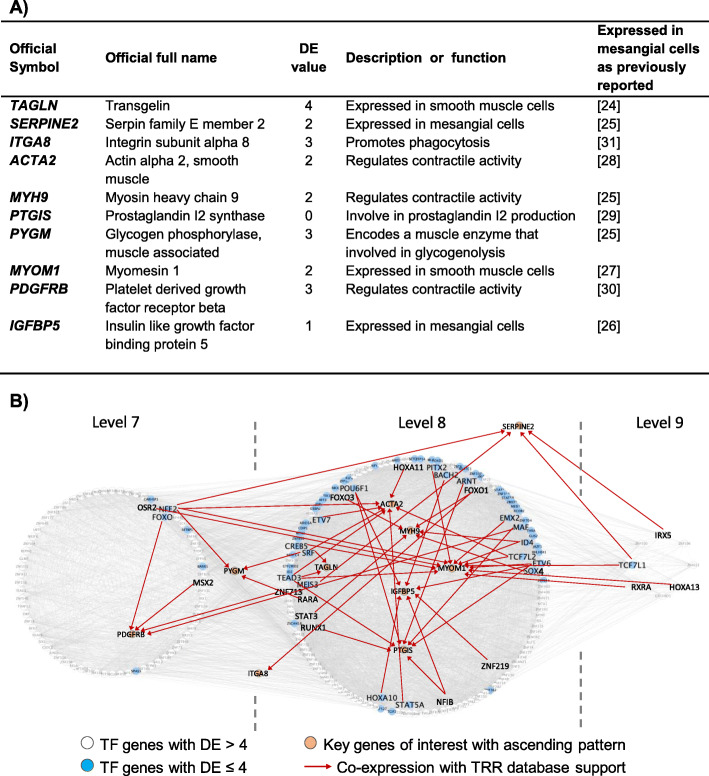
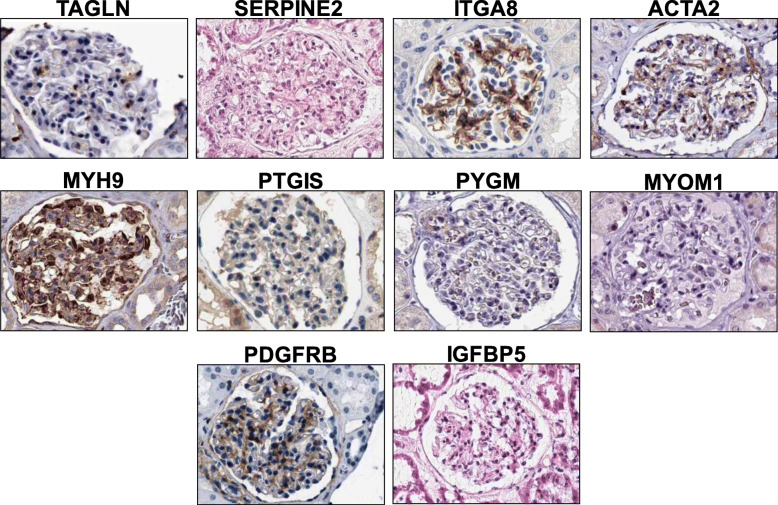
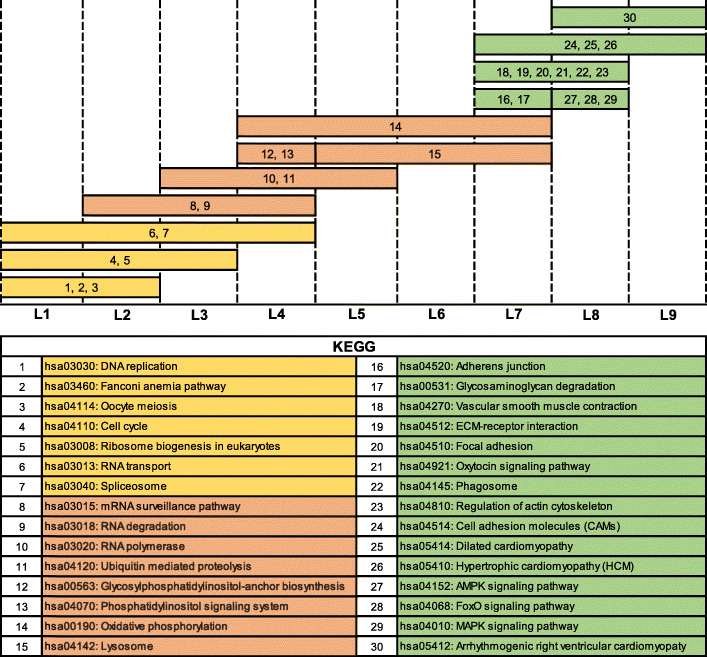
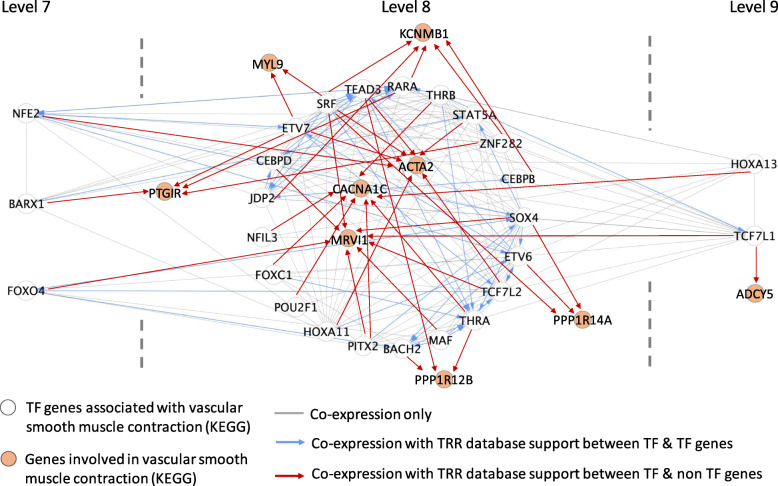
Several ascending and descending monotonic key genes were identified by Monotonic Feature Selector. The identified descending monotonic key genes are related to stemness or regulation of cell cycle while ascending monotonic key genes are associated with the functions of mesangial cells. The TFs were arranged in a co-expression network in order of time by Time-Ordered Gene Co-expression Network (TO-GCN) analysis. TO-GCN analysis can classify the differentiation process into three stages: differentiation preparation, differentiation initiation and maturation. Furthermore, it can also explore TF-TF-key genes regulatory relationships in the muscle contraction process.
A systematic analysis for transcriptomic profiling of MSC differentiation into mesangial cells has been established. Key genes or biomarkers, TFs and pathways involved in differentiation of MSC-mesangial cells have been identified and the related biological implications have been discussed. Finally, we further elucidated for the first time the three main stages of mesangial cell differentiation, and the regulatory relationships between TF-TF-key genes involved in the muscle contraction process. Through this study, we have increased fundamental understanding of the gene transcripts during the differentiation of MSC into mesangial cells.
系膜细胞在肾小球中起着重要作用,为其提供机械支持并维持肾脏血浆的有效超滤。由于病理条件导致系膜细胞丢失可能导致肾功能受损。间充质干细胞(MSC)可以分化为多种细胞类型,包括系膜细胞。然而,MSC 分化为系膜细胞过程中的转录组谱分析尚未研究。本研究旨在检查 MSC 分化为系膜细胞过程中转录组变化的模式,了解转录因子(TF)在分化过程中的参与情况,最终阐明 MSC 分化为系膜细胞过程中 TF-TF 和 TF-关键基因或生物标志物之间的关系。
通过单调特征选择,确定了几个单调上升和单调下降的关键基因。鉴定的下降单调关键基因与干性或细胞周期调控有关,而单调上升关键基因与系膜细胞的功能有关。TF 按时间顺序排列在共表达网络中,通过时间有序基因共表达网络(TO-GCN)分析。TO-GCN 分析可以将分化过程分为三个阶段:分化准备、分化启动和成熟。此外,它还可以探索肌肉收缩过程中 TF-TF-关键基因的调控关系。
建立了 MSC 分化为系膜细胞的转录组谱系统分析。确定了 MSC 向系膜细胞分化过程中涉及的关键基因或生物标志物、TFs 和途径,并讨论了相关的生物学意义。最后,我们首次阐明了系膜细胞分化的三个主要阶段,以及肌肉收缩过程中涉及的 TF-TF-关键基因的调控关系。通过这项研究,我们增加了对 MSC 分化为系膜细胞过程中基因转录的基本认识。