Brown Steven
Department of Psychology, Neuroscience & Behaviour, McMaster University, Hamilton, ON, Canada.
Front Hum Neurosci. 2020 Jun 19;14:224. doi: 10.3389/fnhum.2020.00224. eCollection 2020.
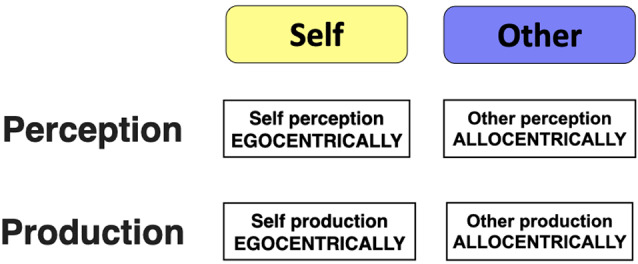
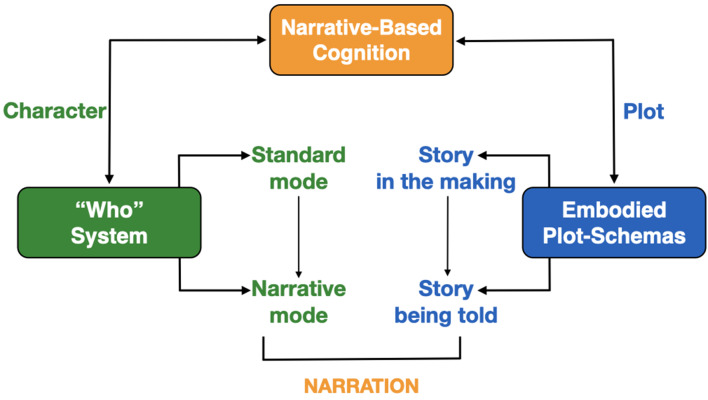
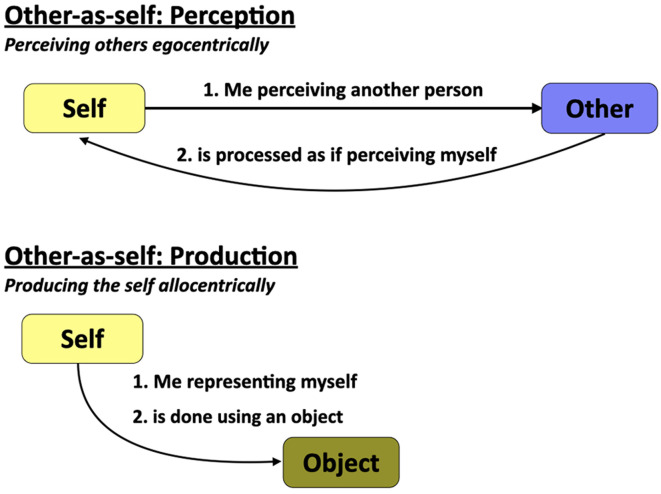
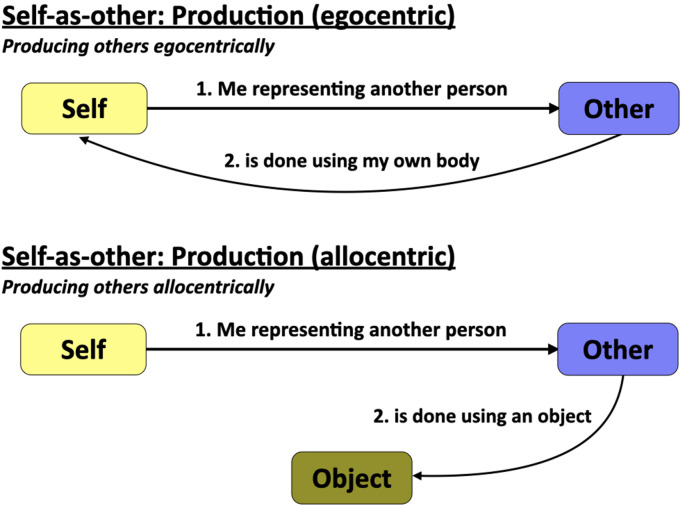
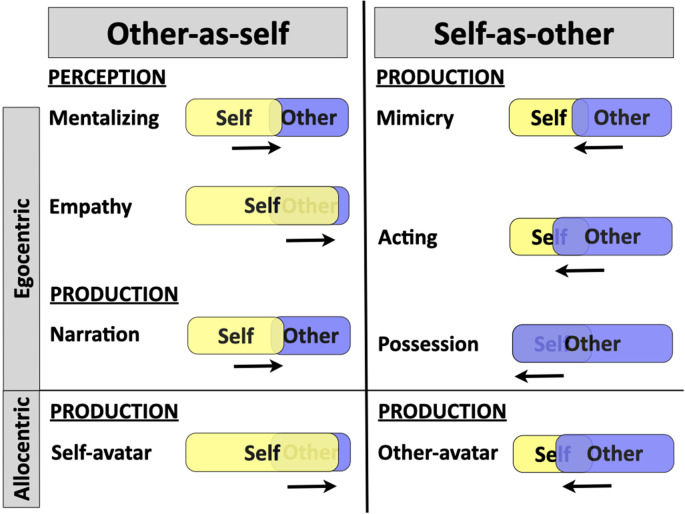
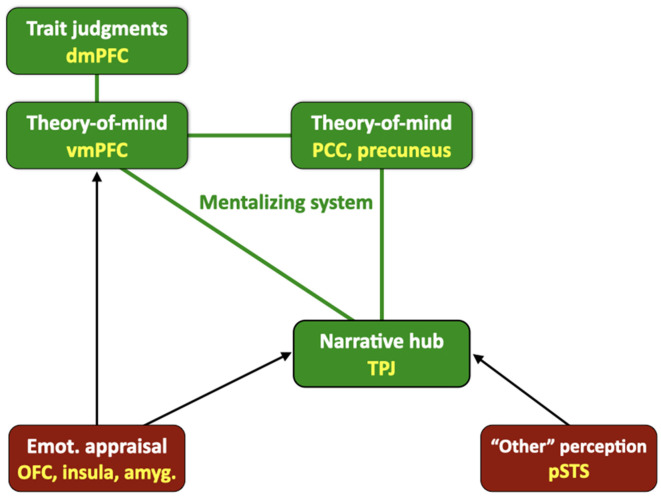
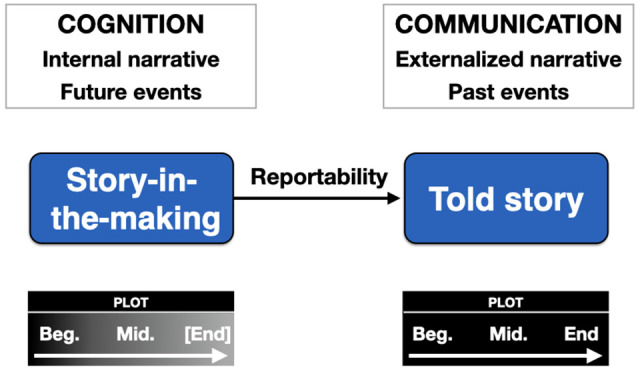
Neuroscientists are fond of talking about brain systems for the processing of "what" and "where" information about objects and their locations. What is critically missing is the concept of a "who" system dedicated to the neural processing of information about social agents-both the self and others-and their interactions. I propose here the characterization of such a system, one that functions not only in perception but in production as well, such as when recounting stories about oneself and others. The most human-specific features of the "who" system are two complementary systems that I refer to as the mechanism and the mechanism. The major function of the other-as-self mechanism is to perceive other people egocentrically as proxies of the self, as occurs through the processes of mentalizing and empathizing in both everyday life and in the experience of the theatrical and literary arts. The major function of the self-as-other mechanism is to overtly depict other people during acts of communication through vocal and gestural processes of mimicry, such as occurs during quotation in conversation and through acting in the theatrical arts. Overall, the "who" system of the human brain mediates both perceptual and behavioral aspects of social cognition, and establishes the existential distinction between self and other in human cognition. I present neural models for the instantiation of the "who" system in the human brain and conclude with a discussion of how narrative serves as a foundation for human cognition more generally, what I refer to as narrative-based cognition.
神经科学家热衷于谈论大脑中用于处理有关物体及其位置的“什么”和“哪里”信息的系统。但至关重要的是,缺少一个“谁”的系统概念,该系统专门用于对关于社会主体(包括自我和他人)及其互动的信息进行神经处理。在此,我提出对这样一个系统的描述,它不仅在感知中起作用,在生产中也起作用,比如在讲述关于自己和他人的故事时。“谁”的系统中最具人类特异性的特征是两个互补的系统,我将其称为机制和机制。“他人即自我”机制的主要功能是以自我为中心将他人视为自我的替身,这在日常生活以及戏剧和文学艺术体验中的心理化和共情过程中都会发生。“自我即他人”机制的主要功能是在交流行为中通过模仿的语音和手势过程来公开描绘他人,比如在对话中的引用以及戏剧艺术中的表演时。总体而言,人类大脑的“谁”系统介导社会认知的感知和行为方面,并在人类认知中确立自我与他人的存在区别。我提出了人类大脑中“谁”系统实例化的神经模型,并以对叙事如何更广泛地作为人类认知基础的讨论作为结尾,我将其称为基于叙事的认知。