Anderson Elizabeth J, Mollon Lea E, Dean Joni L, Warholak Terri L, Aizer Ayal, Platt Emma A, Tang Derek H, Davis Lisa E
University of Arizona College of Pharmacy, Tucson, AZ, USA.
Harvard Medical School, MA, USA.
Int J Breast Cancer. 2020 Jun 20;2020:3759179. doi: 10.1155/2020/3759179. eCollection 2020.
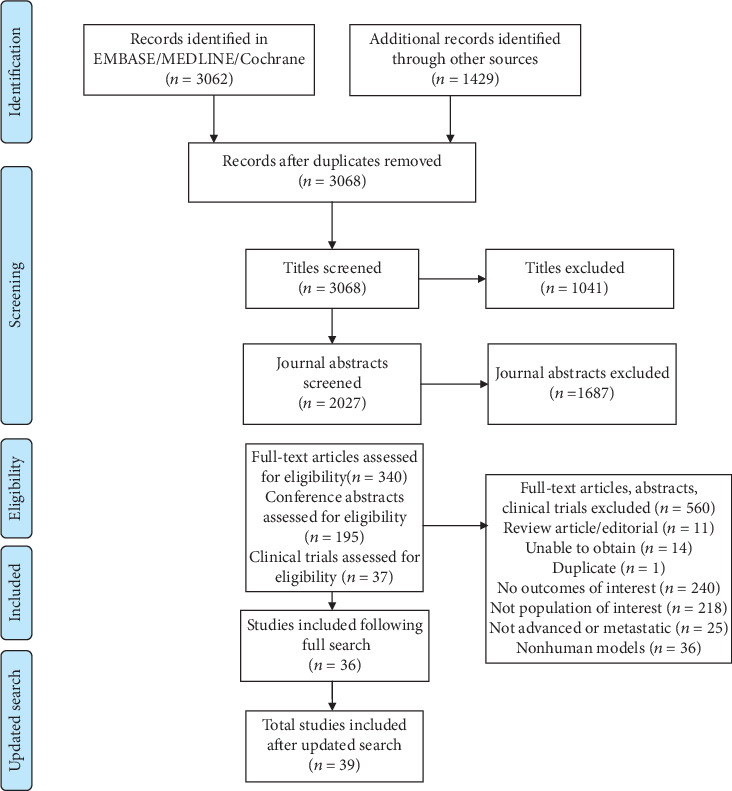
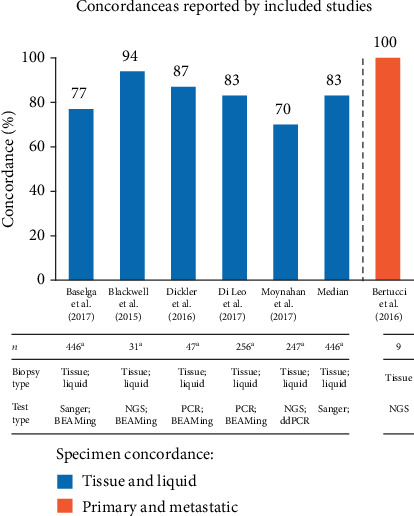
PIK3CA mutation frequency varies among breast cancer (BC) subtypes. Recent evidence suggests combination therapy with the PI3K inhibitor (PI3Ki) alpelisib and endocrine therapy (ET) improves response rates and progression-free survival (PFS) in -mutant, hormone receptor positive (HR+) BC versus ET alone; thus, better understanding the clinical and epidemiologic elements of these mutations is warranted. This systematic review characterizes the mutation epidemiology, type of testing approaches (e.g., liquid or tissue tumor biopsy), and stability/concordance (e.g., consistency in results by liquid versus solid tumor sample, by the same method over time) in patients with HR+/HER2- advanced (locally unresectable) or metastatic disease (HR+/HER2- mBC) and explores performance (e.g., pairwise concordance, sensitivity, specificity, or predictive value) of respective mutation findings. A comprehensive search of PubMed/MEDLINE, EMBASE, Cochrane Central, and select conference abstracts (i.e., AACR, ASCO, SABCS, ECCO, and ESMO conferences between 2014 and 2017) identified 39 studies of patients with HR+, HER2- mBC. The median prevalence of mutation was 36% (range: 13.3% to 61.5%); identified testing approaches more commonly used tissue over liquid biopsies and primarily utilized next-generation sequencing (NGS), polymerase chain reaction (PCR), or Sanger sequencing. There was concordance and stability between tissues (range: 70.4% to 94%) based on limited data. Given the clinical benefit of the PI3Ki alpelisib in patients with PIK3CA mutant HR+/HER2- mBC, determination of tumor mutation status is of importance in managing patients with HR+/HER2- mBC. Prevalence of this mutation and utility of test methodologies likely warrants mutation testing in all patients with this breast cancer subtype via definitive assessment of PIK3CA mutational status.
PIK3CA突变频率在乳腺癌(BC)各亚型中有所不同。近期证据表明,PI3K抑制剂(PI3Ki)阿培利司与内分泌治疗(ET)联合使用,相较于单纯ET,可提高PIK3CA突变、激素受体阳性(HR+)乳腺癌患者的缓解率和无进展生存期(PFS);因此,有必要更好地了解这些突变的临床和流行病学因素。本系统评价描述了HR+/HER2-晚期(局部不可切除)或转移性疾病(HR+/HER2- mBC)患者中PIK3CA的突变流行病学、检测方法类型(如液体或组织肿瘤活检)以及稳定性/一致性(如液体与实体瘤样本结果的一致性、同一方法随时间的一致性),并探讨了各突变结果的性能(如两两一致性、敏感性、特异性或预测价值)。对PubMed/MEDLINE、EMBASE、Cochrane Central以及部分会议摘要(即2014年至2017年间的美国癌症研究协会、美国临床肿瘤学会、圣安东尼奥乳腺癌研讨会、欧洲癌症大会和欧洲肿瘤内科学会会议)进行全面检索,共识别出39项关于HR+、HER2- mBC患者的研究。PIK3CA突变的中位患病率为36%(范围:13.3%至61.5%);已确定检测方法中,组织活检比液体活检更常用,主要采用二代测序(NGS)、聚合酶链反应(PCR)或桑格测序。基于有限数据,组织间存在一致性和稳定性(范围:70.4%至94%)。鉴于PI3Ki阿培利司对PIK3CA突变的HR+/HER2- mBC患者具有临床益处,确定肿瘤PIK3CA突变状态对于HR+/HER2- mBC患者的管理至关重要。该突变的患病率及检测方法的实用性可能需要通过对PIK3CA突变状态的明确评估,对所有该乳腺癌亚型患者进行PIK3CA突变检测。