Bittorf Patrick, Bergmann Thorsten, Merlin Simone, Olgasi Cristina, Pullig Oliver, Sanzenbacher Ralf, Zierau Martin, Walles Heike, Follenzi Antonia, Braspenning Joris
Chair of Tissue Engineering and Regenerative Medicine, University Hospital Würzburg, 97070 Würzburg, Germany.
Department of Health Sciences, Università del Piemonte Orientale "A. Avogadro," 28100 Novara, Italy.
Mol Ther Methods Clin Dev. 2020 Jun 1;18:176-188. doi: 10.1016/j.omtm.2020.05.029. eCollection 2020 Sep 11.
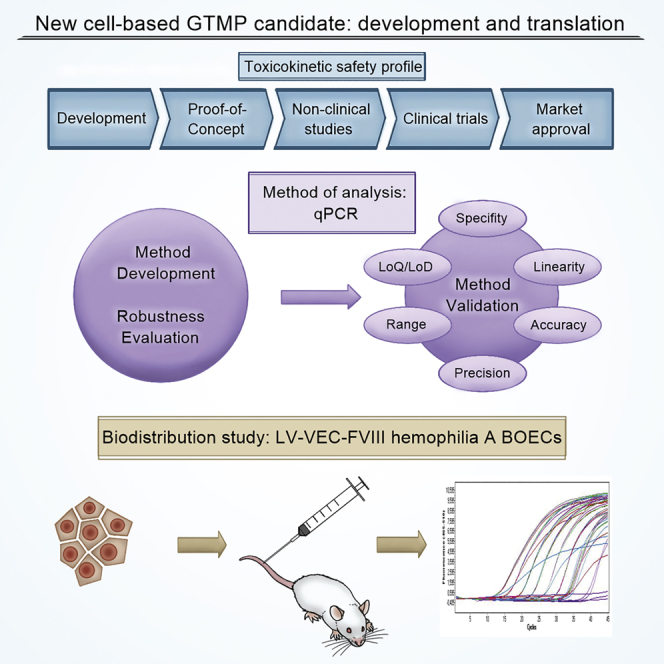
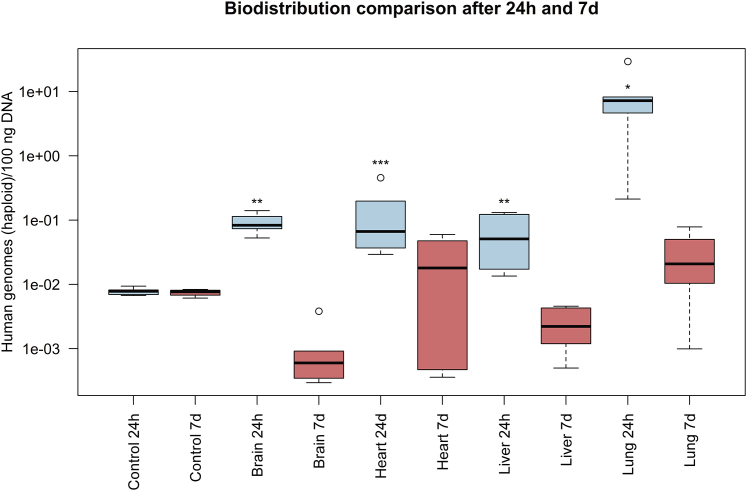
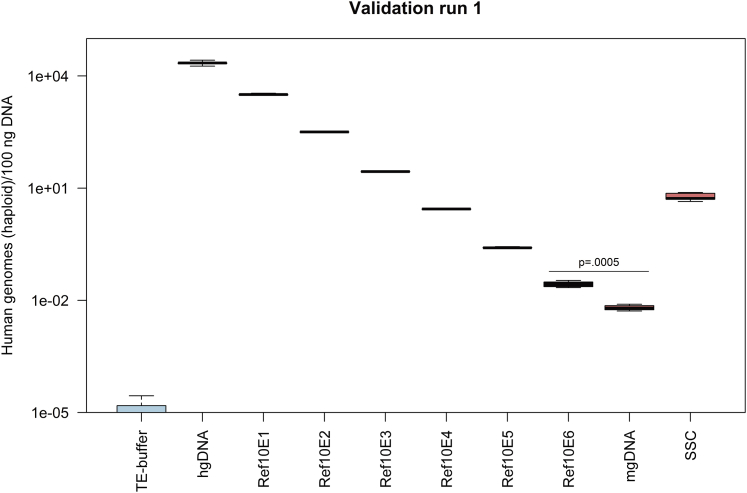
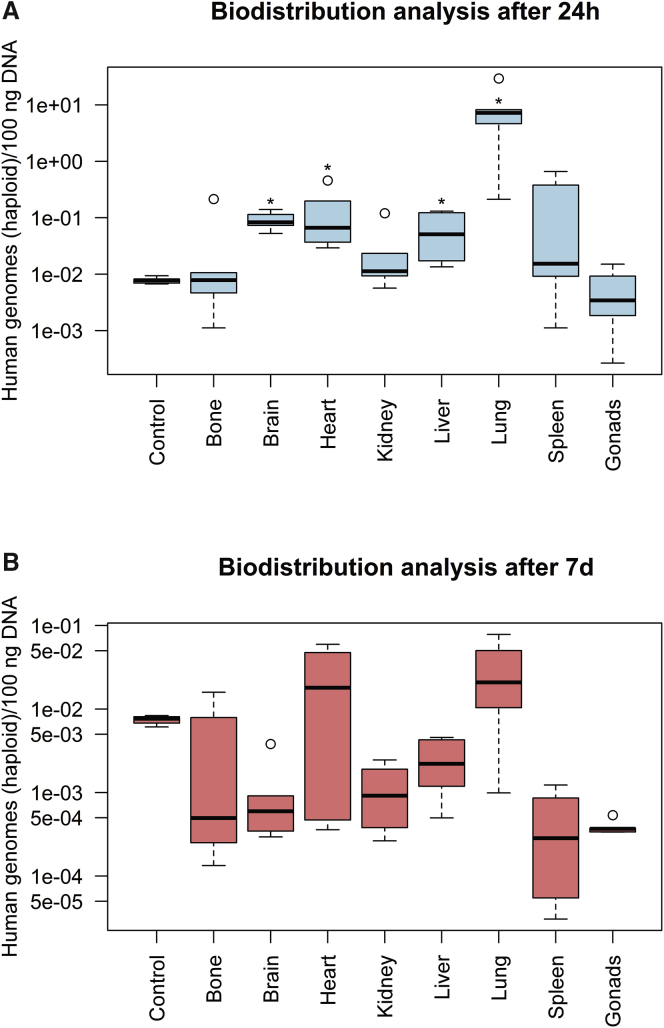
The investigation of the biodistribution profile of a cell-based medicinal product is a pivotal prerequisite to allow a factual benefit-risk assessment within the non-clinical to clinical translation in product development. Here, a qPCR-based method to determine the amount of human DNA in mouse DNA was validated according to the guidelines of the European Medicines Agency and the International Council for Harmonisation of Technical Requirements for Pharmaceuticals for Human Use. Furthermore, a preclinical worst-case scenario study was performed in which this method was applied to investigate the biodistribution of 2 × 10 intravenously administered, genetically modified, blood outgrowth endothelial cells from hemophilia A patients after 24 h and 7 days. The validation of the qPCR method demonstrated high accuracy, precision, and linearity for the concentration interval of 1:1 × 10 to 1:1 × 10 human to mouse DNA. The application of this method in the biodistribution study resulted in the detection of human genomes in four out of the eight investigated organs after 24 h. After 7 days, no human DNA was detected in the eight organs analyzed. This biodistribution study provides mandatory data on the toxicokinetic safety profile of an actual candidate cell-based medicinal product. The extensive evaluation of the required validation parameters confirms the applicability of the qPCR method for non-clinical biodistribution studies.
对基于细胞的医药产品的生物分布特征进行研究,是在产品开发的非临床到临床转化过程中进行实际的获益-风险评估的关键前提条件。在此,根据欧洲药品管理局和人用药品注册技术国际协调理事会的指导原则,验证了一种基于定量聚合酶链反应(qPCR)的方法,用于测定小鼠DNA中的人类DNA含量。此外,还进行了一项临床前最坏情况研究,应用该方法研究了2×10个经基因改造的、来自甲型血友病患者的静脉注射血液来源内皮细胞在给药24小时和7天后的生物分布情况。qPCR方法的验证表明,在1:1×10至1:1×10的人类与小鼠DNA浓度区间内,该方法具有较高的准确性、精密度和线性度。在生物分布研究中应用该方法,结果显示在给药24小时后,在所研究的八个器官中有四个检测到了人类基因组。7天后,在所分析的八个器官中未检测到人类DNA。这项生物分布研究提供了关于一种实际的基于细胞的候选医药产品毒代动力学安全性特征的必要数据。对所需验证参数的广泛评估证实了qPCR方法在非临床生物分布研究中的适用性。