Pei Xiaolei, Shao Wenwei, Xing Allene, Askew Charles, Chen Xiaojing, Cui Caibin, Abajas Yasmina L, Gerber David A, Merricks Elizabeth P, Nichols Timothy C, Li Wuping, Samulski R Jude, Li Chengwen
Institute of Hematology and Blood Diseases Hospital, Chinese Academy of Medical Sciences & Peking Union Medical College, Tianjin 300020, China.
Gene Therapy Center, University of North Carolina at Chapel Hill, Chapel Hill, NC 27599, USA.
Mol Ther Methods Clin Dev. 2020 Jun 3;18:259-268. doi: 10.1016/j.omtm.2020.06.003. eCollection 2020 Sep 11.
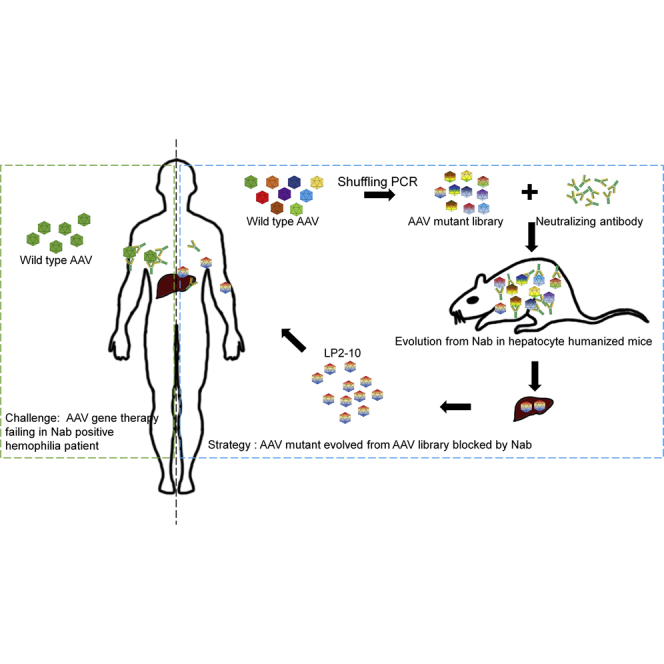
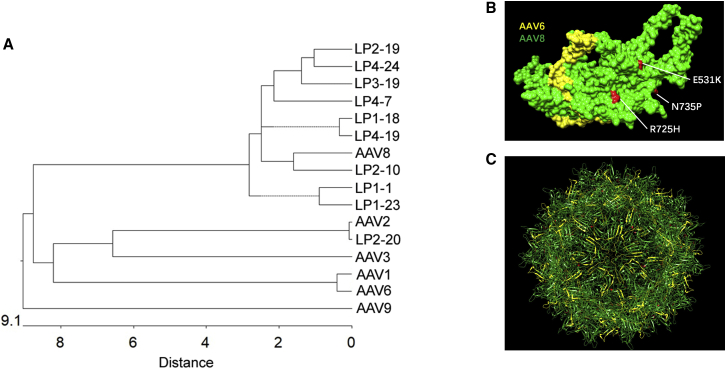
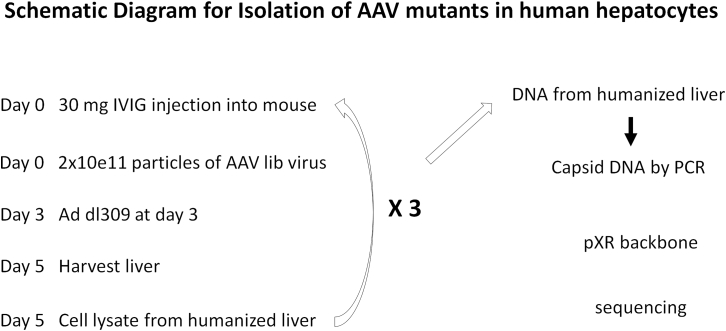
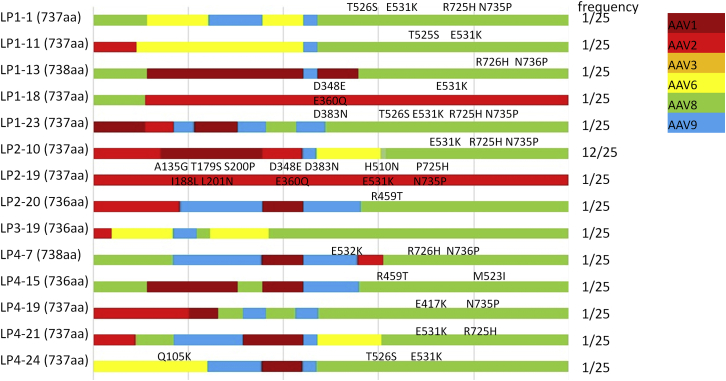
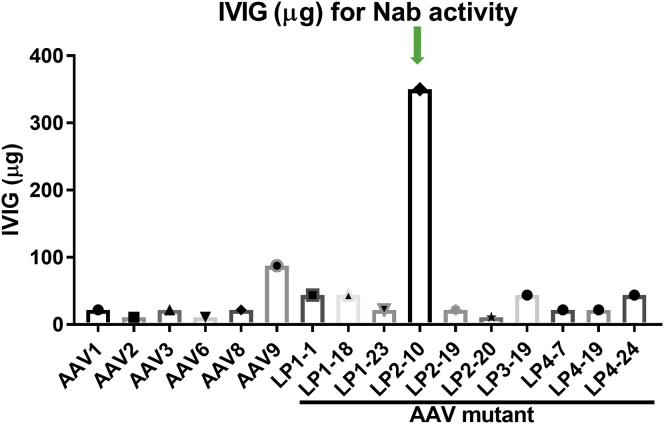
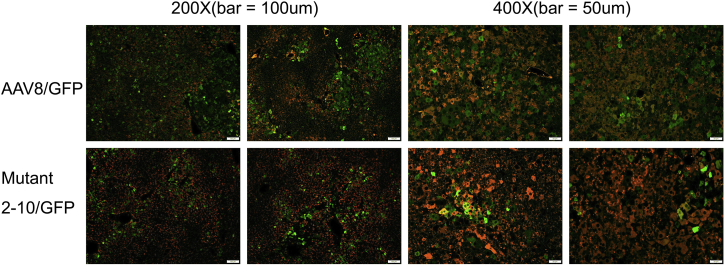
Adeno-associated virus (AAV) vectors have been successfully used in patients with bleeding disorders and blindness. For human liver targeting, two major factors restrict effective AAV transduction after systemic administration of AAV vectors: human hepatocyte tropism and neutralizing antibodies (Nabs). In this study, we attempted to isolate AAV variants with the ability to transduce human hepatocytes and escape Nabs using a directed evolution approach . After four cycles of selection, 14 AAV capsid mutants were identified from a capsid shuffling library selected in the presence of human Intravenous Immunoglobulin (IVIG) and isolated from human hepatocytes xenografted into chimeric mice. AAV neutralization assays using IVIG showed that most of the mutants showed the Nab escape pattern in a manner similar to that of AAV8 or AAV9 and better than that of other AAV serotypes. Different mutants displayed varying capacities to escape Nab activity from individual serum samples collected from healthy subjects or hemophilia patients. The mutant AAV LP2-10 was found in 12 colonies out of 25, which was composed of capsids from AAV serotypes 2, 6, 8, and 9, with VP3 subunits derived from AAV8 swapped with AAV6 from residues 261 to 272. The mutant AAV LP2-10 manifested a higher ability than that of other serotypes to escape Nabs in IVIG and most human serum samples. After injection of AAV vectors encoding a self-complementary GFP cassette into chimeric mice, LP2-10 transduced human hepatocytes with efficiency similar to that of AAV8. In summary, AAV mutants can be isolated in humanized mice with both human hepatocyte tropism and the ability to evade Nab activity.
腺相关病毒(AAV)载体已成功应用于出血性疾病和失明患者。对于人类肝脏靶向,在全身给药AAV载体后,有两个主要因素限制了有效的AAV转导:人类肝细胞嗜性和中和抗体(Nabs)。在本研究中,我们试图使用定向进化方法分离出具有转导人类肝细胞能力并逃避Nabs的AAV变体。经过四轮筛选,从在人静脉注射免疫球蛋白(IVIG)存在下选择的衣壳改组文库中鉴定出14个AAV衣壳突变体,并从移植到嵌合小鼠体内的人肝细胞中分离出来。使用IVIG进行的AAV中和试验表明,大多数突变体呈现出与AAV8或AAV9相似且优于其他AAV血清型的Nab逃逸模式。不同的突变体从健康受试者或血友病患者采集的个体血清样本中逃避Nab活性的能力各不相同。在25个菌落中的12个中发现了突变体AAV LP2-10,它由AAV血清型2、6、8和9的衣壳组成,其VP3亚基来自AAV8,从第261位到第272位与AAV6进行了交换。突变体AAV LP2-10在IVIG和大多数人血清样本中表现出比其他血清型更高的逃避Nabs的能力。将编码自互补绿色荧光蛋白盒的AAV载体注射到嵌合小鼠体内后,LP2-10转导人类肝细胞的效率与AAV8相似。总之,可以在具有人类肝细胞嗜性和逃避Nab活性能力的人源化小鼠中分离出AAV突变体。