Department of Biomedical Sciences, City University of Hong Kong, 83, Tat Chee Avenue, Hong Kong SAR.
Department of Materials Science and Engineering, City University of Hong Kong, 83, Tat Chee Avenue, Hong Kong SAR.
Sci Adv. 2020 Jun 26;6(26):eaaz6119. doi: 10.1126/sciadv.aaz6119. eCollection 2020 Jun.
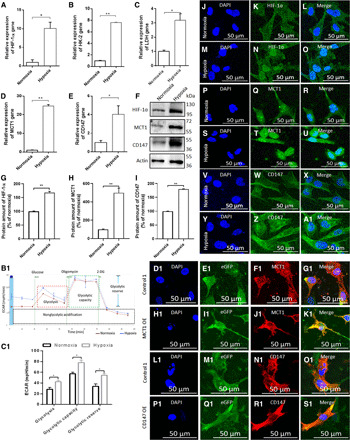
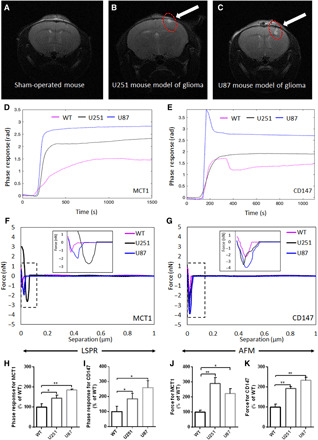
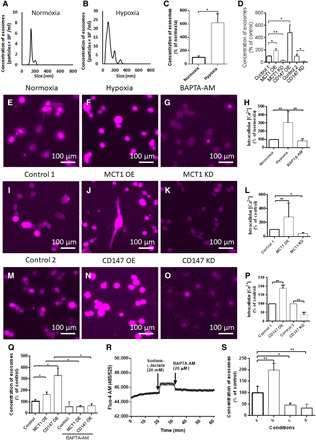
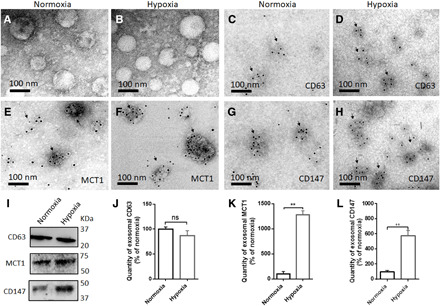
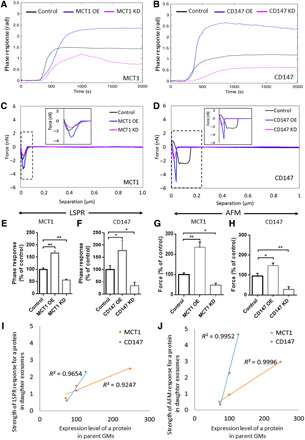
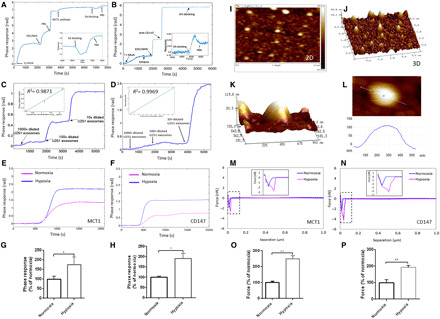
Malignant glioma is a fatal brain tumor whose pathological progression is closely associated with glycolytic reprogramming, leading to the high expression of monocarboxylate transporter 1 (MCT1) and its ancillary protein, cluster of differentiation 147 (CD147) for enhancing lactate efflux. In particular, malignant glioma cells (GMs) release tremendous number of exosomes, nanovesicles of 30 to 200 nm in size, promoting tumor progression by the transport of pro-oncogenic molecules to neighboring cells. In the present study, we found that hypoxia-induced malignant GMs strongly enhanced MCT1 and CD147 expression, playing a crucial role in promoting calcium-dependent exosome release. Furthermore, it was first identified that hypoxic GMs-derived exosomes contained significantly high levels of MCT1 and CD147, which could be quantitatively detected by noninvasive localized surface plasmon resonance and atomic force microscopy biosensors, demonstrating that they could be precise surrogate biomarkers for tracking parent GMs' metabolic reprogramming and malignant progression as liquid biopsies.
恶性脑胶质瘤是一种致命的脑肿瘤,其病理进展与糖酵解重编程密切相关,导致单羧酸转运蛋白 1(MCT1)及其辅助蛋白簇分化抗原 147(CD147)的高表达,以增强乳酸外排。特别是恶性神经胶质瘤细胞(GMs)释放大量外泌体,其大小为 30 至 200nm 的纳米囊泡,通过将致癌分子转运到邻近细胞来促进肿瘤进展。在本研究中,我们发现缺氧诱导的恶性 GMs 强烈增强了 MCT1 和 CD147 的表达,在促进钙依赖性外泌体释放方面发挥着关键作用。此外,首次发现缺氧 GMs 衍生的外泌体中含有明显高水平的 MCT1 和 CD147,可以通过非侵入性局部表面等离子体共振和原子力显微镜生物传感器进行定量检测,表明它们可以作为液体活检作为追踪亲本 GMs 代谢重编程和恶性进展的精确替代生物标志物。