Global Health Division, RTI International, Washington, DC, USA.
Heller School for Social Policy and Management, Brandeis University, 415 South Street, Waltham, MA, 02453, USA.
Hum Resour Health. 2020 Jul 8;18(1):48. doi: 10.1186/s12960-020-00483-x.
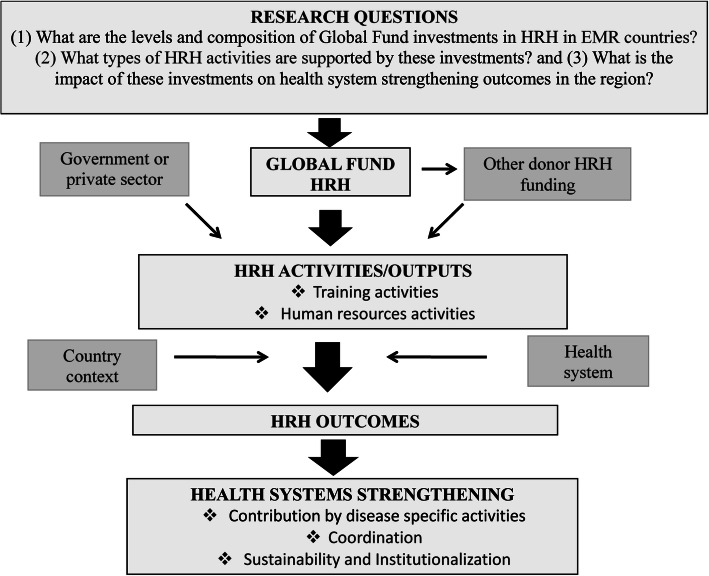
Despite the large investments in donor-related health activities in areas of the globe prone to tension and conflict, few studies have examined in detail the role of these donor investments in human resources for health (HRH).
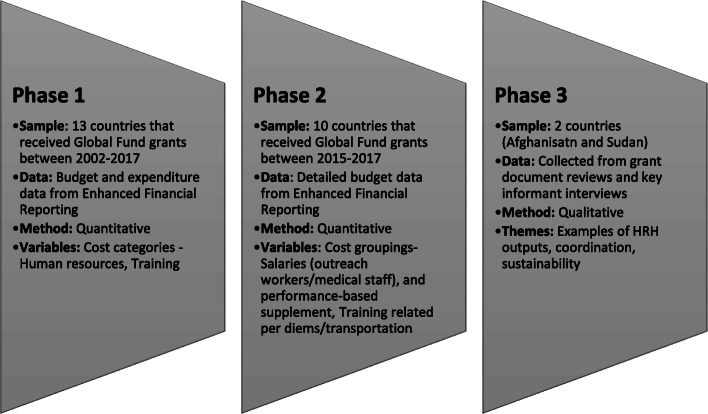
We used a mixed-methods research methodology comprising both quantitative and qualitative analyses to analyze the Enhanced Financial Reporting System of the Global Fund to Fight AIDS, Tuberculosis and Malaria budget and expenditure data from 2003 to 2017 for 13 countries in the Eastern Mediterranean Region (EMR). We analyzed additional detailed budgetary data over the period 2015-2017 for a sub-set of these countries. Two country-case studies were conducted in Afghanistan and Sudan for a more in-depth understanding of the HRH-related activities that occurred as a result of Global Fund grants.
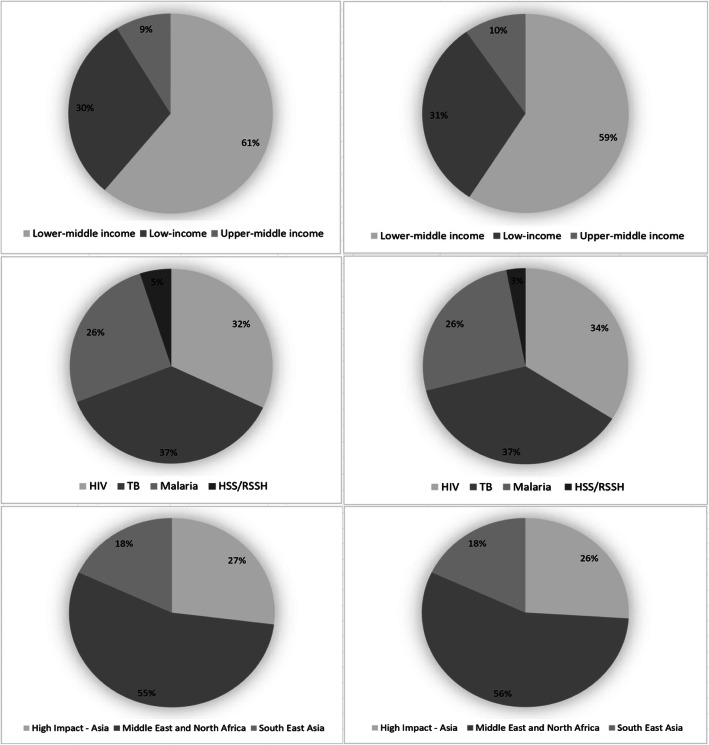
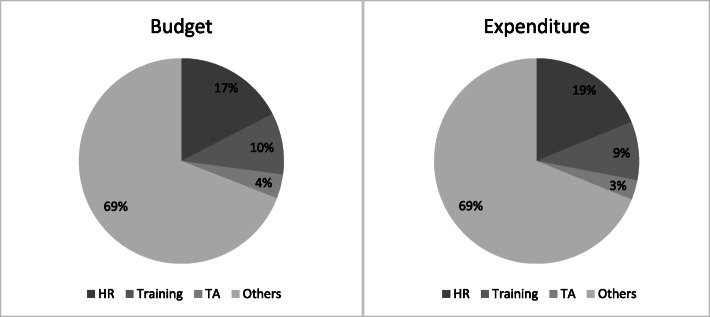
The results show that US$2.2 billion Global Fund dollars had been budgeted and US$1.6 billion were expended over the period 2003-2017 in 13 Eastern Mediterranean countries. The average expenditures for human resources for health (training and human resources) as a percentage of total expenditure are 28%. Additional detailed budgetary data analysis shows a more conservative investment in HRH with 13% of total budgets allocated to "direct" HRH activities such as salaries, training costs, and technical assistance. HRH-related activities supported by the Global Fund in Afghanistan and Sudan were similar, including pre-service and in-services training, hiring of program coordinators and staff, and top-ups for clinical staff.
HRH remains a key issue in strengthening the health systems of low- and middle-income countries. While this study suggests that Global Fund's HRH investments in the EMR are not lagging behind the global average, there appears to be a need to further scale up these investments considering this region's unique HRH challenges.
尽管在易发生紧张局势和冲突的全球地区投入了大量资金用于与捐赠者相关的卫生活动,但很少有研究详细探讨这些捐赠者投资在卫生人力方面的作用。
我们使用了一种混合方法研究方法,包括定量和定性分析,来分析全球抗击艾滋病、结核病和疟疾基金增强财务报告系统的预算和支出数据,这些数据来自 2003 年至 2017 年期间东地中海区域的 13 个国家。我们对这些国家中的一部分在 2015 年至 2017 年期间的额外详细预算数据进行了分析。在阿富汗和苏丹进行了两项国家案例研究,以便更深入地了解由于全球基金赠款而开展的与卫生人力有关的活动。
结果显示,在 2003 年至 2017 年期间,13 个东地中海国家预算了 22 亿美元的全球基金资金,支出了 16 亿美元。卫生人力(培训和人力资源)支出占总支出的平均比例为 28%。对额外详细预算数据的分析显示,对卫生人力的投资较为保守,总预算的 13%用于“直接”卫生人力活动,如工资、培训费用和技术援助。全球基金在阿富汗和苏丹支持的卫生人力相关活动相似,包括职前和在职培训、方案协调员和工作人员的招聘以及对临床工作人员的津贴。
卫生人力仍然是加强中低收入国家卫生系统的一个关键问题。尽管这项研究表明,全球基金在东地中海区域的卫生人力投资并不落后于全球平均水平,但考虑到该区域独特的卫生人力挑战,似乎有必要进一步扩大这些投资。