Département de Biochimie-Biologie Moléculaire, Pharmacologie, Génétique Médicale, AP-HP, Hôpitaux Universitaires Henri Mondor, F-94010, Creteil, France.
Univ Paris Est Creteil, INSERM, IMRB, F-94010, Creteil, France.
Orphanet J Rare Dis. 2020 Jul 8;15(1):180. doi: 10.1186/s13023-020-01425-5.
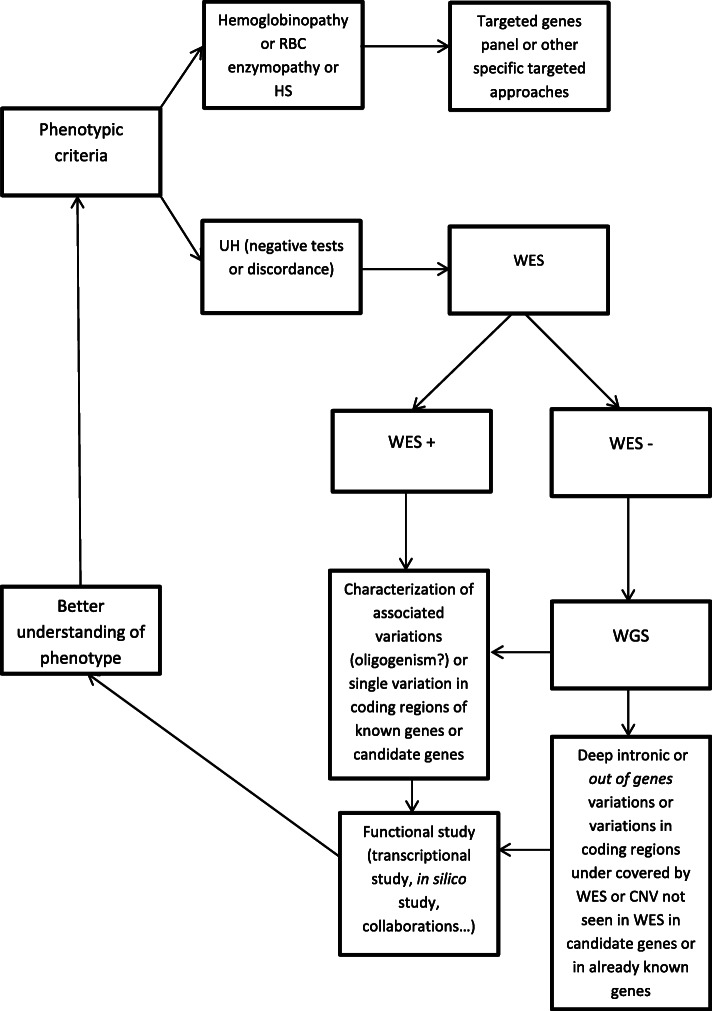
Congenital hemolytic anemia constitutes a heterogeneous group of rare genetic disorders of red blood cells. Diagnosis is based on clinical data, family history and phenotypic testing, genetic analyses being usually performed as a late step. In this study, we explored 40 patients with congenital hemolytic anemia by whole exome sequencing: 20 patients with hereditary spherocytosis and 20 patients with unexplained hemolysis.
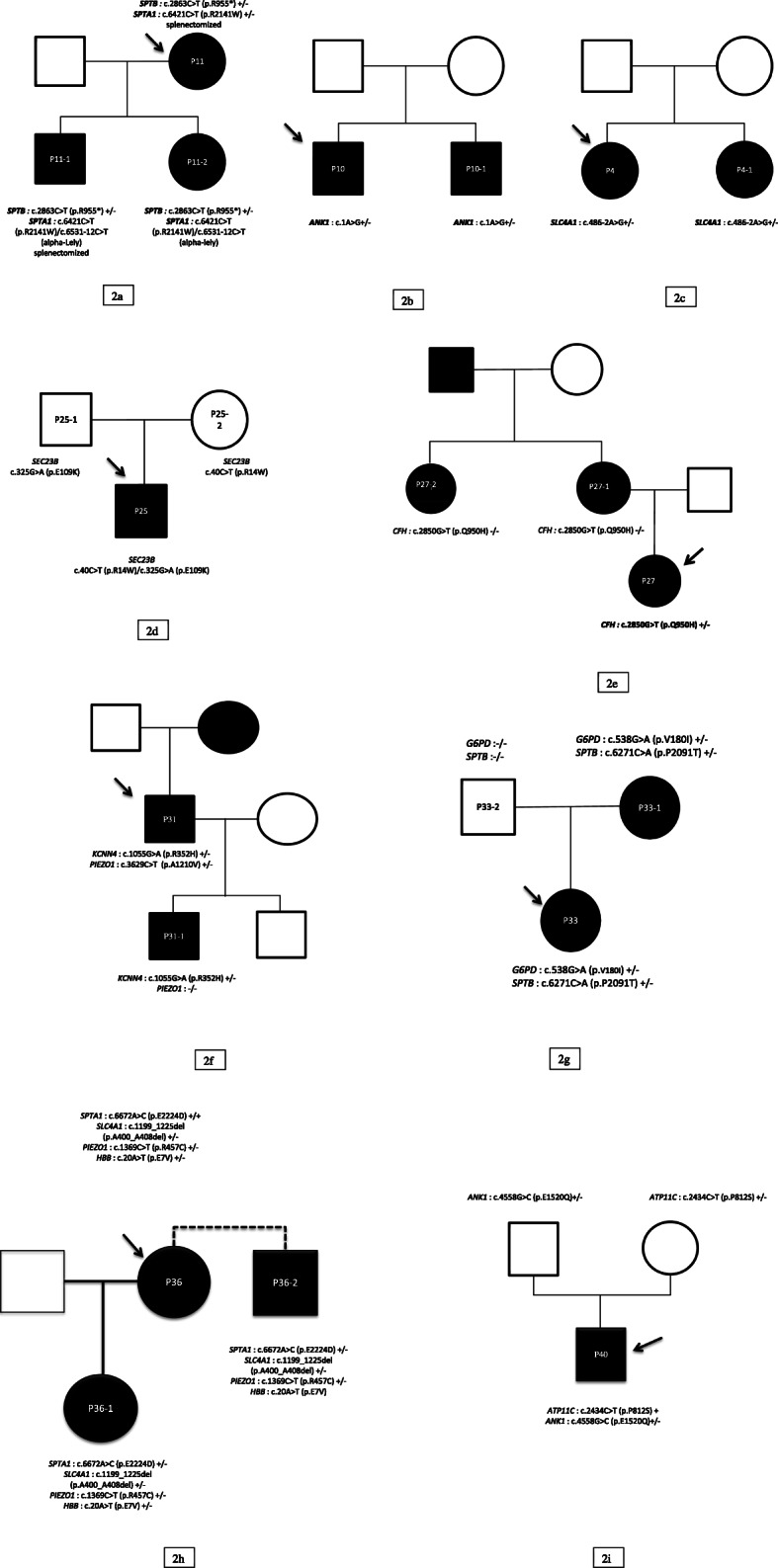
A probable genetic cause of disease was identified in 82.5% of the patients (33/40): 100% of those with suspected hereditary spherocytosis (20/20) and 65% of those with unexplained hemolysis (13/20). We found that several patients carried genetic variations in more than one gene (3/20 in the hereditary spherocytosis group, 6/13 fully elucidated patients in the unexplained hemolysis group), giving a more accurate picture of the genetic complexity of congenital hemolytic anemia. In addition, whole exome sequencing allowed us to identify genetic variants in non-congenital hemolytic anemia genes that explained part of the phenotype in 3 patients.
The rapid development of next generation sequencing has rendered the genetic study of these diseases much easier and cheaper. Whole exome sequencing in congenital hemolytic anemia could provide a more precise and quicker diagnosis, improve patients' healthcare and probably has to be democratized notably for complex cases.
先天性溶血性贫血是一组由红细胞遗传缺陷引起的罕见疾病。诊断基于临床数据、家族史和表型检测,遗传分析通常作为后续步骤进行。本研究通过全外显子组测序对 40 名先天性溶血性贫血患者进行了研究:20 名遗传性球形红细胞增多症患者和 20 名原因不明溶血性贫血患者。
82.5%的患者(33/40)确定了可能的疾病遗传原因:疑似遗传性球形红细胞增多症患者(20/20)的 100%和原因不明溶血性贫血患者(13/20)的 65%。我们发现,一些患者携带一种以上基因的遗传变异(遗传性球形红细胞增多症组中 3/20 例,完全阐明的原因不明溶血性贫血组中 6/13 例),更准确地反映了先天性溶血性贫血的遗传复杂性。此外,全外显子组测序使我们能够鉴定出非先天性溶血性贫血基因中的遗传变异,这些变异在 3 名患者的部分表型中解释。
下一代测序技术的快速发展使得这些疾病的遗传研究变得更加容易和便宜。先天性溶血性贫血的全外显子组测序可以提供更准确和快速的诊断,改善患者的医疗保健,并且可能需要显著民主化,尤其是对于复杂病例。