Department of Oncology and Hematology, The Second Hospital of Jilin University, 218 Ziqiang Street, Nanguan District, Changchun, 130041, Jilin, People's Republic of China.
Department of Thoracic Surgery, The First Hospital of Jilin University, Chaoyang, Changchun, 130021, Jilin, People's Republic of China.
Sci Rep. 2020 Jul 8;10(1):11236. doi: 10.1038/s41598-020-67908-4.
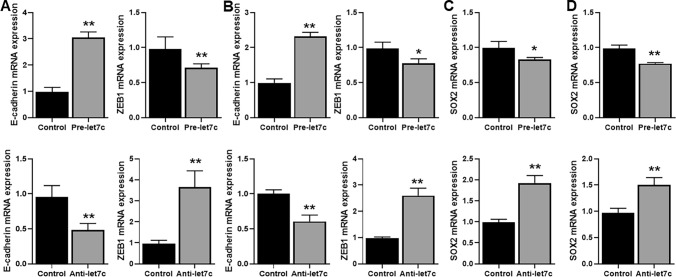
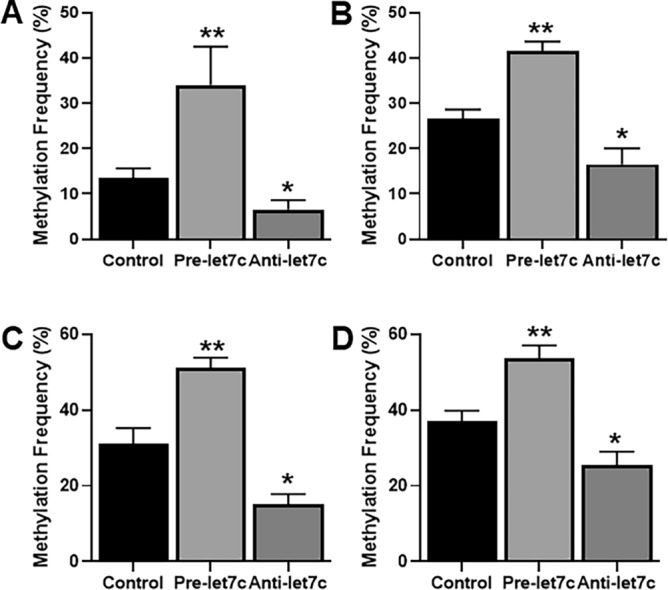
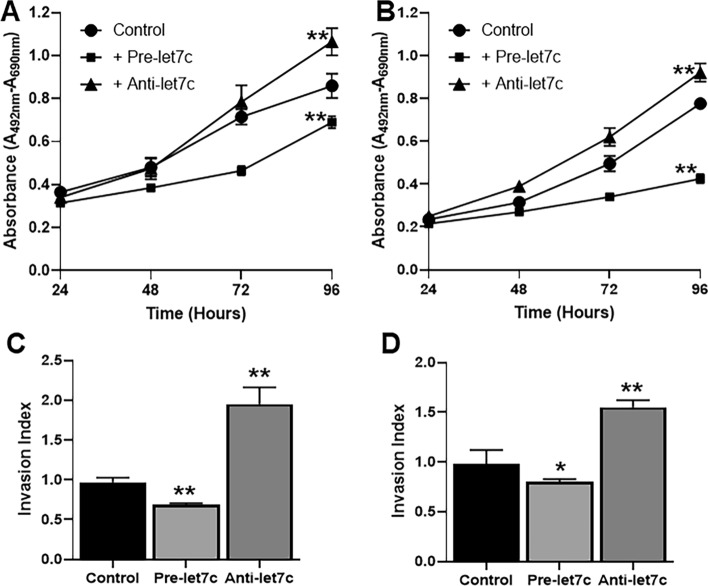
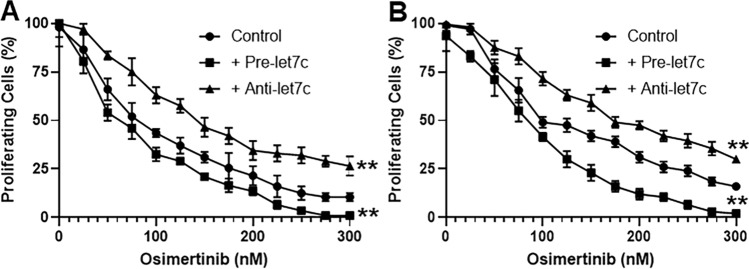
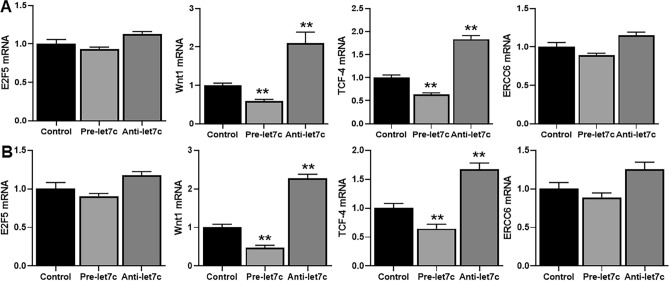
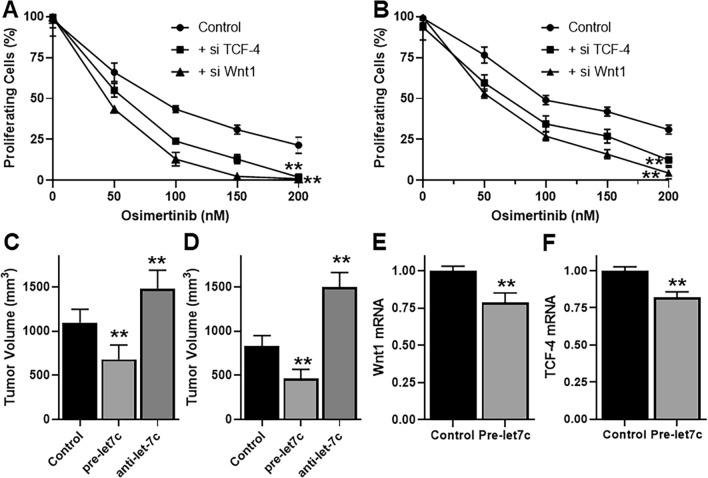
Epidermal growth factor receptor- tyrosine kinase inhibitors (EGFR-TKIs) have shown promise against non-small cell lung cancers (NSCLCs) in clinics but the utility is often short-lived because of T790M mutations in EGFR that help evade TKIs' action. Osimertinib is the third and latest generation TKI that targets EGFRs with T790M mutations. However, there are already reports on acquired resistance against Osimertinib. Recent work has revealed the role that miRNAs, particularly tumor suppressor let-7c, play in the invasiveness and acquired resistance of NSCLCs, but the mechanistic details, particularly in Osimertinib resistance, remain elusive. Using two cells lines, H1975 (endogenous T790M mutation) and HCC827-T790M (with acquired T790M mutation), we found that let-7c is a regulator of EMT, as well as it affects CSC phenotype. In both the cell lines, transfection with pre-let-7c led to reversal of EMT as studied through EMT markers e-cadherin and ZEB1. This resulted in reduced proliferation and invasion. Conversely, reduced expression of let-7c through anti-let-7c transfections significantly increased proliferation and invasion of lung cancer cells. Expression of let-7c was functionally relevant as EMT correlated with resistance to Osimertinib. High let-7c expression reversed EMT and made cells sensitive to Osimertinib, and vice versa. WNT1 and TCF-4 were found to be two targets of let-7c which were epigenetic suppressed by let-7c through increased methylation. In vivo, pre-let-7c inhibited while anti-let-7c potentiated tumor growth and WNT1 and TCF-4 were downregulated in xenografts with pre-let-7c. Silencing of both WNT1 and TCF-4 resulted in potentiation of Osimertinib action. Our results suggest an important role of let-7c in regulating EMT and the resulting Osimertinib resistance in T790M NSCLCs. More clinical studies need to be performed to fully understand the translational relevance of this novel mechanism.
表皮生长因子受体-酪氨酸激酶抑制剂 (EGFR-TKIs) 在临床上对非小细胞肺癌 (NSCLC) 显示出一定的疗效,但由于 EGFR 的 T790M 突变有助于逃避 TKI 的作用,其疗效往往是短暂的。奥希替尼是针对具有 T790M 突变的 EGFR 的第三代也是最新一代 TKI。然而,已经有关于奥希替尼获得性耐药的报道。最近的研究揭示了 miRNA,特别是肿瘤抑制因子 let-7c,在 NSCLC 的侵袭性和获得性耐药中的作用,但机制细节,特别是在奥希替尼耐药性方面,仍然难以捉摸。我们使用两种细胞系,H1975(内源性 T790M 突变)和 HCC827-T790M(获得性 T790M 突变),发现 let-7c 是 EMT 的调节剂,并且影响 CSC 表型。在这两种细胞系中,通过 EMT 标志物 E-钙粘蛋白和 ZEB1 的研究,转染 pre-let-7c 导致 EMT 的逆转。这导致增殖和侵袭减少。相反,通过 anti-let-7c 转染减少 let-7c 的表达显著增加肺癌细胞的增殖和侵袭。let-7c 的表达与奥希替尼的耐药性相关,具有功能相关性,因为 EMT 与奥希替尼的耐药性相关。高表达 let-7c 逆转 EMT 并使细胞对奥希替尼敏感,反之亦然。发现 WNT1 和 TCF-4 是 let-7c 的两个靶标,通过增加甲基化,let-7c 对它们进行表观遗传抑制。在体内,pre-let-7c 抑制而 anti-let-7c 增强肿瘤生长,并且在用 pre-let-7c 处理的异种移植物中下调 WNT1 和 TCF-4。沉默 WNT1 和 TCF-4 两者都增强了奥希替尼的作用。我们的研究结果表明 let-7c 在调节 EMT 以及由此产生的 T790M NSCLC 对奥希替尼的耐药性方面发挥着重要作用。需要进行更多的临床研究来充分了解这一新机制的转化相关性。