Department of Biomedical Sciences, Asan Medical Center, AMIST, University of Ulsan College of Medicine, Seoul, 05505, Republic of Korea.
Asan Institute for Life Sciences, Asan Medical Center, University of Ulsan of Medicine, Seoul, 05505, Republic of Korea.
Sci Rep. 2021 Oct 4;11(1):19667. doi: 10.1038/s41598-021-99267-z.
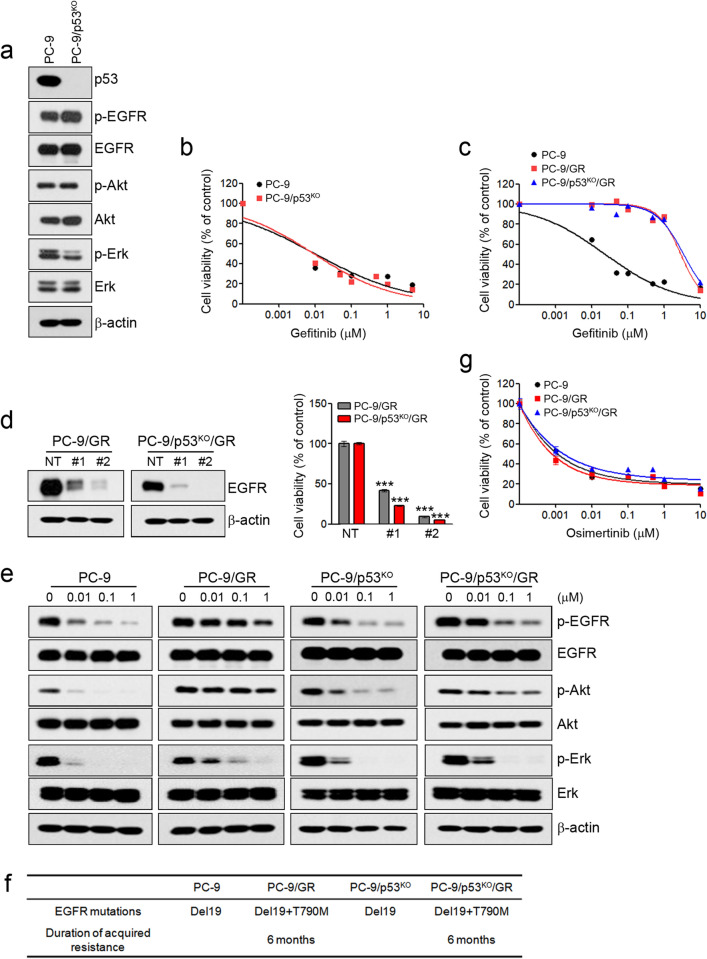
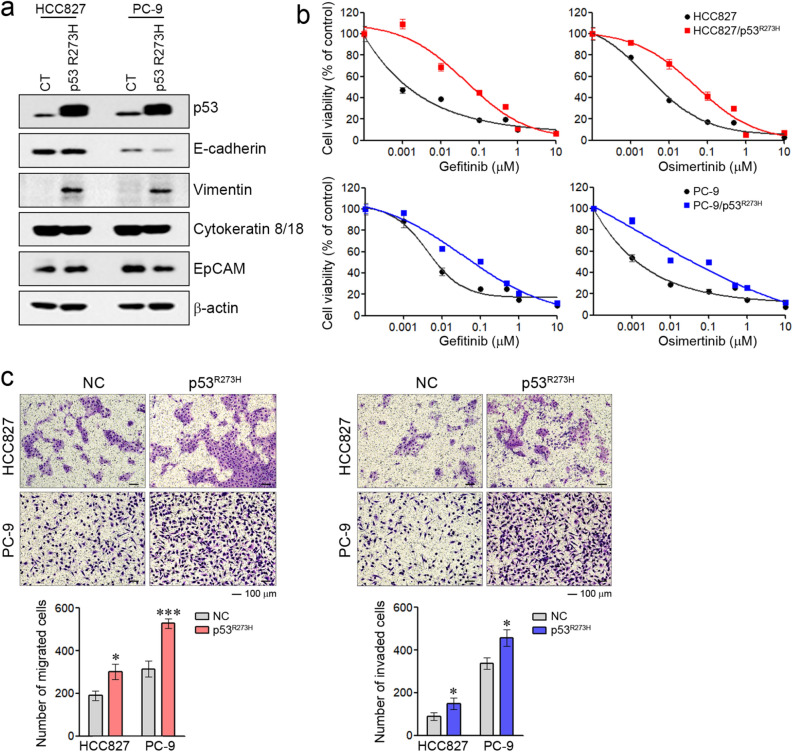
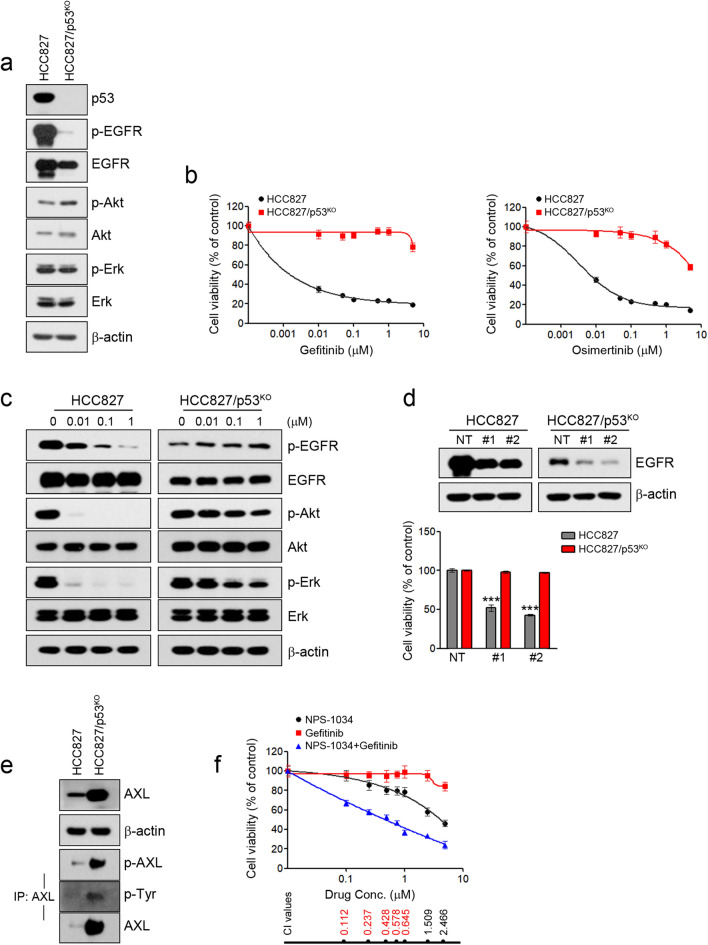
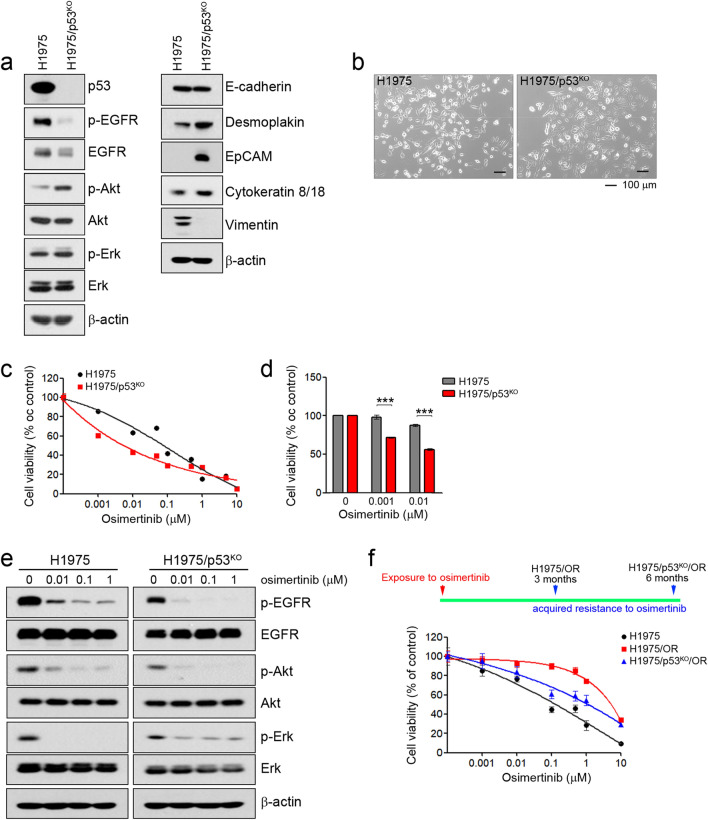
The emergence of resistance to epidermal growth factor receptor (EGFR) tyrosine kinase inhibitors (TKIs) in non-small cell lung cancer (NSCLC) with activating EGFR mutations is a major hindrance to treatment. We investigated the effects of p53 in primary sensitivity and acquired resistance to EGFR-TKIs in NSCLC cells. Changes in sensitivity to EGFR-TKIs were determined using p53 overexpression or knockdown in cells with activating EGFR mutations. We investigated EMT-related molecules, morphologic changes, and AXL induction to elucidate mechanisms of acquired resistance to EGFR-TKIs according to p53 status. Changes in p53 status affected primary sensitivity as well as acquired resistance to EGFR-TKIs according to cell type. Firstly, p53 silencing did not affect primary and acquired resistance to EGFR-TKIs in PC-9 cells, but it led to primary resistance to EGFR-TKIs through AXL induction in HCC827 cells. Secondly, p53 silencing in H1975 cells enhanced the sensitivity to osimertinib through the emergence of mesenchymal-to-epithelial transition, and the emergence of acquired resistance to osimertinib in p53 knockout cells was much slower than in H1975 cells. Furthermore, two cell lines (H1975 and H1975/p53) demonstrated the different mechanisms of acquired resistance to osimertinib. Lastly, the introduction of mutant p53-R273H induced the epithelial-to-mesenchymal transition and exerted resistance to EGFR-TKIs in cells with activating EGFR mutations. These findings indicate that p53 mutations can be associated with primary or acquired resistance to EGFR-TKIs. Thus, the status or mutations of p53 may be considered as routes to improving the therapeutic effects of EGFR-TKIs in NSCLC.
表皮生长因子受体(EGFR)酪氨酸激酶抑制剂(TKI)在具有激活 EGFR 突变的非小细胞肺癌(NSCLC)中的耐药性的出现是治疗的主要障碍。我们研究了 p53 在 NSCLC 细胞中对 EGFR-TKI 的原发性敏感性和获得性耐药中的作用。通过在具有激活 EGFR 突变的细胞中过表达或敲低 p53 来确定对 EGFR-TKI 的敏感性变化。根据 p53 状态,我们研究了 EMT 相关分子、形态变化和 AXL 诱导,以阐明获得性耐药的机制。p53 状态的变化根据细胞类型影响原发性敏感性和对 EGFR-TKI 的获得性耐药。首先,p53 沉默不会影响 PC-9 细胞对 EGFR-TKI 的原发性和获得性耐药,但它会通过在 HCC827 细胞中诱导 AXL 导致对 EGFR-TKI 的原发性耐药。其次,在 H1975 细胞中敲低 p53 通过出现间质上皮转化增强了对奥希替尼的敏感性,并且在 p53 敲除细胞中获得奥希替尼耐药的出现速度明显慢于 H1975 细胞。此外,两种细胞系(H1975 和 H1975/p53)表现出对奥希替尼获得性耐药的不同机制。最后,引入突变型 p53-R273H 可诱导上皮间质转化,并赋予具有激活 EGFR 突变的细胞对 EGFR-TKI 的耐药性。这些发现表明,p53 突变可能与 EGFR-TKI 的原发性或获得性耐药有关。因此,p53 的状态或突变可能被认为是改善 NSCLC 中 EGFR-TKI 治疗效果的途径。