Department of Urology, Tongji Hospital, Tongji Medical College, Huazhong University of Science and Technology, Wuhan, China.
Department of Urology, The Second Affiliated Hospital of Kunming Medical University, Kunming, China.
Theranostics. 2020 Jun 5;10(16):7319-7334. doi: 10.7150/thno.44054. eCollection 2020.
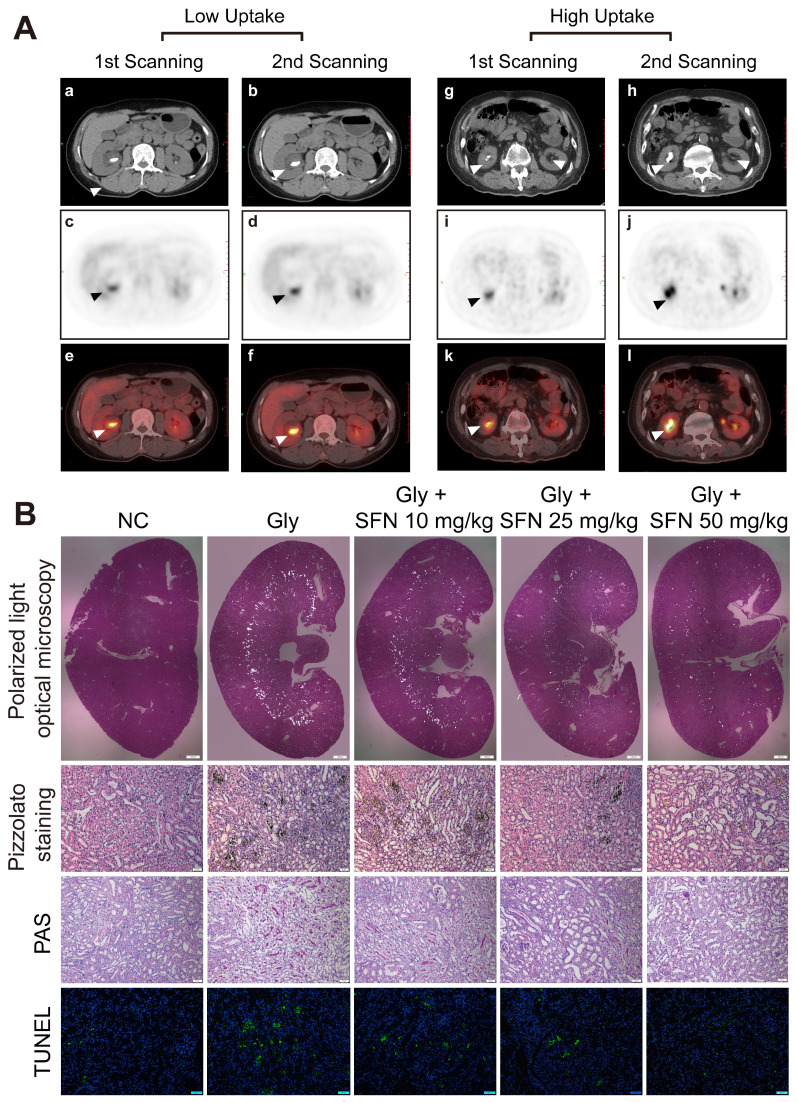
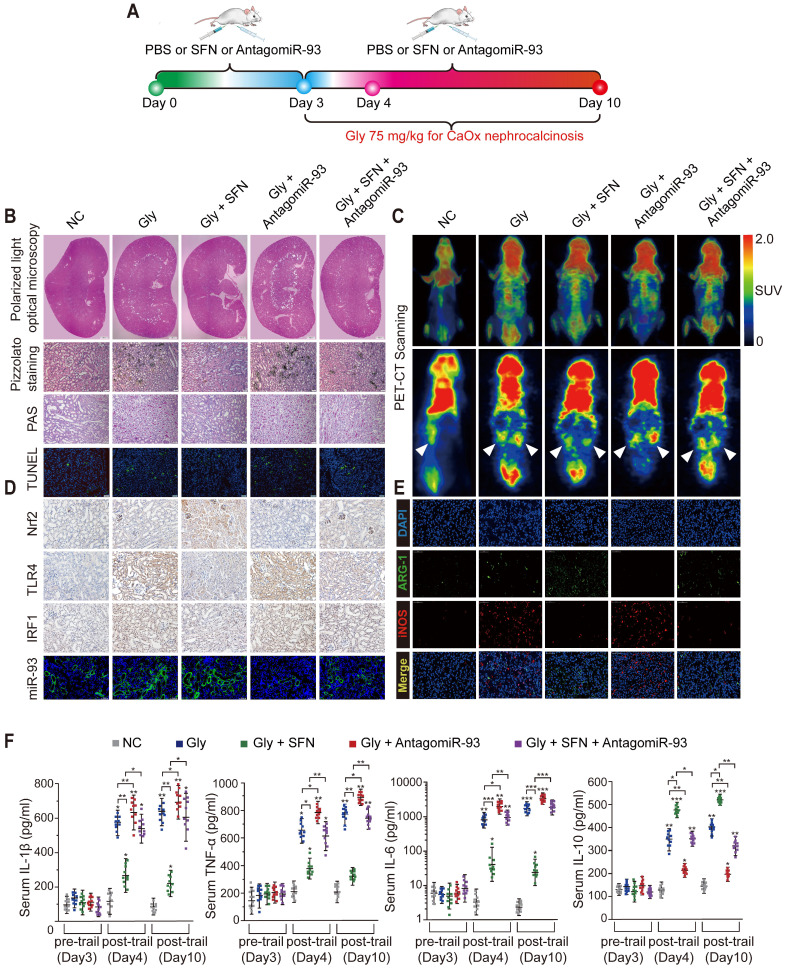
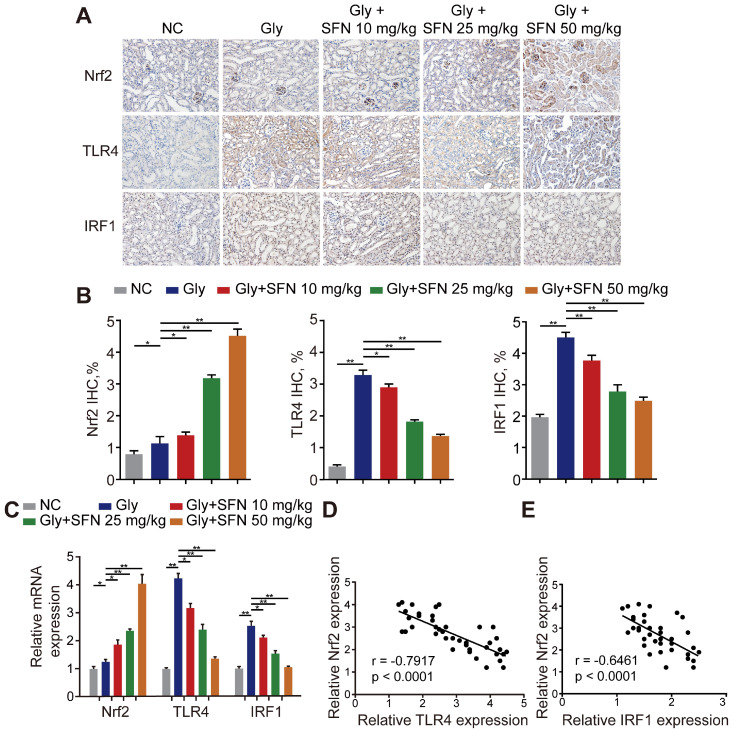
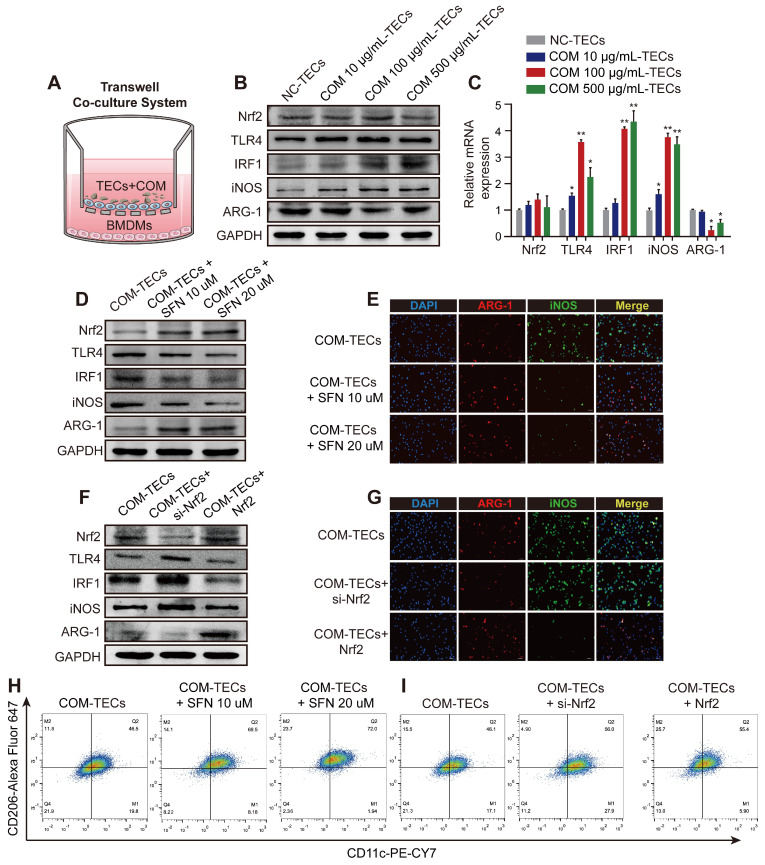
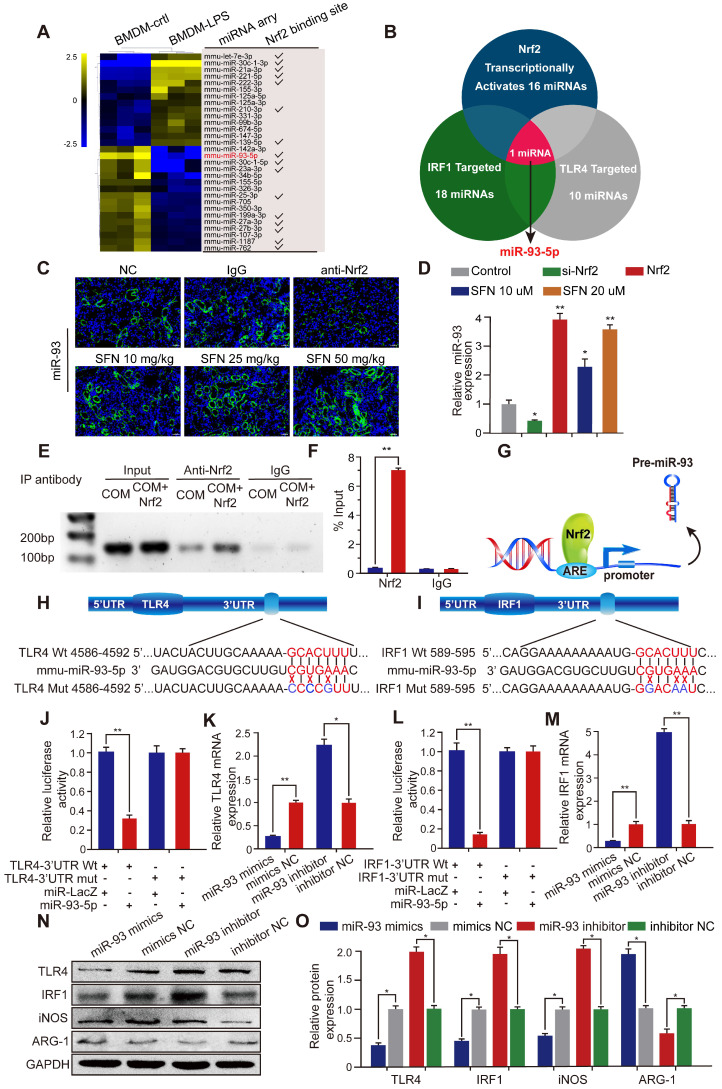
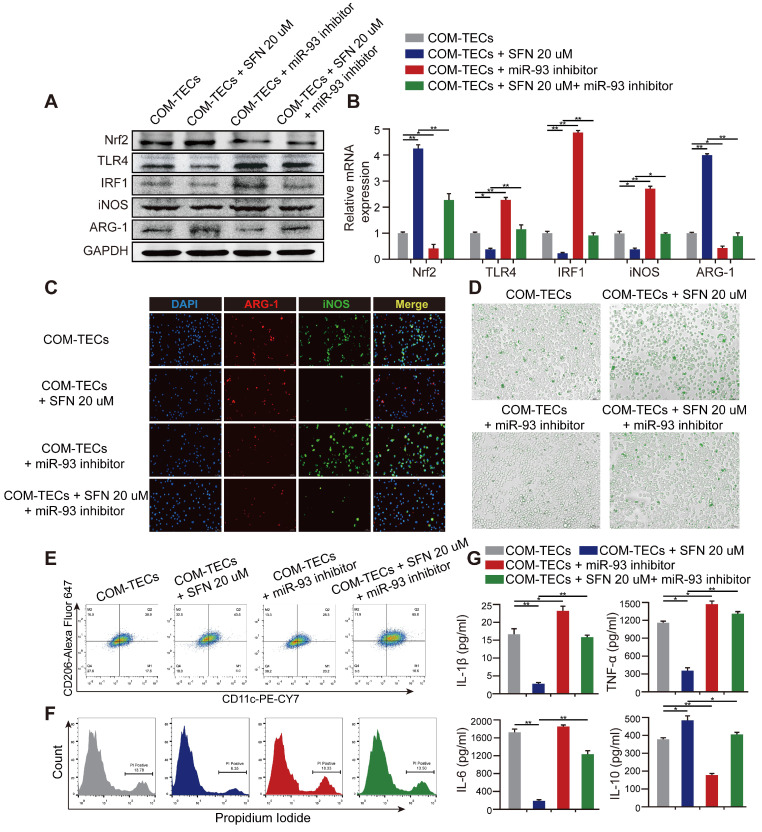
Intrarenal calcium oxalate (CaOx) crystals induce renal tubular epithelial cells (TECs) injury and inflammation, which involve Toll-like receptor 4 (TLR4)/interferon regulatory factor 1 (IRF1) signaling. Additionally, infiltrating macrophages (Mϕs) might influence intrarenal CaOx crystals and CaOx-induced renal injury. Although the roles of nuclear factor erythroid 2-related factor 2 (Nrf2) in regulating inflammation and macrophage polarization are well characterized, its potential mechanisms in regulating CaOx nephrocalcinosis remain undefined. We used a Gene Expression Omnibus dataset to analyze gene-expression profiles. Luciferase reporter, western blot, quantitative polymerase chain reaction, immunofluorescence staining, fluorescence in situ hybridization, positron emission tomography computed tomography imaging, flow cytometry, and chromatin immunoprecipitation assays were employed to study the mechanism of miR-93-TLR4/IRF1 regulation by Nrf2. Anti-inflammatory activity and regulation of macrophage polarization by Nrf2 were investigated and . We found that stone-mediated kidney inflammation significantly affected stone growth, and that sulforaphane attenuated CaOx nephrocalcinosis-induced kidney injury and renal CaOx crystals deposition. Additionally, Nrf2 levels significantly increased and negatively correlated with TLR4 and IRF1 levels in a mouse model of CaOx nephrocalcinosis following sulforaphane treatment. Moreover, Nrf2 suppressed TLR4 and IRF1 levels and decreased M1-macrophage polarization which induced by supernatants from COM-stimulated TECs . In terms of mechanism, transcription factor analyses, microRNA microarray, and chromatin immunoprecipitation assays showed that Nrf2 exhibited positive transcriptional activation of miR-93-5p. In addition, Luciferase reporter, qRT-PCR, and western blot validated that miR-93-5p targets TLR4 and IRF1 mRNA. Furthermore, suppressed miR-93-5p expression partially reversed Nrf2-dependent TLR4/IRF1 downregulation. The results suggested that sulforaphane might promote M2Mϕ polarization and inhibit CaOx nephrocalcinosis-induced inflammatory injury to renal tubular epithelial cells via the Nrf2-miR-93-TLR4/IRF1 pathway and
肾内草酸钙(CaOx)晶体诱导肾小管上皮细胞(TEC)损伤和炎症,涉及 Toll 样受体 4(TLR4)/干扰素调节因子 1(IRF1)信号通路。此外,浸润的巨噬细胞(Mϕ)可能影响肾内 CaOx 晶体和 CaOx 诱导的肾损伤。虽然核因子红细胞 2 相关因子 2(Nrf2)在调节炎症和巨噬细胞极化中的作用已得到充分描述,但它在调节 CaOx 肾钙质沉着症中的潜在机制尚不清楚。我们使用基因表达综合数据库分析了基因表达谱。利用荧光素酶报告基因、western blot、定量聚合酶链反应、免疫荧光染色、荧光原位杂交、正电子发射断层扫描计算机断层扫描成像、流式细胞术和染色质免疫沉淀检测,研究了 Nrf2 对 miR-93-TLR4/IRF1 调节的机制。并研究了 Nrf2 对炎症的抑制活性和对巨噬细胞极化的调节作用。我们发现结石介导的肾脏炎症显著影响结石生长,而萝卜硫素可减轻 CaOx 肾钙质沉着症诱导的肾损伤和肾内 CaOx 晶体沉积。此外,在萝卜硫素处理的 CaOx 肾钙质沉着症小鼠模型中,Nrf2 水平显著增加,并与 TLR4 和 IRF1 水平呈负相关。此外,Nrf2 抑制了由 COM 刺激的 TEC 上清液诱导的 TLR4 和 IRF1 水平,并减少了 M1 巨噬细胞极化。在机制方面,转录因子分析、miRNA 微阵列和染色质免疫沉淀检测显示,Nrf2 对 miR-93-5p 的表达具有正向转录激活作用。此外,荧光素酶报告基因、qRT-PCR 和 western blot 验证了 miR-93-5p 靶向 TLR4 和 IRF1 mRNA。此外,抑制 miR-93-5p 的表达部分逆转了 Nrf2 依赖的 TLR4/IRF1 下调。结果表明,萝卜硫素可能通过 Nrf2-miR-93-TLR4/IRF1 通路促进 M2 巨噬细胞极化,抑制 CaOx 肾钙质沉着症诱导的肾小管上皮细胞炎症损伤。