Zhang Yuxin, He Liantu, Zhou Xinghua, Zhou Dazhi, Tang Jiaxin, Tang Qing
1Department of Ultrasound, 2Department of Respiratory Disease, First Affiliated Hospital of Guangzhou Medical University, Guangzhou 510120, China.
J Thorac Dis. 2020 Jun;12(6):3167-3177. doi: 10.21037/jtd-20-1247.
Hemoptysis is the most frequently reported complication of ultrasound-guided transthoracic needle lung biopsy (US-TTLB). However, factors influencing the occurrence of hemoptysis as a result of US-TTLB remain uncertain. Therefore, the aim of this study was to evaluate the incidence of hemoptysis as a complication of US-TTLB and to identify the related risk factors.
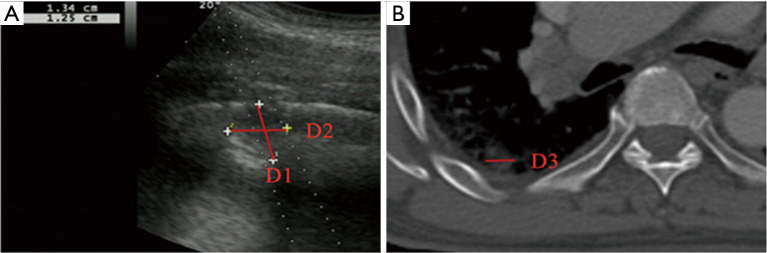
We retrospectively analyzed all data of patients who underwent US-TTLB from February 2013 through December 2016. The incidence, severity, and treatment of hemoptysis in each case were carefully recorded. Study variables were classified into patient-related factors (age, sex, smoking history, pulse oxygen saturation, laboratory tests and emphysema), biopsy-related factors (use of contrast agent, number of punctures and operators), and lesion-related factors (lesion location, size, pathology, length of puncture path and the grade of air bronchial sign). Univariate and multivariate logistic regression analyses were performed to analyze the risk factors of hemoptysis. We investigated whether incidence of hemoptysis increased according to increased grade of air bronchial sign by Mantel-Haenszel test.
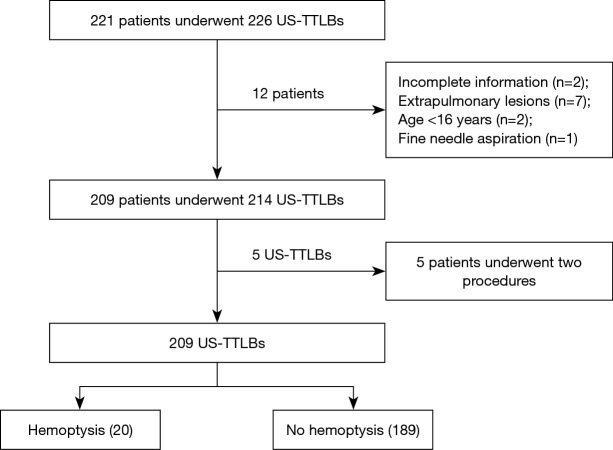
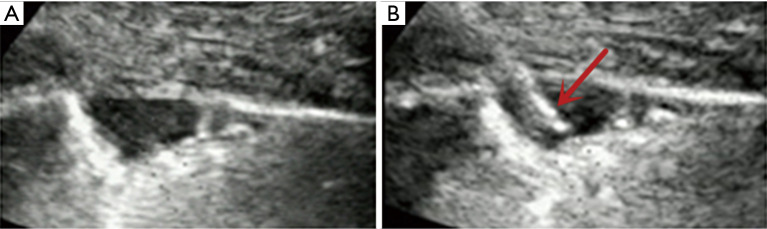
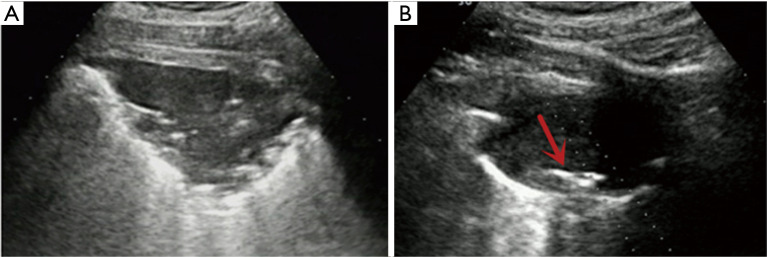
A total of 209 patients were evaluated. Hemoptysis occurred in 20 of the 209 patients (9.6%). In univariate analysis, the lesion pathology (P=0.037) and grade of air bronchial sign (P<0.001) were statistically significant factors between the hemoptysis group and the non-hemoptysis group. In multivariate analysis, the presence of multi-air bronchogram in sonographic image (odds ratio =8.946; 95% confidence interval: 2.873-27.863; P<0.001) was a statistically significant predictive risk factor for hemoptysis complicating US-TTLB. There was a significant tendency for incidence of hemoptysis with the grade of air bronchial sign (P<0.001).
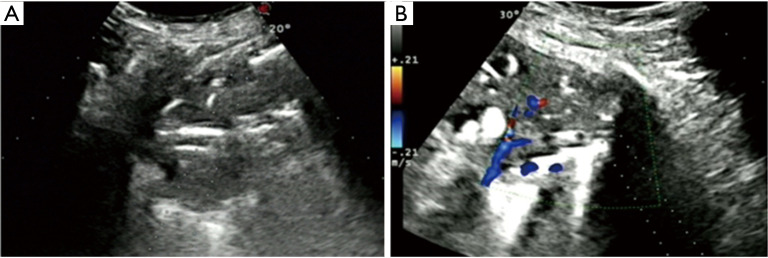
We found that the rate of hemoptysis complicating US-TTLB was 9.6% and the severity of hemoptysis was not serious. Target lesion without air bronchogram is a safety sign, minor bronchogram means relatively low-risk, while multiple bronchogram is a highly dangerous ultrasound sign of hemoptysis.
咯血是超声引导下经胸壁肺穿刺活检术(US-TTLB)最常报告的并发症。然而,US-TTLB导致咯血发生的影响因素仍不明确。因此,本研究的目的是评估US-TTLB并发症咯血的发生率,并确定相关危险因素。
我们回顾性分析了2013年2月至2016年12月期间接受US-TTLB的患者的所有数据。仔细记录每例患者咯血的发生率、严重程度及治疗情况。研究变量分为患者相关因素(年龄、性别、吸烟史、脉搏血氧饱和度、实验室检查及肺气肿)、活检相关因素(造影剂使用、穿刺次数及操作者)和病灶相关因素(病灶位置、大小、病理、穿刺路径长度及空气支气管征分级)。进行单因素和多因素逻辑回归分析以分析咯血的危险因素。我们通过Mantel-Haenszel检验研究咯血发生率是否随空气支气管征分级增加而升高。
共评估了209例患者。209例患者中有20例(9.6%)发生咯血。单因素分析显示,咯血组与非咯血组之间,病灶病理(P=0.037)和空气支气管征分级(P<0.001)是具有统计学意义的因素。多因素分析显示,超声图像中存在多发空气支气管征(比值比=8.946;95%置信区间:2.873-27.863;P<0.001)是US-TTLB并发咯血的具有统计学意义的预测危险因素。咯血发生率随空气支气管征分级有显著升高趋势(P<0.001)。
我们发现US-TTLB并发咯血的发生率为9.6%,且咯血严重程度不严重。无空气支气管征的靶病灶是安全征象,轻度支气管征意味着风险相对较低,而多发支气管征是咯血的高度危险超声征象。