Tang Jingshu, Kang Yuying, Huang Longjian, Wu Lei, Peng Ying
State Key Laboratory of Bioactive Substances and Functions of Natural Medicines, Institute of Materia Medica, Chinese Academy of Medical Sciences & Peking Union Medical College, Beijing 100050, China.
Acta Pharm Sin B. 2020 Jun;10(6):987-1003. doi: 10.1016/j.apsb.2020.02.015. Epub 2020 Mar 5.
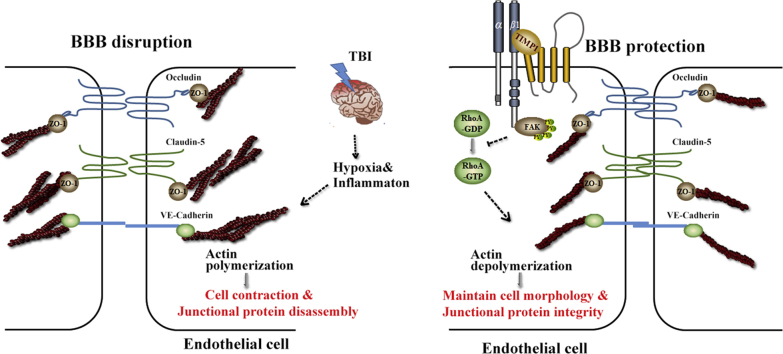
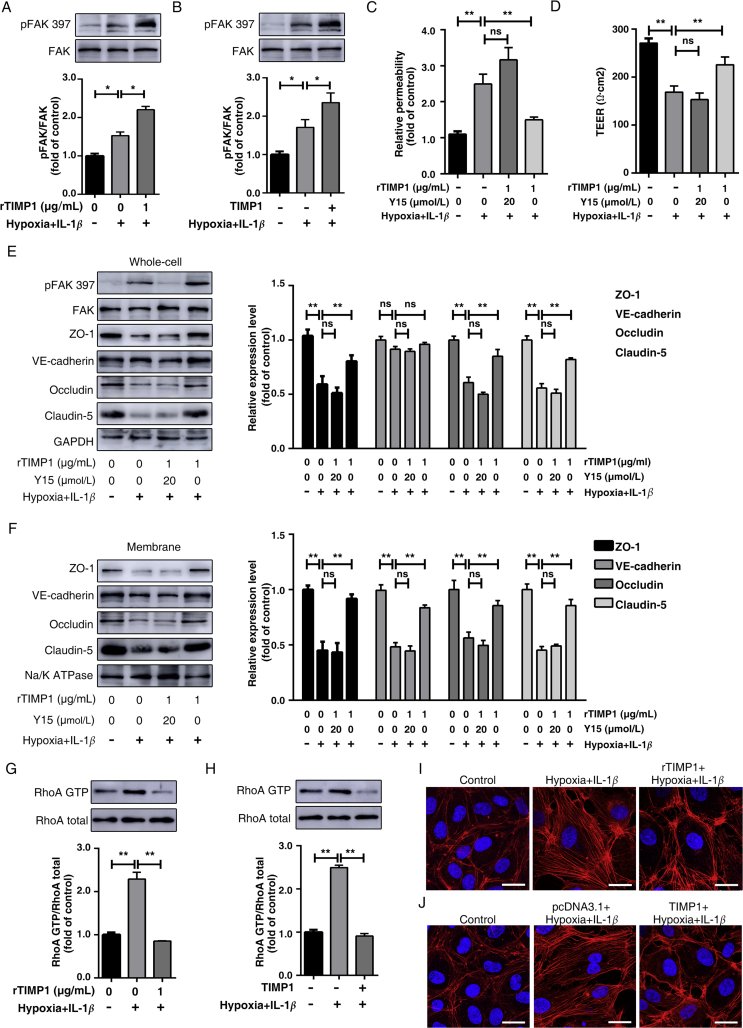
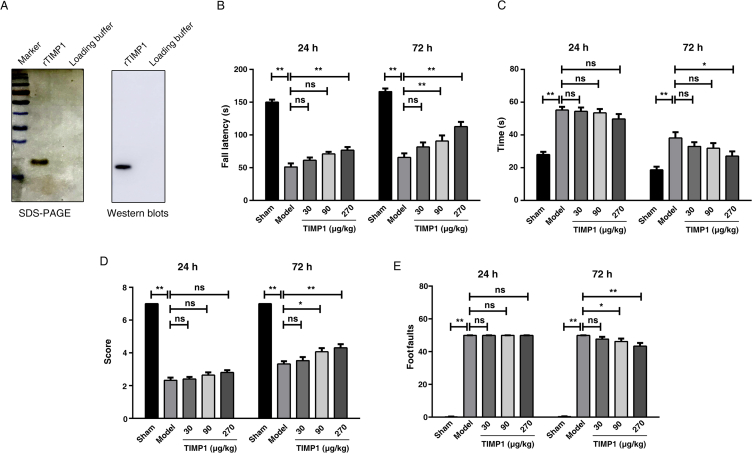
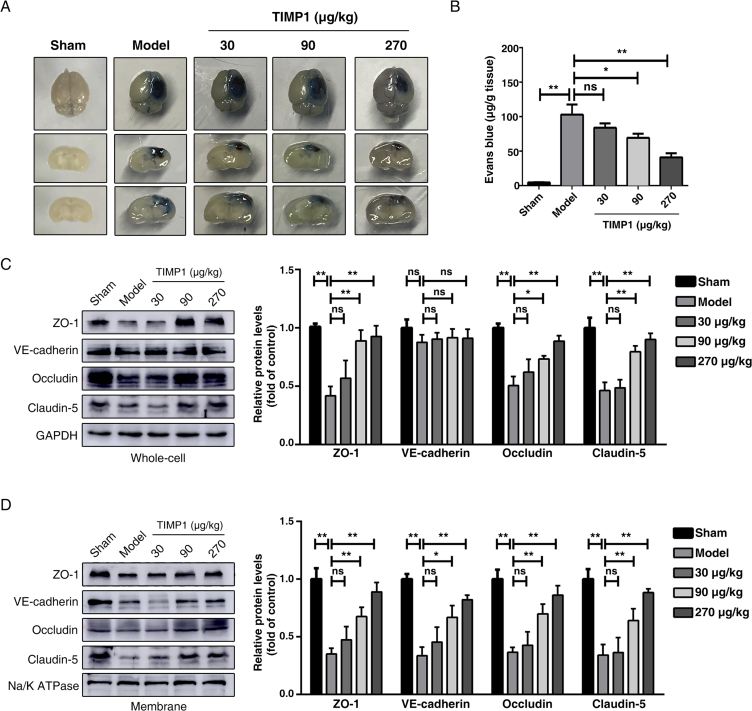
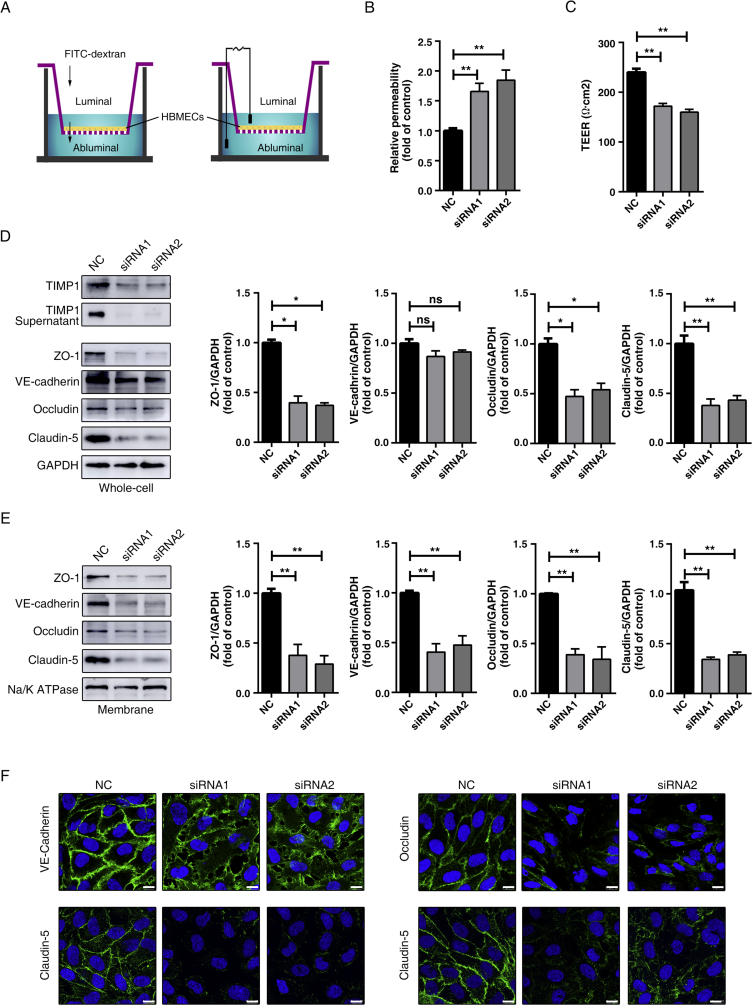
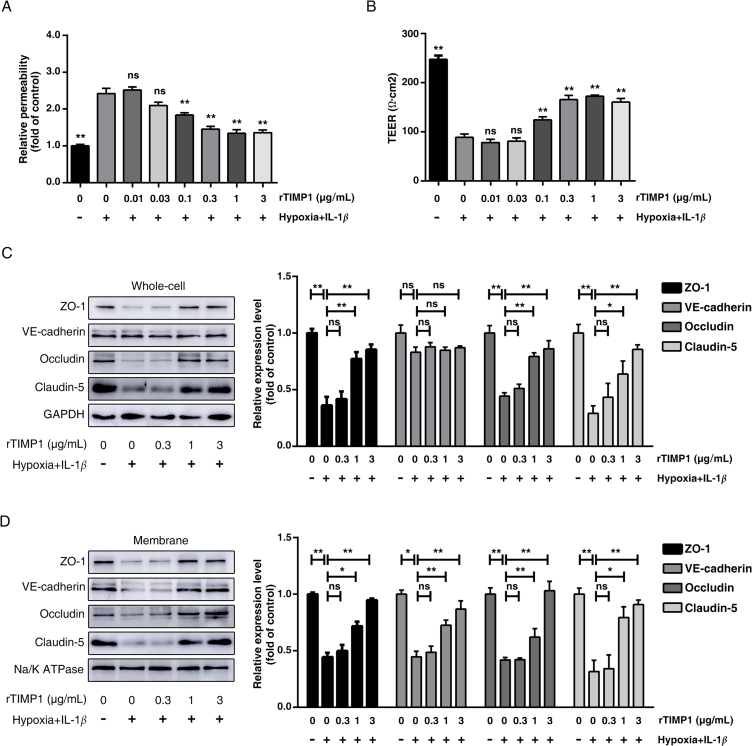
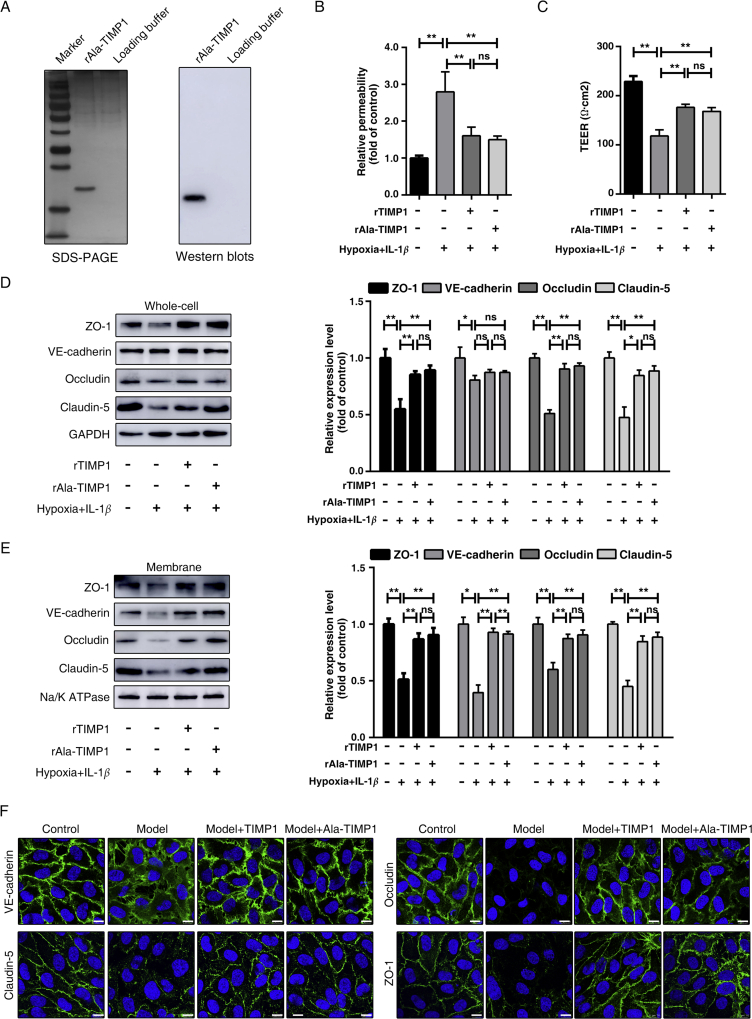
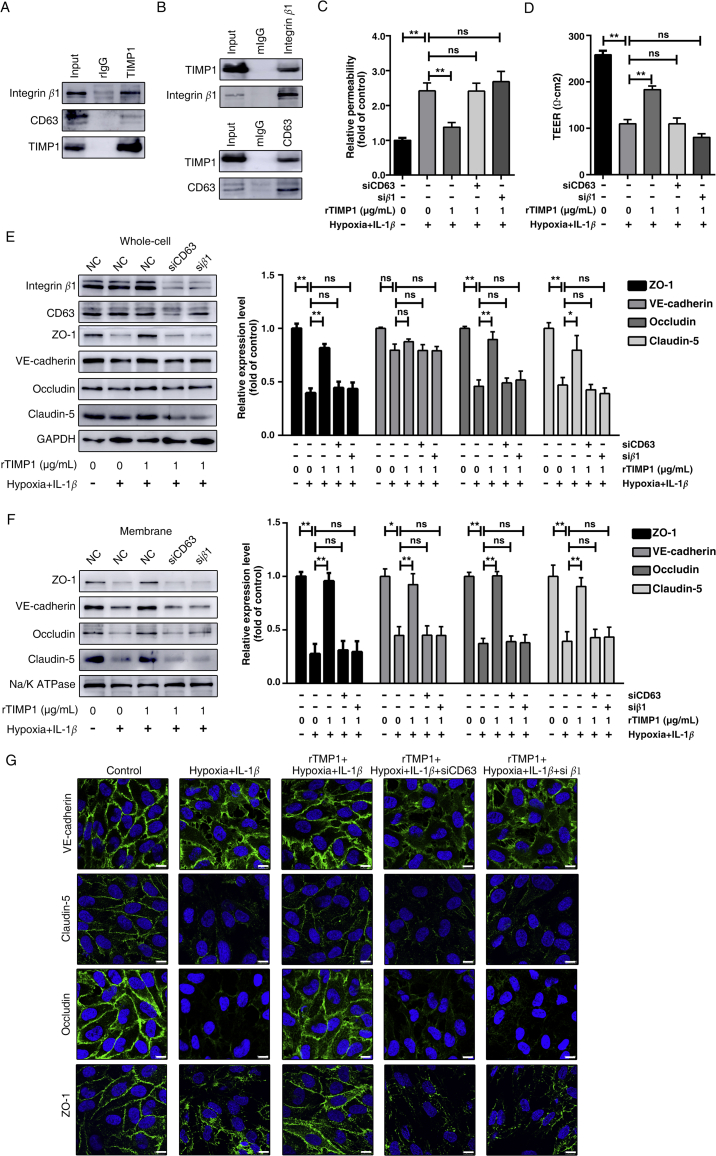
Blood-brain barrier (BBB) breakdown and the associated microvascular hyperpermeability are hallmark features of several neurological disorders, including traumatic brain injury (TBI). However, there is no viable therapeutic strategy to rescue BBB function. Tissue inhibitor of metalloproteinase-1 (TIMP1) has been considered to be beneficial for vascular integrity, but the molecular mechanisms underlying the functions of TIMP1 remain elusive. Here, we report that TIMP1 executes a protective role on neuroprotective function ameliorating BBB disruption in mice with experimental TBI. In human brain microvessel endothelial cells (HBMECs) exposed to hypoxia and inflammation injury, the recombinant TIMP1 (rTIMP1) treatment maintained integrity of junctional proteins and trans-endothelial tightness. Mechanistically, TIMP1 interacts with CD63/integrin 1 complex and activates downstream FAK signaling, leading to attenuation of RhoA activation and F-actin depolymerization for endothelial cells structure stabilization. Notably, these effects depend on CD63/integrin 1 complex, instead of the MMP-inhibitory function. Together, our results identified a novel MMP-independent function of TIMP1 in regulating endothelial barrier integrity. Therapeutic interventions targeting TIMP1 and its downstream signaling may be beneficial to protect BBB function following brain injury and neurological disorders.
血脑屏障(BBB)破坏及相关的微血管高通透性是包括创伤性脑损伤(TBI)在内的多种神经系统疾病的标志性特征。然而,目前尚无可行的治疗策略来挽救血脑屏障功能。金属蛋白酶组织抑制剂-1(TIMP1)被认为对血管完整性有益,但其发挥功能的分子机制仍不清楚。在此,我们报告TIMP1在实验性TBI小鼠中对神经保护功能发挥保护作用,减轻血脑屏障破坏。在暴露于缺氧和炎症损伤的人脑微血管内皮细胞(HBMECs)中,重组TIMP1(rTIMP1)处理维持了连接蛋白的完整性和跨内皮紧密性。机制上,TIMP1与CD63/整合素β1复合物相互作用并激活下游FAK信号,导致RhoA激活减弱和F-肌动蛋白解聚,从而稳定内皮细胞结构。值得注意的是,这些作用依赖于CD63/整合素β1复合物,而非MMP抑制功能。总之,我们的结果确定了TIMP1在调节内皮屏障完整性方面一种新的不依赖MMP的功能。针对TIMP1及其下游信号的治疗干预可能有助于在脑损伤和神经系统疾病后保护血脑屏障功能。