Park Jong-Chan, Baik Sung Hoon, Han Sun-Ho, Cho Hyun Jin, Choi Hyunjung, Kim Haeng Jun, Choi Heesun, Lee Wonik, Kim Dong Kyu, Mook-Jung Inhee
Department of Biochemistry and Biomedical Sciences, College of Medicine, Seoul National University, Seoul, 110-799, Korea.
Aging Cell. 2017 Feb;16(1):149-161. doi: 10.1111/acel.12530. Epub 2016 Sep 16.
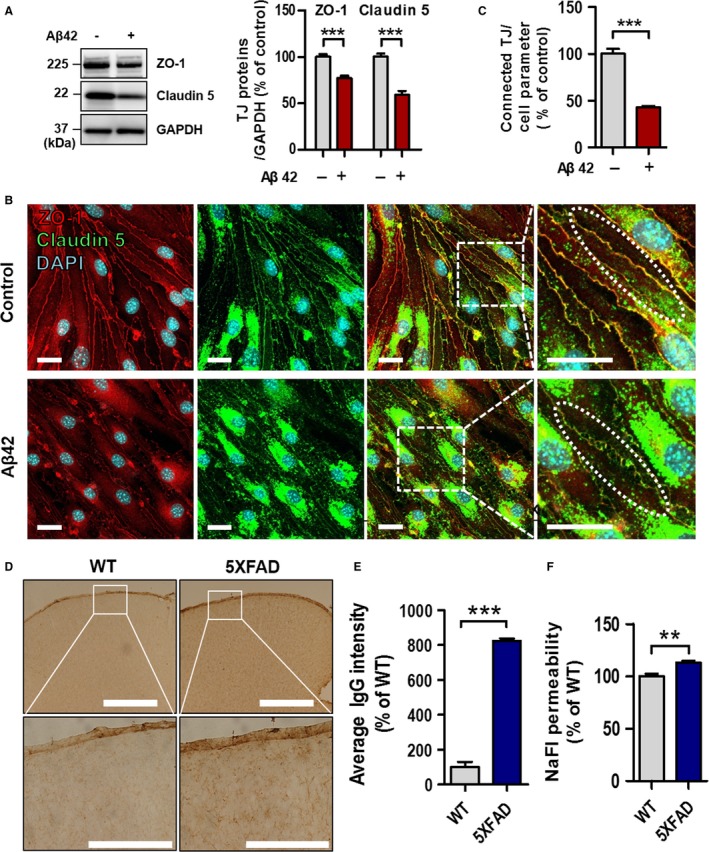
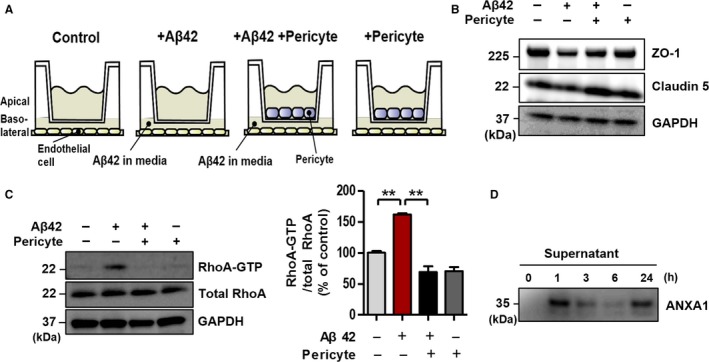
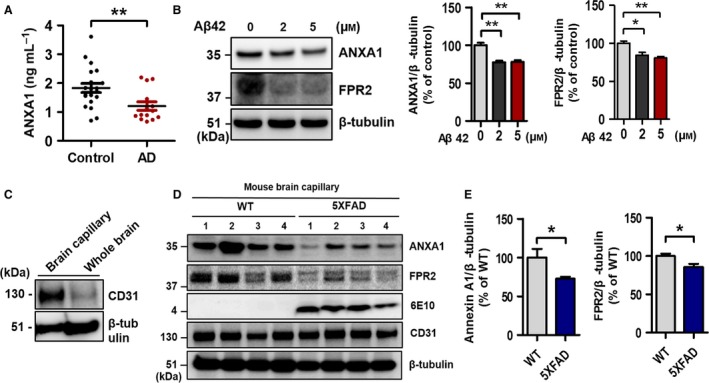
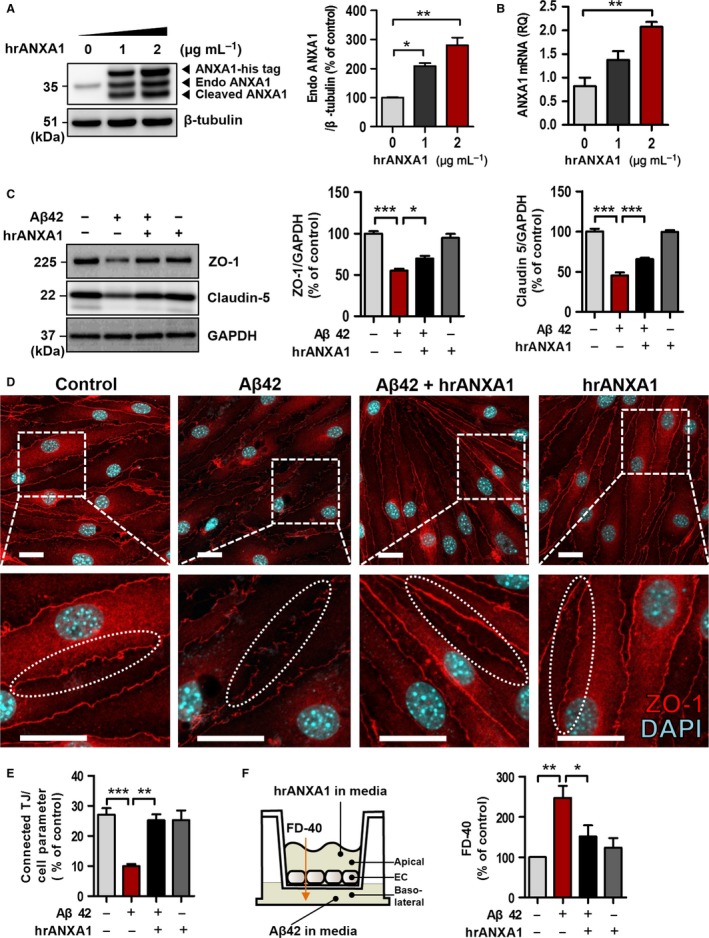
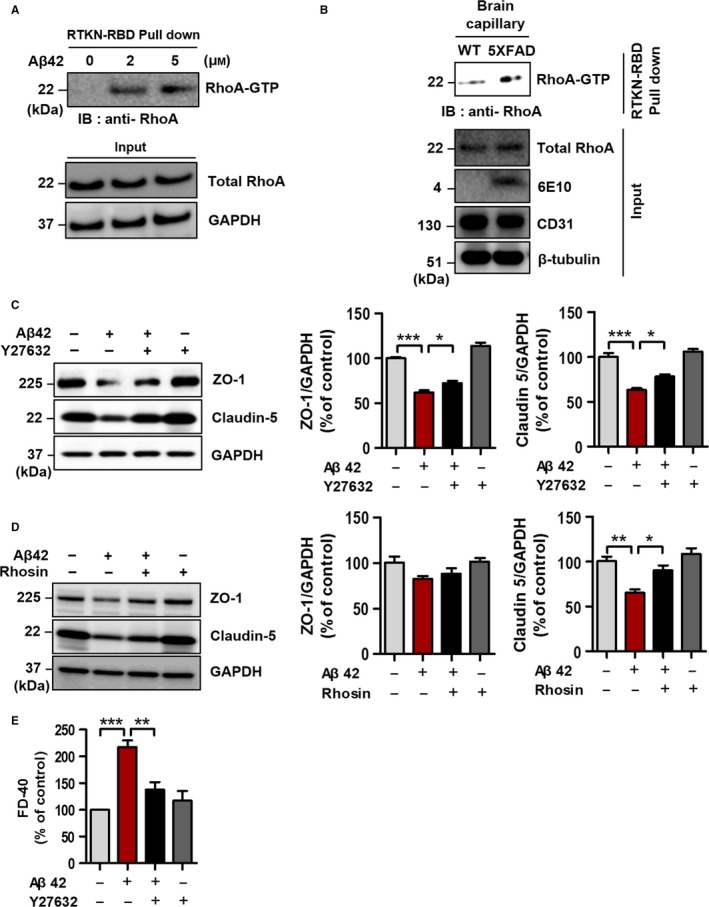
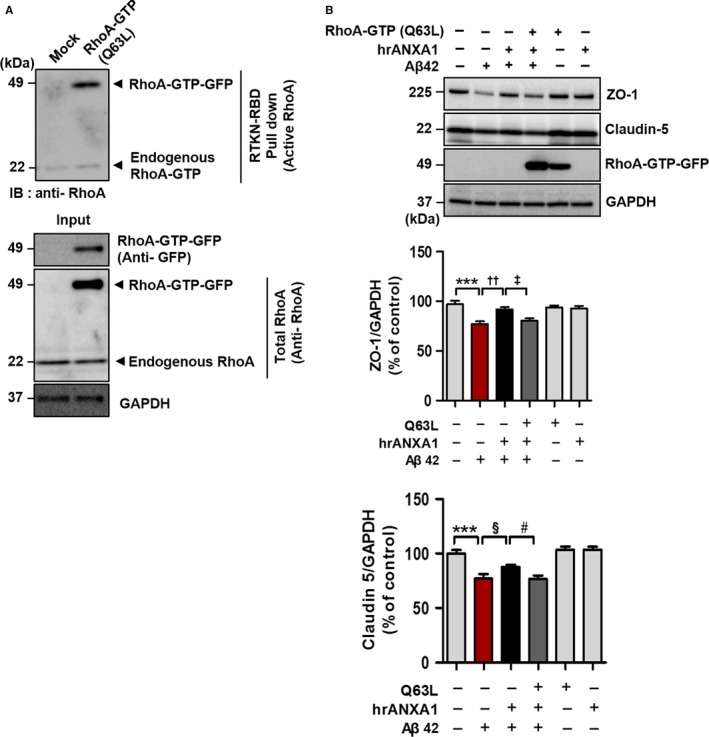
The blood-brain barrier (BBB) is composed of brain capillary endothelial cells and has an important role in maintaining homeostasis of the brain separating the blood from the parenchyma of the central nervous system (CNS). It is widely known that disruption of the BBB occurs in various neurodegenerative diseases, including Alzheimer's disease (AD). Annexin A1 (ANXA1), an anti-inflammatory messenger, is expressed in brain endothelial cells and regulates the BBB integrity. However, its role and mechanism for protecting BBB in AD have not been identified. We found that β-Amyloid 1-42 (Aβ42)-induced BBB disruption was rescued by human recombinant ANXA1 (hrANXA1) in the murine brain endothelial cell line bEnd.3. Also, ANXA1 was decreased in the bEnd.3 cells, the capillaries of 5XFAD mice, and the human serum of patients with AD. To find out the mechanism by which ANXA1 recovers the BBB integrity in AD, the RhoA-ROCK signaling pathway was examined in both Aβ42-treated bEnd.3 cells and the capillaries of 5XFAD mice as RhoA was activated in both cases. RhoA inhibitors alleviated Aβ42-induced BBB disruption and constitutively overexpressed RhoA-GTP (active form of RhoA) attenuated the protective effect of ANXA1. When pericytes were cocultured with bEnd.3 cells, Aβ42-induced RhoA activation of bEnd.3 cells was inhibited by the secretion of ANXA1 from pericytes. Taken together, our results suggest that ANXA1 restores Aβ42-induced BBB disruption through inhibition of RhoA-ROCK signaling pathway and we propose ANXA1 as a therapeutic reagent, protecting against the breakdown of the BBB in AD.
血脑屏障(BBB)由脑毛细血管内皮细胞组成,在维持大脑内环境稳定方面发挥着重要作用,它将血液与中枢神经系统(CNS)实质分隔开来。众所周知,在包括阿尔茨海默病(AD)在内的各种神经退行性疾病中,血脑屏障都会遭到破坏。膜联蛋白A1(ANXA1)是一种抗炎信使,在脑内皮细胞中表达并调节血脑屏障的完整性。然而,其在AD中保护血脑屏障的作用和机制尚未明确。我们发现,人重组ANXA1(hrANXA1)可挽救β-淀粉样蛋白1-42(Aβ42)诱导的小鼠脑内皮细胞系bEnd.3中的血脑屏障破坏。此外,在bEnd.3细胞、5XFAD小鼠的毛细血管以及AD患者的人血清中,ANXA1水平均降低。为了找出ANXA1在AD中恢复血脑屏障完整性的机制,我们在Aβ42处理的bEnd.3细胞和5XFAD小鼠的毛细血管中检测了RhoA-ROCK信号通路,因为在这两种情况下RhoA均被激活。RhoA抑制剂可减轻Aβ42诱导的血脑屏障破坏,而组成型过表达的RhoA-GTP(RhoA的活性形式)则减弱了ANXA1的保护作用。当周细胞与bEnd.3细胞共培养时,周细胞分泌的ANXA1可抑制Aβ42诱导的bEnd.3细胞的RhoA激活。综上所述,我们的结果表明,ANXA1通过抑制RhoA-ROCK信号通路来恢复Aβ42诱导的血脑屏障破坏,我们建议将ANXA1作为一种治疗试剂,用于预防AD中的血脑屏障破坏。