Alghamri Mahmoud S, Thalla Rohit, Avvari Ruthvik P, Dabaja Ali, Taher Ayman, Zhao Lili, Ulintz Peter J, Castro Maria G, Lowenstein Pedro R
Department of Neurosurgery, University of Michigan Medical School, MSRB II, Ann Arbor, Michigan, USA.
Department of Cell and Developmental Biology, University of Michigan Medical School, MSRB II, Ann Arbor, Michigan, USA.
Neurooncol Adv. 2020 Mar 27;2(1):vdaa042. doi: 10.1093/noajnl/vdaa042. eCollection 2020 Jan-Dec.
Gliomas are the most common primary brain tumors. High-Grade Gliomas have a median survival (MS) of 18 months, while Low-Grade Gliomas (LGGs) have an MS of approximately 7.3 years. Seventy-six percent of patients with LGG express mutated isocitrate dehydrogenase (mIDH) enzyme. Survival of these patients ranges from 1 to 15 years, and tumor mutational burden ranges from 0.28 to 3.85 somatic mutations/megabase per tumor. We tested the hypothesis that the tumor mutational burden would predict the survival of patients with tumors bearing mIDH.
We analyzed the effect of tumor mutational burden on patients' survival using clinical and genomic data of 1199 glioma patients from The Cancer Genome Atlas and validated our results using the Glioma Longitudinal AnalySiS consortium.
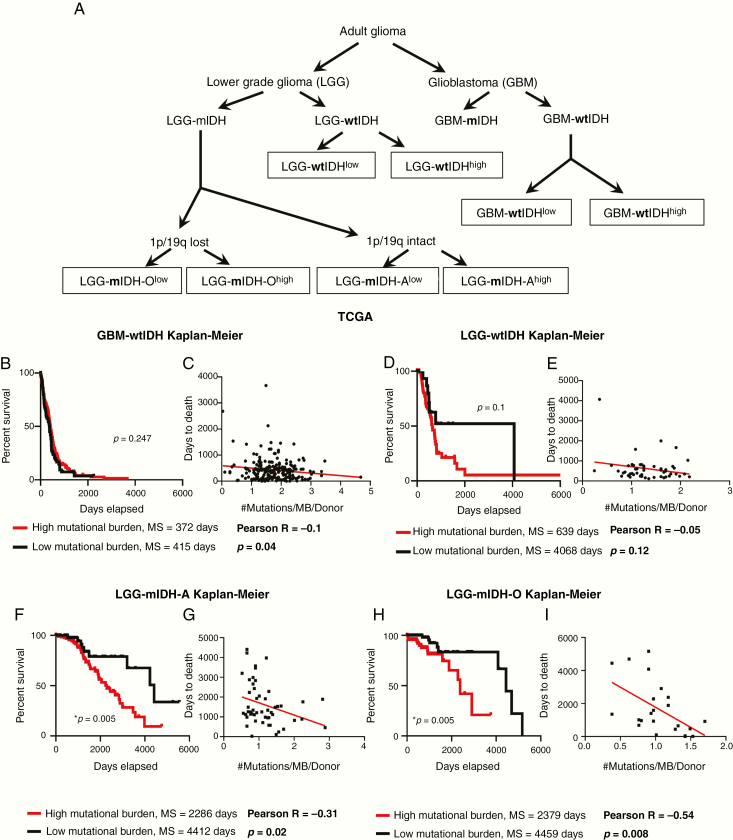
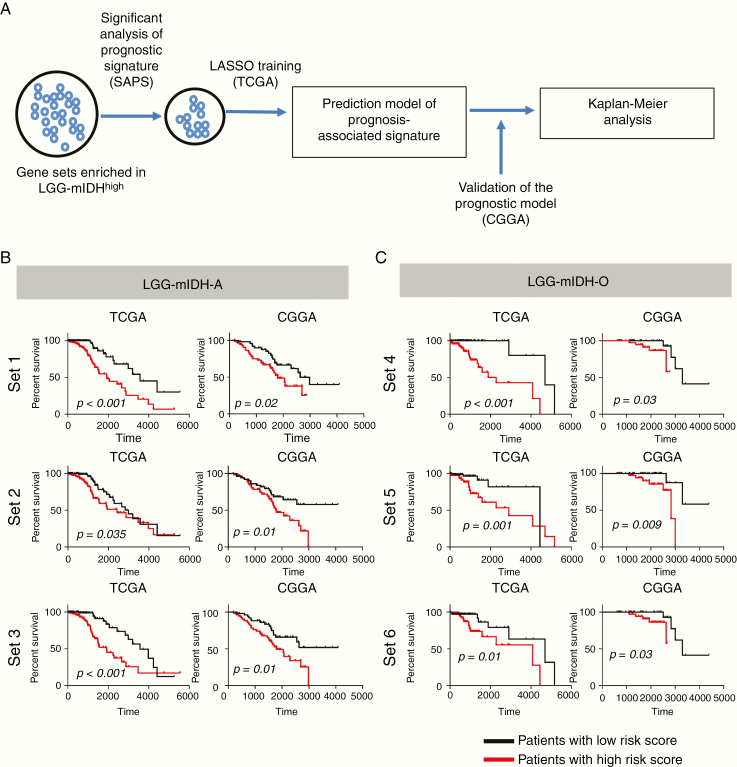
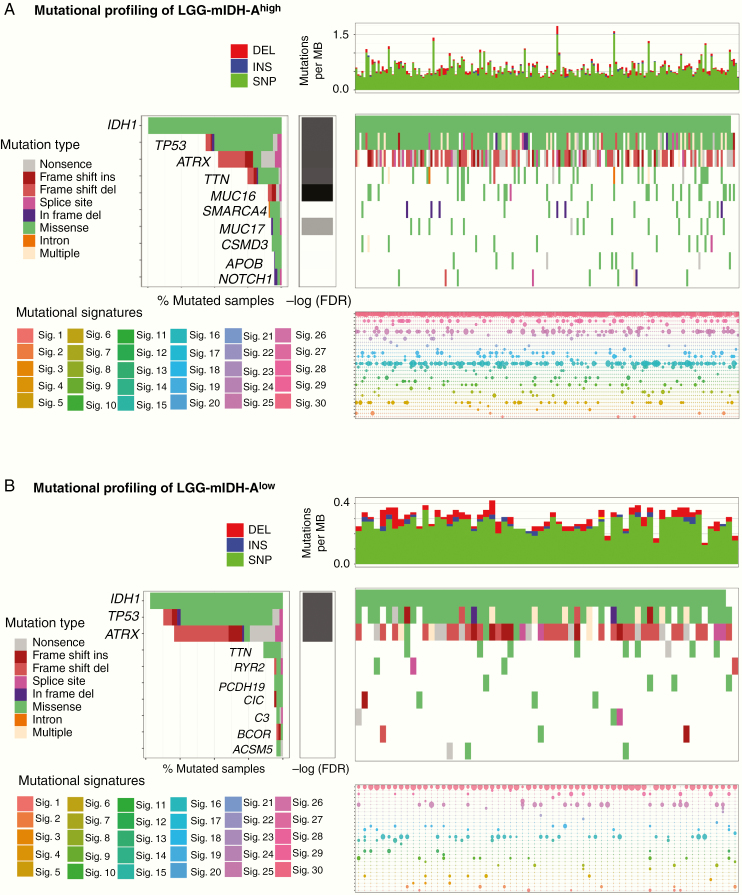
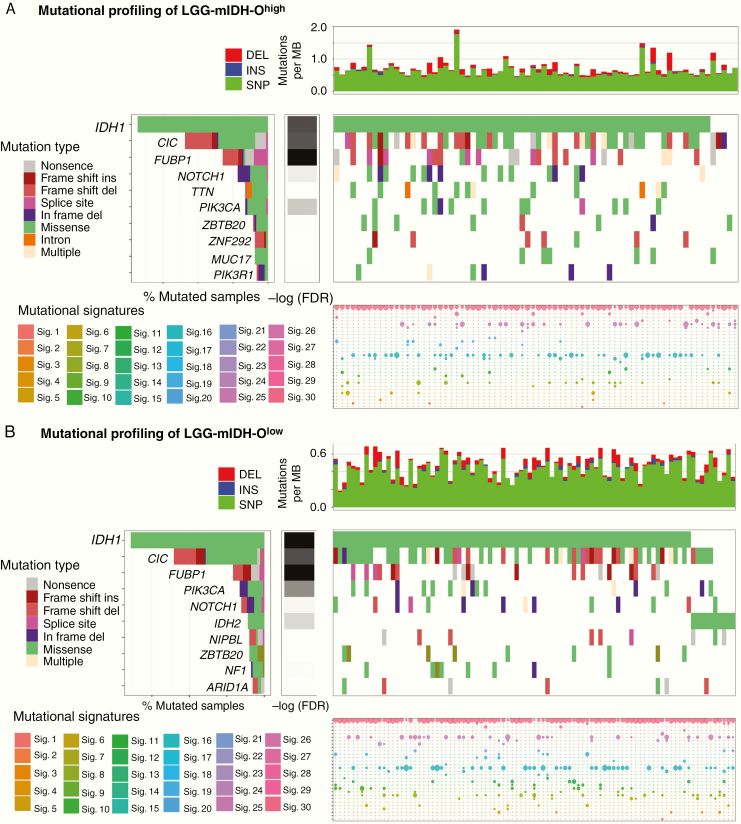
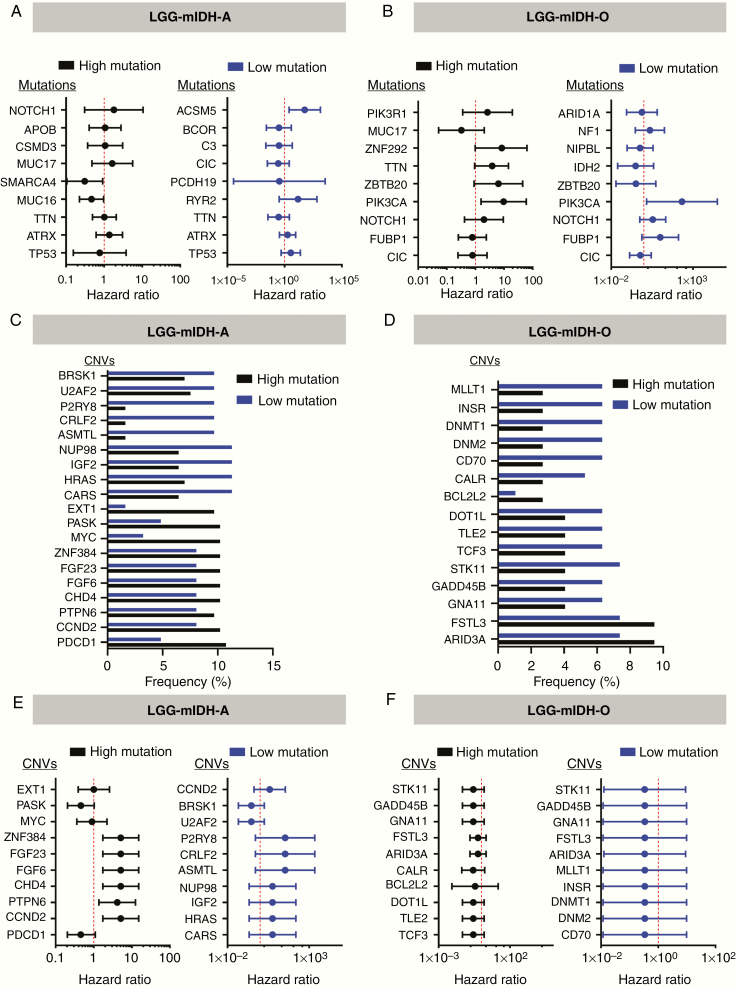
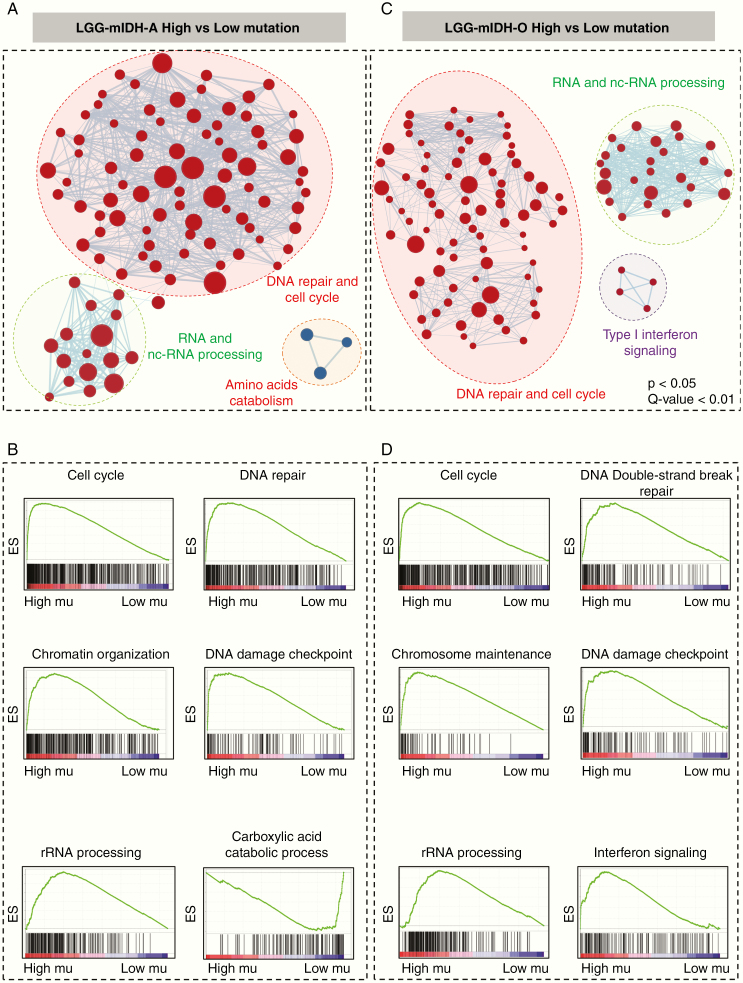
High tumor mutational burden negatively correlates with the survival of patients with LGG harboring mIDH ( = .005). This effect was significant for both Oligodendroglioma (LGG-IDH-; MS = 2379 vs 4459 days in high vs low, respectively; = .005) and Astrocytoma (LGG-IDH-; MS = 2286 vs 4412 days in high vs low respectively; = .005). There was no differential representation of frequently mutated genes (eg, , , , and ) in either group. Gene set enrichment analysis revealed an enrichment in Gene Ontologies related to cell cycle, DNA-damage response in high versus low tumor mutational burden. Finally, we identified 6 gene sets that predict survival for LGG-IDH- and LGG-IDH-.
we demonstrate that tumor mutational burden is a powerful, robust, and clinically relevant prognostic factor of MS in mIDH patients.
神经胶质瘤是最常见的原发性脑肿瘤。高级别神经胶质瘤的中位生存期(MS)为18个月,而低级别神经胶质瘤(LGG)的MS约为7.3年。76%的LGG患者表达异柠檬酸脱氢酶(mIDH)突变酶。这些患者的生存期为1至15年,肿瘤突变负担为每个肿瘤0.28至3.85个体细胞突变/兆碱基。我们检验了肿瘤突变负担可预测携带mIDH肿瘤患者生存期的假设。
我们使用来自癌症基因组图谱的1199例神经胶质瘤患者的临床和基因组数据,分析肿瘤突变负担对患者生存期的影响,并使用神经胶质瘤纵向分析联盟验证我们的结果。
高肿瘤突变负担与携带mIDH的LGG患者的生存期呈负相关(P = 0.005)。这种影响在少突胶质细胞瘤(LGG-IDH-;高负担组与低负担组的MS分别为2379天和4459天;P = 0.005)和星形细胞瘤(LGG-IDH-;高负担组与低负担组的MS分别为2286天和4412天;P = 0.005)中均显著。两组中常见突变基因(如、、、和)的差异表达均无统计学意义。基因集富集分析显示,在高肿瘤突变负担组与低肿瘤突变负担组中,与细胞周期、DNA损伤反应相关的基因本体存在富集。最后,我们确定了6个可预测LGG-IDH-和LGG-IDH-患者生存期的基因集。
我们证明肿瘤突变负担是mIDH患者MS的一个强大、稳健且与临床相关的预后因素。