Department of Pathology, Division of Neuropathology, University of Pittsburgh Medical Center, S701 Scaife Hall, 3550 Terrace Street, Pittsburgh, PA, 15261, USA.
Acta Neuropathol Commun. 2020 Oct 20;8(1):169. doi: 10.1186/s40478-020-01044-y.
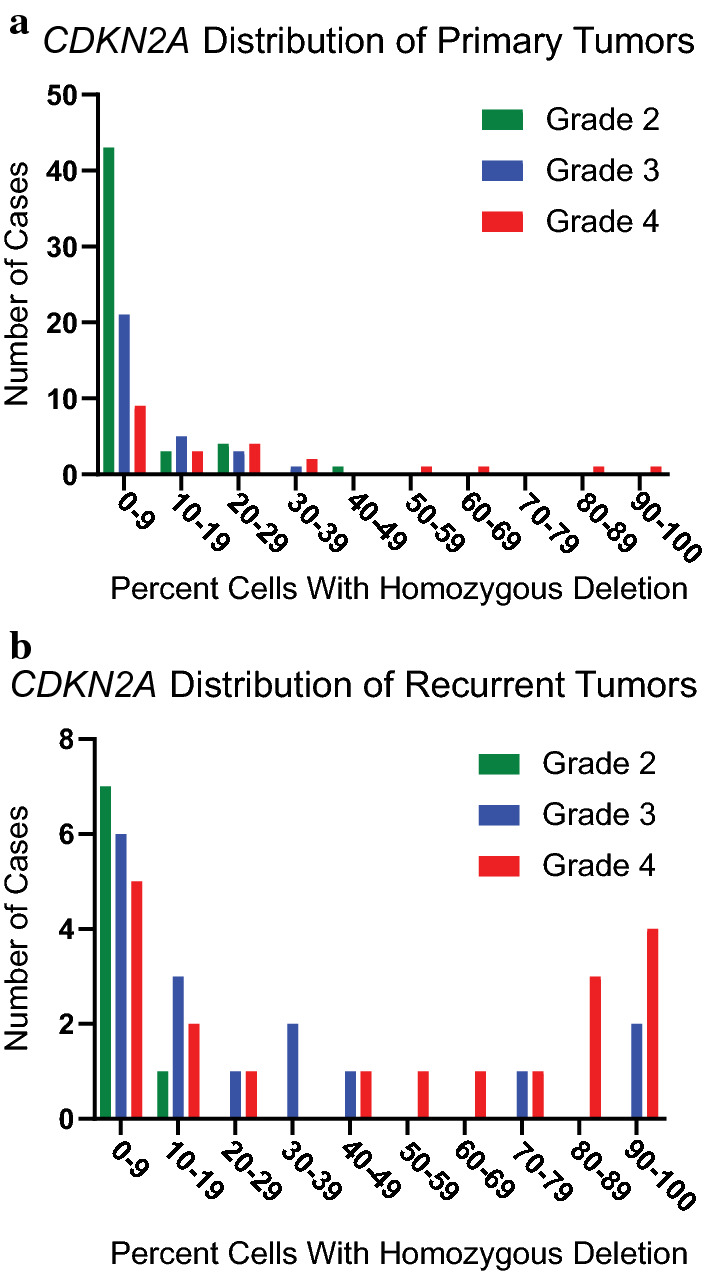
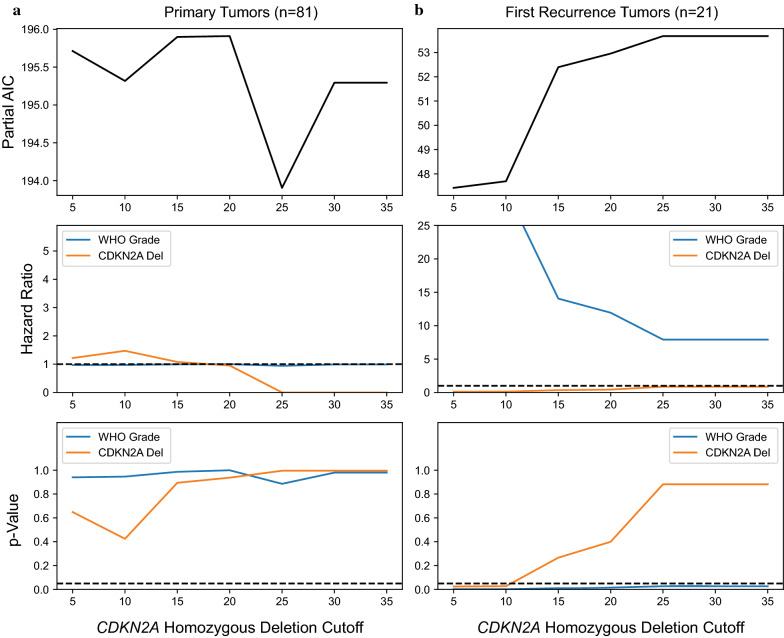
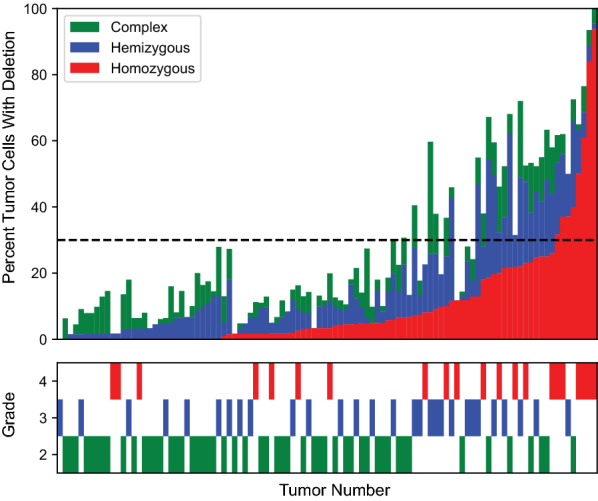
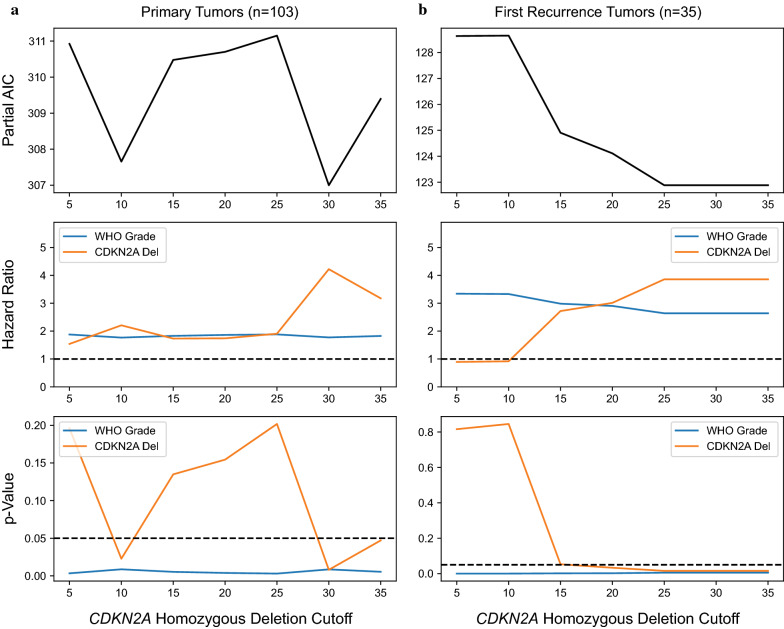
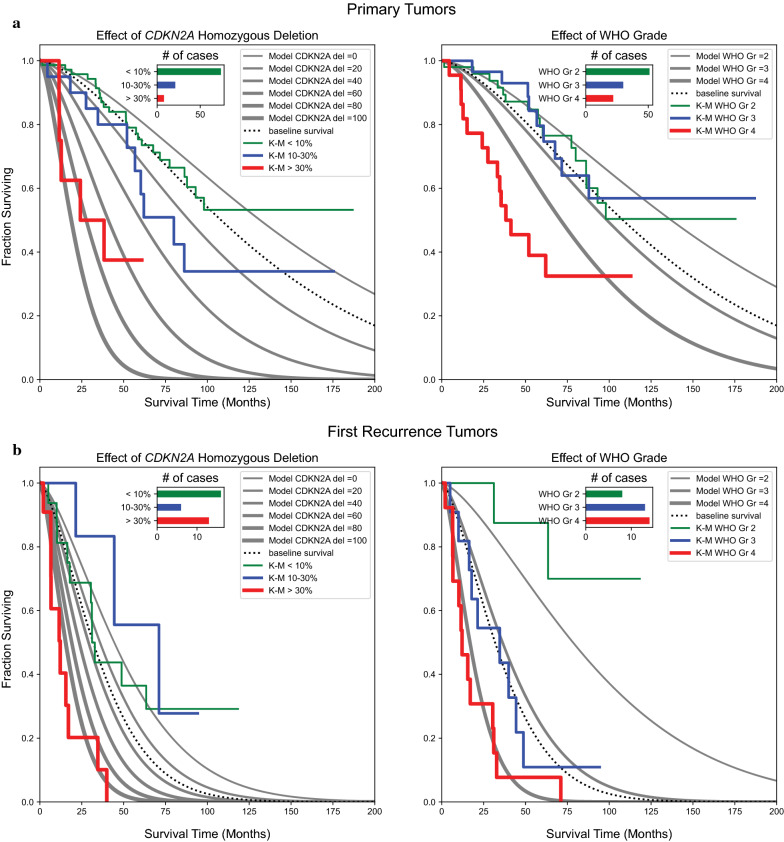
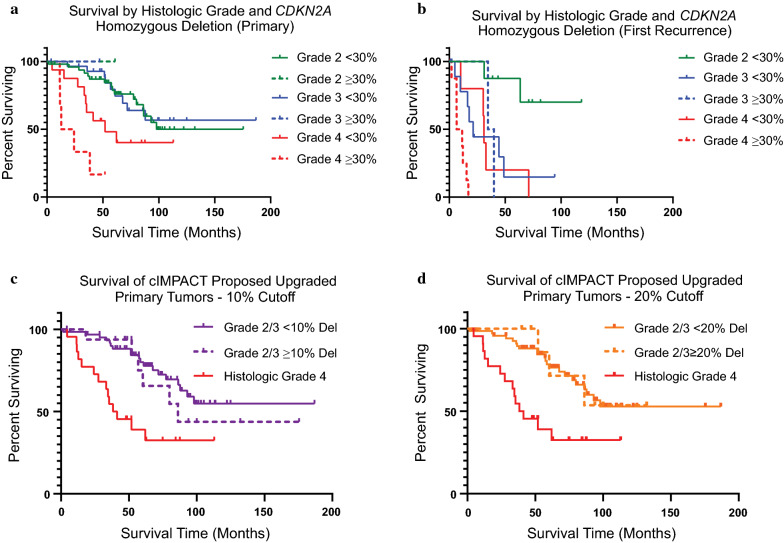
IDH-mutant astrocytomas have a more indolent natural history and better prognosis than their IDH-wild type counterparts, but are still graded according to schemes developed prior to the recognition of this type of neoplasm as a distinct entity. Homozygous deletion of CDKN2A has been proposed as a molecular correlate of aggressive behavior in these tumors, and may be incorporated into future grading systems in an effort to improve prognostic stratification. Fluorescence in situ hybridization (FISH) is a common ancillary testing modality used to assess CDKN2A status, but the specifics of how to best interpret FISH results for prognostication of gliomas have not been clearly defined in the literature. To address this issue, we performed a retrospective analysis of prospectively collected CDKN2A FISH data from 108 primary and 43 recurrent IDH-mutant astrocytomas diagnosed between 2007-2020 at the University of Pittsburgh Medical Center. High level CDKN2A homozygous deletion was rare in primary tumors and was identified more frequently in recurrent tumors. Multivariate Cox Proportional-Hazards analysis demonstrated that histologic grade and CDKN2A status are independent predictors of survival, and the prognostic value of CDKN2A is maximized by applying a threshold of ≥ 30% of tumor cells with homozygous deletion by FISH to define a positive result. At this threshold, CDKN2A deletion significantly stratified survival of histologic grade 4 tumors, but grade 2 and 3 tumors rarely exceeded this cutoff value and did not show worse survival. Lower thresholds identified additional lower grade tumors, but were not prognostically useful. Compared to prior studies, the lack of prognostic significance of CDKN2A homozygous deletion by FISH in grade 2-3 IDH-mutant astrocytomas may reflect differences in cohort populations or technical differences between testing modalities. Definitive criteria for determining CDKN2A homozygous deletion by various methodologies will be critical if this is to be included in future grading schemes.
IDH 突变型星形细胞瘤的自然病史较惰性,预后较 IDH 野生型星形细胞瘤好,但仍根据在认识到这种肿瘤为一种独特实体之前制定的方案进行分级。CDKN2A 纯合缺失已被提出作为这些肿瘤侵袭性行为的分子相关性,并且可能被纳入未来的分级系统中,以提高预后分层。荧光原位杂交(FISH)是一种常用的辅助检测方法,用于评估 CDKN2A 状态,但文献中尚未明确界定如何最好地解释 FISH 结果以预测胶质瘤的预后。为了解决这个问题,我们对 2007 年至 2020 年期间在匹兹堡大学医学中心诊断的 108 例原发性和 43 例复发性 IDH 突变型星形细胞瘤的前瞻性收集的 CDKN2A FISH 数据进行了回顾性分析。高水平 CDKN2A 纯合缺失在原发性肿瘤中罕见,在复发性肿瘤中更常见。多变量 Cox 比例风险分析表明,组织学分级和 CDKN2A 状态是生存的独立预测因素,并且通过应用 FISH 定义阳性结果的≥30%肿瘤细胞具有纯合缺失的阈值,CDKN2A 的预后价值最大化。在该阈值下,CDKN2A 缺失显著分层了 4 级肿瘤的生存,但 2 级和 3 级肿瘤很少超过该截止值,并且没有显示出更差的生存。较低的阈值确定了其他较低级别的肿瘤,但在预后上没有用处。与以前的研究相比,FISH 检测的 CDKN2A 纯合缺失在 2-3 级 IDH 突变型星形细胞瘤中缺乏预后意义,这可能反映了队列人群的差异或检测方法之间的技术差异。如果要将其纳入未来的分级方案,则需要确定各种方法学确定 CDKN2A 纯合缺失的明确标准。